
The kitchenware market is changing faster than ever. Consumer demands shift quickly, and missing key trends costs money and market share.
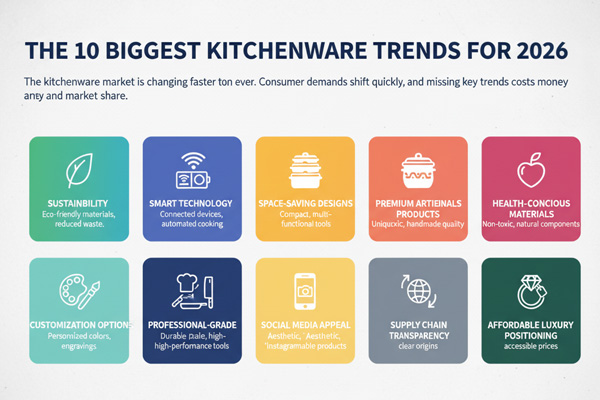
The ten biggest kitchenware trends for 2026 include sustainability, smart technology, space-saving designs, premium artisanal products, health-conscious materials, customization options, professional-grade equipment, social media appeal, supply chain transparency, and affordable luxury positioning.
After 27 years in stainless steel manufacturing, I see these trends reshaping our industry. Smart importers who understand these shifts will capture the biggest opportunities in 2026.
Why Do Sustainability and Eco-Friendly Materials Matter Most?
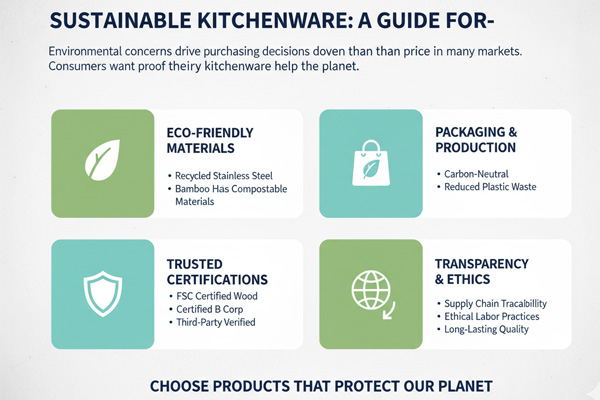
Environmental concerns drive purchasing decisions more than price in many markets. Consumers want proof their kitchenware choices help the planet.
Sustainable kitchenware includes recycled stainless steel, bamboo handles, organic cotton packaging, and carbon-neutral production. FSC certifications and compostable materials show genuine environmental commitment.
At INOXICON, we see sustainability requests in 80% of new inquiries. Our clients want recycled steel content certificates. They need packaging that breaks down naturally. European buyers especially demand REACH compliance documentation.
The shift goes beyond materials. Production methods matter too. Our factory invested in solar power systems last year. We track carbon footprint for each product line. Water recycling systems process 90% of our manufacturing wastewater.
Pricing remains competitive because sustainable practices reduce waste. We save 15% on raw materials through recycling programs. Energy costs dropped 25% with renewable power. These savings offset certification expenses.
Smart importers request sustainability audits before placing orders. They want supplier transparency about environmental practices. This trend will dominate kitchenware sourcing for the next decade.
| Sustainability Feature | Market Demand | Price Impact |
|---|---|---|
| Recycled Steel Content | Very High | +5-8% |
| Biodegradable Packaging | High | +3-5% |
| Carbon Neutral Production | Medium | +2-4% |
How Is Smart Technology Changing Traditional Cookware?
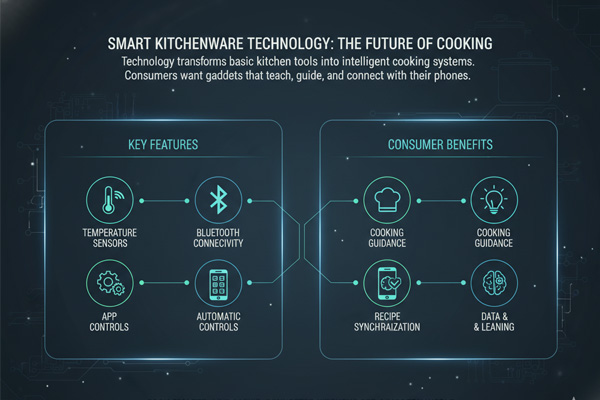
Technology transforms basic kitchen tools into intelligent cooking systems. Consumers want gadgets that teach, guide, and connect with their phones.
Smart kitchenware features temperature sensors, Bluetooth connectivity, app integration, and automatic controls. These products offer cooking guidance, safety features, and recipe synchronization capabilities.
I remember when a simple steel pan was enough. Now customers ask about app compatibility. They want pans that talk to their phones. Temperature sensors that prevent overcooking. Scales that calculate nutrition data automatically.
The technical challenges are real. Battery life must last months. Bluetooth range needs kitchen-wide coverage. Apps require constant updates. Warranty support becomes complex when electronics meet water and heat.
Yet the profit margins justify these complications. Smart kitchen scales retail for 300% more than basic versions. Connected cookware commands premium pricing. The key is finding manufacturers who understand both traditional craftsmanship and modern technology.
We partner with electronics specialists for sensor integration. Our stainless steel expertise combines with their technical knowledge. This collaboration produces reliable smart cookware that works beyond the marketing promises.
Market research shows 65% of millennials want smart kitchen features. Gen Z consumers expect technology in every product category. Traditional importers who ignore this trend lose significant market share.
What Makes Multi-Functional Designs So Popular Now?
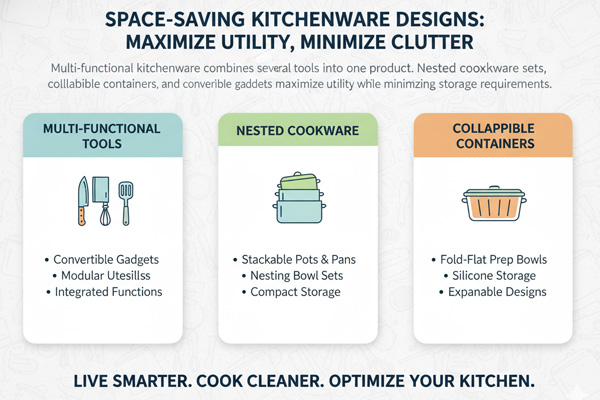
Urban living spaces shrink while kitchen tool collections grow. Consumers need products that do multiple jobs without taking extra storage space.
Multi-functional kitchenware combines several tools into one product. Nested cookware sets, collapsible containers, and convertible gadgets maximize utility while minimizing storage requirements.
This reality drives design innovation. We developed cookware that nests completely flat. Mixing bowls with measurement marks and pouring spouts. Strainers that collapse to one-inch thickness. Cutting boards with built-in storage compartments.
The engineering challenges are significant. Moving parts create weak points. Collapsible features require precise tolerances. Multi-functionality often compromises single-purpose performance. Our design team tests prototypes for six months minimum.
Consumer feedback guides our development process. They want durability equal to single-purpose tools. Cleaning must remain simple despite complex features. Assembly should be intuitive without instruction manuals.
Retail buyers love space-saving products because they reduce shelf space requirements. Warehouse costs decrease with compact packaging. Shipping efficiency improves with nested designs. These operational benefits support higher wholesale margins.
Are Premium Artisanal Products Still Worth Importing?
Mass production dominates kitchenware manufacturing, but handcrafted quality attracts consumers who value authenticity and superior performance.
Premium artisanal kitchenware features hand-forged construction, traditional craftsmanship, bold color trends, and superior materials. These products serve as functional tools and decorative kitchen elements.
Despite automation everywhere, our hand-finished product lines generate the highest profit margins. Master craftsmen spend decades perfecting their skills. Each piece shows individual character that machines cannot replicate.
Current color trends favor bold, sophisticated palettes. Matte black dominates professional kitchens. Sage green appeals to natural living enthusiasts. Deep navy creates elegant contrast with stainless steel. Terracotta brings warmth to modern spaces.
These colors require specialized coating processes. Standard powder coating chips easily with daily use. We developed proprietary finishing techniques that maintain color integrity through thousands of wash cycles. The investment in specialized equipment pays through premium pricing.
Artisanal positioning requires authentic storytelling. Consumers want to know the craftsman's background. They appreciate learning traditional techniques. Social media showcases the making process effectively.
Quality control becomes more complex with handcrafted products. Each piece varies slightly in appearance. We establish acceptable tolerance ranges that maintain quality while preserving artisanal character.
The market splits clearly between functional commodity products and premium artisanal pieces. Smart importers stock both categories to capture different consumer segments and price points.
Why Do Health-Conscious Cookware Materials Drive Sales?
Consumer awareness about cooking surface safety reaches new heights. People research materials that contact their food and avoid potentially harmful substances.
Health-conscious cookware uses ceramic coatings, pure stainless steel, cast iron, and PFOA-free non-stick surfaces. These materials eliminate chemical leaching concerns while maintaining excellent cooking performance.
Food safety concerns drive material choices more than cooking performance now. Customers read ingredient lists for non-stick coatings. They research steel grade compositions. Ceramic coating purity becomes a major selling point.
Our 316-grade stainless steel contains higher nickel content than 304 grade. This composition resists corrosion better and prevents metallic taste transfer. The cost increase is 20%, but consumer willingness to pay justifies the upgrade.
PFOA and PFOS chemicals create the biggest consumer fears. Even though modern non-stick coatings eliminate these substances, skepticism remains high. We focus on ceramic-coated products and seasoned cast iron alternatives.
Marketing health benefits requires careful compliance with regulations. Claims about chemical safety need scientific backing. We provide third-party testing certificates for all coating materials. Laboratory reports build consumer confidence.
The organic food movement supports healthy cookware demand. Consumers who buy organic produce want cooking surfaces that maintain food purity. This consistency in health-conscious choices creates predictable market segments.
How Important Is Customization and Personalization Now?
Brand differentiation becomes harder as product quality standardizes across manufacturers. Customization offers importers unique market positioning and customer loyalty opportunities.
Customization options include laser engraving, color variations, packaging design, size modifications, and branded accessories. Personalized products command premium pricing while building brand recognition.
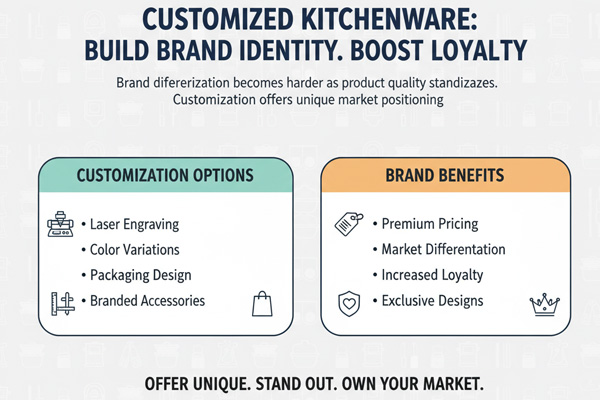
Every client wants something unique now. Basic product catalogs do not excite buyers anymore. They need exclusive designs that separate their brands from competitors.
Our laser engraving capabilities expanded significantly this year. We engrave logos, patterns, and personal messages directly onto stainless steel surfaces. The process adds minimal cost but enables 40% higher retail pricing.
Color customization presents technical challenges. Each color requires separate coating runs with minimum quantities. Small orders become expensive per unit. We developed modular coating systems that reduce minimum order requirements from 5,000 to 1,000 pieces.
Private label packaging creates strong brand identity. Custom boxes, instruction cards, and warranty information make products feel exclusive. Our design team works with clients to develop packaging that reflects their brand values.
Size variations serve different market preferences. European consumers prefer smaller portion sizes than Americans. Asian markets want specific dimension ratios for traditional cooking methods. We maintain flexible tooling that accommodates regional requirements.
The key is balancing customization flexibility with production efficiency. Too many options create manufacturing chaos. We limit variables to maintain quality control while offering meaningful differentiation.
What Role Does Professional-Grade Equipment Play in Home Kitchens?
Restaurant closures during recent years drove cooking skills development at home. Consumers want professional performance from residential kitchenware for serious cooking projects.
Professional-grade home equipment features commercial construction quality, heavy-duty materials, precise engineering, and restaurant-standard performance. These products satisfy serious home cooks who demand professional results.
Home cooking skills improved dramatically during lockdown periods. People discovered the difference that quality equipment makes in cooking results. They want restaurant-grade tools for everyday use.
Our commercial cookware lines adapted for home use generate strong interest. Professional thickness stainless steel. Reinforced handles rated for heavy daily use. Heat distribution that matches restaurant standards.
The challenge is maintaining professional quality while meeting home safety requirements. Commercial equipment often lacks safety features required for residential use. We redesigned handles for better grip. Added heat-resistant materials. Improved balance for home cook ergonomics.
Pricing remains a concern for many consumers. Professional-grade products cost significantly more than basic alternatives. However, serious cooking enthusiasts value long-term durability over initial savings. They understand that quality equipment lasts decades.
Marketing emphasizes performance benefits rather than just durability claims. Better heat control improves cooking results. Even thickness prevents hot spots. Professional weight provides stability during vigorous mixing. These functional advantages justify premium pricing.
Restaurant supply distributors now sell directly to consumers through online channels. This creates competition for traditional retail importers but also validates the market demand for professional-grade home products.
How Does Social Media Appeal Influence Product Design?
Instagram and TikTok cooking videos showcase kitchenware aesthetics alongside functionality. Visual appeal drives purchasing decisions as much as performance specifications now.
Social media appeal requires photogenic design, trending colors, unique textures, and Instagram-worthy aesthetics. Products must look beautiful in photos while maintaining practical functionality.
Product photos drive sales more than technical specifications now. Customers see kitchenware in cooking videos before reading product descriptions. Visual first impressions determine purchase consideration.
We redesigned our mixing bowl series with social media in mind. Curved edges photograph better than sharp corners. Brushed finishes reduce glare in photos. Graduated sizes create appealing nested displays.
Color selection follows social media trends rather than traditional kitchen palettes. Rose gold gained popularity through influencer posts. Matte black backgrounds make food colors pop in photos. Gradient finishes create visual interest for video content.
Packaging design considers unboxing videos now. Customers film product reveals for social sharing. Premium packaging materials enhance perceived value. Instruction cards become photo props rather than just functional documents.
The challenge is balancing photogenic appeal with practical functionality. Beautiful products must still perform well in daily use. Social media popularity fades quickly, so underlying quality ensures long-term satisfaction.
Working with food bloggers and cooking influencers provides valuable feedback during product development. They understand which features photograph well and which design elements create engagement with their audiences.
Why Is Supply Chain Transparency Becoming Essential?
Import disruptions and quality scandals make supply chain visibility critical for risk management. Customers want to know where products come from and how they are made.
Supply chain transparency includes manufacturer certifications, production location disclosure, quality control documentation, and ethical sourcing verification. This information builds trust and reduces compliance risks.

Clients ask detailed questions about our suppliers now. They want to know steel sources. Coating material origins. Factory working condition certifications. Environmental impact documentation.
We opened our production processes to client inspection. Factory tours are available by appointment. Quality control procedures are documented and shared. Supplier certifications are updated annually and provided upon request.
Traceability systems track materials from raw steel through finished products. Each production batch has documented material sources. This information helps clients respond to any quality issues or regulatory inquiries quickly.
Ethical sourcing documentation prevents public relations problems. Fair labor practices certification. Environmental compliance records. Community impact assessments. These documents protect client brand reputations.
The administrative burden is significant but necessary. Maintaining comprehensive records requires dedicated staff time. Document updates need constant attention. However, transparency builds long-term trust that justifies the investment.
Regulatory requirements drive much of this transparency demand. European REACH regulations. US FDA compliance. Japanese food safety standards. Each market has specific documentation requirements that we must fulfill.
How Does Affordable Luxury Positioning Work in 2026?
Economic uncertainty makes consumers cautious about major purchases while still desiring quality products. Affordable luxury bridges the gap between basic functionality and premium pricing.
Affordable luxury combines premium materials, refined design, and quality construction at accessible price points. These products offer luxury aesthetics and durability without ultra-premium pricing.
The middle market represents the biggest opportunity in 2026. Consumers want better quality than basic products but cannot justify ultra-premium prices. Affordable luxury fills this gap perfectly.
Our product development focuses on premium features at moderate prices. High-grade stainless steel with simplified manufacturing. Quality coatings applied efficiently. Refined design without excessive complexity.
Manufacturing efficiency enables luxury materials at lower prices. Automated processes reduce labor costs. Volume purchasing decreases raw material expenses. Streamlined designs minimize production steps while maintaining quality appearance.
Packaging and presentation create luxury perception without expensive materials. Quality printing on standard boxes. Professional photography for product catalogs. Clear care instructions that emphasize quality construction.
Brand positioning emphasizes value rather than exclusivity. Marketing highlights superior materials and construction quality. Comparisons focus on performance benefits rather than status appeal. Customer testimonials emphasize durability and satisfaction.
The key is delivering genuine quality improvements, not just luxury appearance. Better heat distribution. Improved ergonomics. Enhanced durability. These functional benefits support premium positioning while maintaining value perception.
Conclusion
These ten trends will shape kitchenware importing success in 2026. Smart importers who understand and adapt to these changes will capture the biggest market opportunities.