
Wholesale buyers face tough choices when sourcing bakeware that can make or break their business success. Wrong material selections lead to customer complaints, while poor product mix decisions create slow-moving inventory that ties up capital and hurts profitability.
Successful bakeware sourcing requires matching three key elements to your target market: product types that customers actually need, materials that deliver expected performance, and quality details that prevent complaints. Master these elements to build profitable ranges that sell consistently.
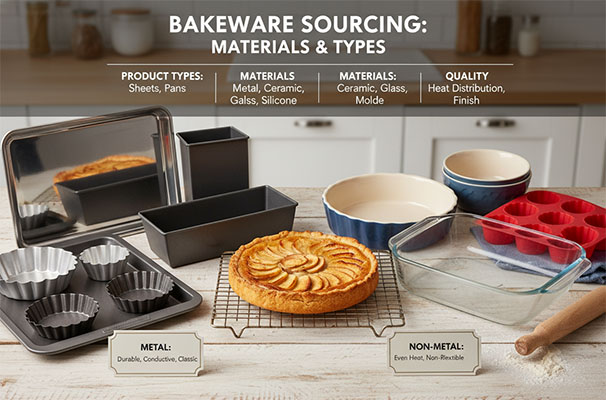
After 27 years in stainless steel kitchenware manufacturing, I have seen many buyers struggle with bakeware decisions. They focus on price alone or pick popular items without understanding their market needs. This approach leads to slow-moving inventory and disappointed customers. Smart buyers take a different path.
What Are the Main Bakeware Product Types Every Wholesale Buyer Should Know?
Building a successful bakeware range starts with understanding product roles. Each type serves different customer needs and market segments.
Core baking pans form the foundation of most wholesale programs. These include loaf pans, round cake pans, muffin trays, and pizza pans that appeal to broad customer bases across different retail channels.
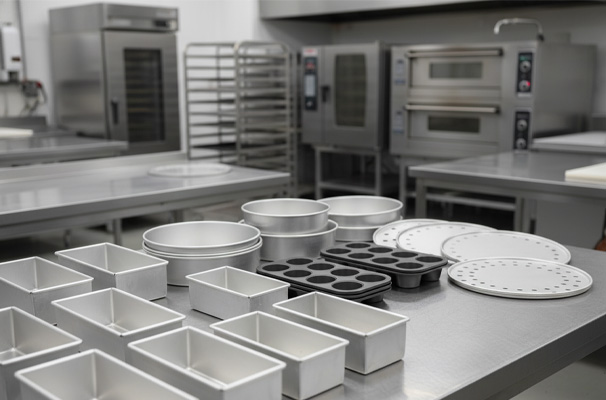
I always tell buyers to start with core baking pans because they generate consistent sales volume. Loaf pans, round cake pans, square pans, muffin trays, pizza pans, and brownie pans cover everyday baking needs. These products work well in value-focused supermarkets and specialty kitchen retailers alike. The key is understanding that core products should represent 60-70% of your initial order quantity. This approach reduces risk while ensuring you have products that customers actually search for and buy regularly. In my experience, buyers who spread their investment too thinly across many specialty items often struggle with slow inventory turnover. Core pans also offer the best margin potential because they have consistent demand and less price pressure from seasonal fluctuations. When you build strong relationships with retailers using reliable core products, you create opportunities to introduce specialty items later. This strategy has helped our clients achieve 40% faster inventory turnover compared to those who start with complex product mixes.
Baking trays and sheets represent the second essential group that drives volume sales. Standard baking sheets, cookie sheets, and oven trays are kitchen basics that customers replace regularly due to wear and frequent use. They are easy to understand and merchandise, making them strong volume products for entry-level and mid-range programs. These items also work exceptionally well for promotional pricing strategies because customers recognize their value immediately.
Specialty bakeware adds assortment depth without requiring huge volume commitments. Springform pans, tart pans, pie dishes, and bundt pans help create complete product ranges that differentiate your offering from basic competitors. They work especially well for kitchen retailers and online sellers who want more than standard mass-market offerings. Bakeware sets combine multiple pieces to increase average order value while simplifying customer decision-making.
| Product Category | Volume Potential | Market Positioning | Best Retail Channels |
|---|---|---|---|
| Core Baking Pans | High | Universal appeal | All channels |
| Baking Trays | Very High | Essential basics | Mass market, online |
| Specialty Items | Medium | Premium/Complete | Kitchen stores, gifts |
| Bakeware Sets | Medium-High | Value perception | All channels |
Which Bakeware Materials Deliver the Best Value for Your Market?
Material choice directly affects cost, performance, and customer satisfaction. I have worked with different materials for decades and learned which ones work best for different market positions.
Carbon steel offers the best balance of affordability and performance for most wholesale programs. When paired with quality non-stick coating, it covers wide market needs while maintaining reasonable production costs.
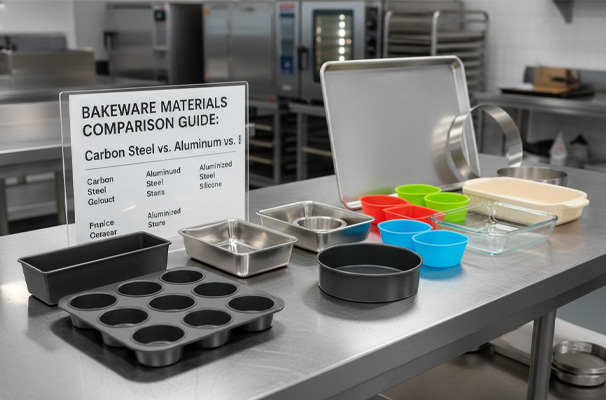
Carbon steel dominates our bakeware production because it delivers reliable results at competitive prices. It works well for mainstream retail programs where buyers want dependable performance without premium costs. We have produced millions of carbon steel pieces that perform consistently across different markets. The material provides excellent heat retention and distribution while maintaining cost structures that support competitive retail pricing. Carbon steel also accepts non-stick coatings well, creating products that satisfy customer expectations for easy food release and cleanup. From a manufacturing perspective, carbon steel allows for precise forming and consistent thickness control, which directly impacts product quality and customer satisfaction. The material's durability means products maintain their shape and performance through normal consumer use cycles. Most importantly for wholesale buyers, carbon steel products offer predictable quality standards that reduce complaint rates and support repeat business. When you choose carbon steel bakeware from experienced manufacturers, you get products that balance cost control with performance reliability. This combination is essential for building sustainable wholesale relationships with retailers who need consistent product quality at competitive price points.
Aluminum and aluminized steel provide excellent heat distribution for performance-focused positioning. These materials cost slightly more but offer better baking results that justify higher retail prices. I recommend them when buyers target quality-conscious customers or premium retail segments where performance matters more than lowest possible cost.
Silicone bakeware serves different market needs entirely. It appeals to customers who want colorful, flexible options for specialty baking applications. However, it works better as a complementary category rather than your main product line. Most of our wholesale clients use silicone for 10-20% of their range to add visual variety and appeal to specific customer segments.
Glass and ceramic materials suit specific applications where presentation matters, such as oven-to-table serving. They work well for gift-oriented channels but usually do not fit broad volume programs. Stainless steel appears less frequently in bakeware than cookware but can work effectively for professional-use segments that prioritize durability over heat distribution.
How Do Product Details Impact Your Wholesale Bakeware Success?
Small details make big differences in bakeware performance and customer satisfaction. Poor attention to these factors creates problems that hurt your business reputation.
Coating quality determines product lifespan and customer satisfaction. Poor coatings lead to sticking, scratching, and complaints that damage your brand value and repeat business potential.

I have seen buyers choose cheap coatings to save money, only to face massive return rates that cost far more than the initial savings. Quality non-stick coatings cost more upfront but prevent customer complaints and protect your long-term reputation. We test all our coatings for release performance, scratch resistance, and durability before production because coating failure is the leading cause of bakeware complaints. The coating system affects not just initial performance but also how well products maintain their non-stick properties through repeated use and washing cycles. Premium coatings use multi-layer systems that provide better adhesion to the base material and superior resistance to wear from metal utensils and abrasive cleaning. This translates directly to customer satisfaction and repeat purchases. Poor coatings may work initially but fail within months, creating negative reviews that damage your brand reputation across all sales channels. From a business perspective, coating quality affects your total cost of ownership because high-quality coatings reduce returns, warranty claims, and customer service costs. The small premium you pay for better coatings protects your margins and supports sustainable growth. When evaluating coating options, focus on manufacturers who can demonstrate coating performance through standardized testing rather than just visual appearance samples.
Thickness affects both perceived value and actual performance in ways that directly impact sales success. Thin bakeware feels cheap in customers' hands and may warp during use, creating immediate negative impressions that hurt conversion rates. We maintain specific thickness standards because heavier construction creates better customer impressions and longer product life that supports positive reviews and repeat business.
Surface finish influences market positioning and customer appeal more than many buyers realize. Light finishes look clean and professional, appealing to customers who want modern, minimalist aesthetics. Dark finishes can appear more premium and hide wear better over time. The choice should match your target market expectations and retail channel requirements to maximize visual impact and sales conversion.
Structural design details like rolled edges, reinforced rims, and smooth forming separate quality products from cheap alternatives. These features cost little to add during manufacturing but significantly improve the user experience and product durability that customers notice immediately when handling products.
| Quality Factor | Impact on Sales | Impact on Returns | Cost Impact |
|---|---|---|---|
| Coating Quality | High | Very High | Medium |
| Thickness | Medium | High | High |
| Surface Finish | Medium | Low | Low |
| Structural Design | High | Medium | Low |
What Should You Confirm Before Placing Your Bulk Bakeware Order?
Smart buyers verify key details before production starts. This approach prevents costly mistakes and ensures products match market requirements perfectly.
Confirm product specifications, coating types, packaging requirements, and customization options with your manufacturer. Clear communication on these points reduces sourcing risk and improves final product quality.

First, discuss which product categories make sense for your target market based on actual retail data rather than assumptions. After working with 500+ clients worldwide, I can tell you that successful ranges match product selection to retail channels and customer needs with precision. A manufacturer should guide you on what works best for different markets based on their experience with similar clients. This conversation should cover seasonal demand patterns, regional preferences, and competitive positioning strategies that affect product selection. Understanding these factors helps you avoid inventory problems and maximize sell-through rates. The best manufacturers share market insights that help you make smarter sourcing decisions rather than just accepting whatever products you request. This collaborative approach leads to better business results for both parties and stronger long-term relationships that support your growth objectives.
Second, verify all specification details clearly before any production begins. Material type, thickness measurements, coating specifications, exact dimensions, and finish requirements must be confirmed in writing with technical drawings when necessary. These details directly affect both production costs and final performance, so accuracy is critical for avoiding expensive mistakes or quality problems.
Third, plan packaging early in the process because it affects multiple aspects of your business success. Packaging influences shelf appeal, e-commerce presentation, brand image, shipping costs, and inventory storage requirements. We help clients design packaging that supports their market positioning while protecting products during shipping and retail handling.
Fourth, clarify customization options upfront to maximize your competitive advantages. Private labeling, color variations, logo application, and custom product combinations are common in wholesale business and can significantly differentiate your offering from competitors. Understanding these possibilities helps you create more distinctive product ranges that command better margins and customer loyalty.
Finally, review practical details like minimum order quantities, lead times, sample processes, quality control procedures, and payment terms. Reliable manufacturers provide consistent information and delivery performance that supports your business growth without creating cash flow or inventory problems.
Conclusion
Successful bakeware sourcing combines smart product selection, appropriate materials, quality details, and clear manufacturer communication for profitable wholesale programs.