
Are you struggling to choose the right cookware for your import business? You see countless trends in materials and designs, but investing in the wrong inventory can be a costly mistake that ties up capital and shrinks your profit margins. We can help you navigate this complex landscape.
The best-selling cookware varies greatly by region. While non-stick pans are popular globally for convenience, North American and European markets are increasingly demanding durable stainless steel and cast iron for health and performance. Meanwhile, woks and rice cookers remain essential in Asia. Understanding these deep-seated cultural preferences is crucial for smart, profitable sourcing.
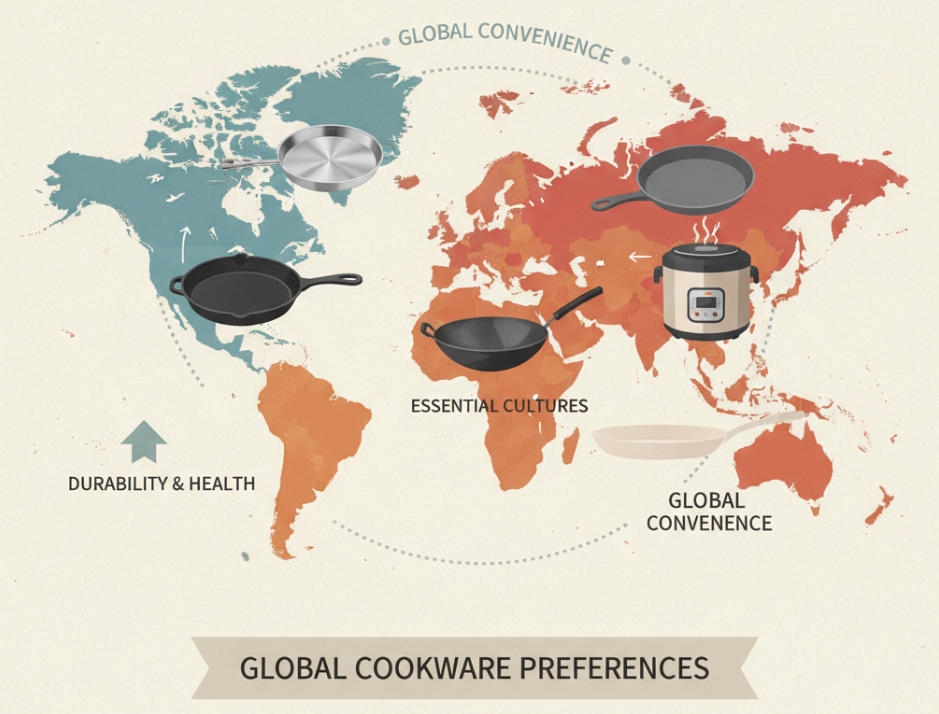
In my 27 years as a manufacturer, I've seen sourcing managers make the same critical error time and again: they assume a best-seller in one country will automatically succeed in another. I once had a client who was thrilled with the sales of heavy, 12-piece stainless steel sets in the US. They placed a huge order for the same sets, expecting to replicate that success in Japan. The inventory sat for months. Why? The kitchens were smaller, the cooking styles were different, and the perceived value wasn't there. This experience taught me a vital lesson: successful sourcing isn't about chasing universal trends; it's about deep-diving into the culture, cooking habits, and core values of your specific customers. Let’s break down what truly sells in each key market, so you can build a profitable cookware line and avoid costly mistakes.
How Do Cookware Preferences Differ Between North America and Europe?
Choosing between North American and European markets seems straightforward, but their cookware needs have subtle yet critical differences. Overlooking these nuances can lead to slow-moving stock, missed sales opportunities, and a brand that doesn't resonate with the local culture.
North Americans favor large, durable, professional-style cookware like stainless steel and cast iron sets that offer great value. In contrast, Europeans prioritize high-quality materials, elegant design, and sustainability, often choosing individual pieces of multi-ply stainless steel, enameled cast iron, and eco-friendly products.
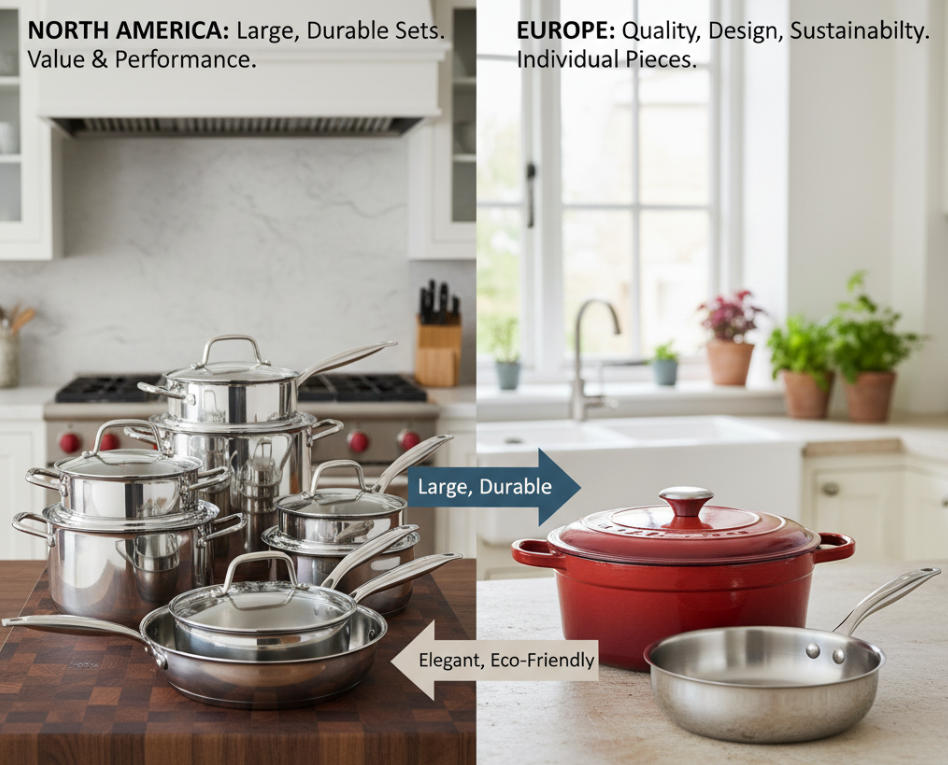
My conversations with buyers from these two continents always start differently, which is very revealing. For our North American partners, the dialogue often begins with function, size, and durability. They are thinking about Thanksgiving turkeys, searing thick-cut steaks, and cooking large batches of pasta. Their customers have larger kitchens and are more likely to invest in a comprehensive, matching set that covers all their needs. The "value for money" proposition is huge.
Conversely, when I speak with a buyer from Germany or France, the first questions are almost always about the materials, the finish, and the design heritage. They want to know if the stainless steel is high-grade 18/10, if the product is made from recyclable metals, and if its aesthetic is timeless. They represent a customer who might buy one perfect saucepan this year and a matching skillet the next, building a collection of high-performing, beautiful tools that last a lifetime.
North America: The Rise of the "Prosumer"
The North American market is heavily influenced by the "prosumer" (professional + consumer) trend. Home cooks watch celebrity chefs on TV using heavy-duty, restaurant-style equipment and want to replicate that experience. This drives demand for:
- Size and Performance: Large 12-inch skillets are a must for getting a good sear on meat without overcrowding. 8-quart stockpots are standard for soups, stews, and boiling pasta. Heavy-bottomed pans that ensure even heat distribution are highly valued.
- Convenience Features: "Dishwasher-safe" and "oven-safe" are almost non-negotiable features. Lids should be tight-fitting (often glass, to monitor cooking), and handles should be ergonomic and stay cool.
- The All-in-One Set: Buying a complete 10 or 12-piece set is very common. It provides a cohesive look and feels like a smart, one-time investment. This is a major opportunity for importers who can offer well-packaged, comprehensive sets.
As a manufacturer, we meet this demand with our robust stainless steel lines. We can produce heavy-gauge, multi-ply cookware that delivers the professional performance these consumers crave, and we are experts at configuring and packaging complete sets for retail success.
Europe: A Blend of Tradition, Design, and Sustainability
The European consumer approaches cookware with a different mindset. While performance is essential, it's viewed through a lens of craftsmanship and longevity.
- Material Integrity: There's a deep appreciation for high-quality materials. Multi-ply stainless steel is popular for its heat control, enameled cast iron (especially from French and Belgian traditions) is beloved for slow-cooking and braising, and copper remains a niche but respected choice for its superior conductivity, especially in sauce-making.
- Aesthetic and Design: Cookware is not just a tool; it's part of the kitchen's decor. Scandinavian minimalism, Italian elegance, and French rustic charm all influence design choices. A pot must look good on the stovetop and on the dining table.
- Sustainability as a Selling Point: Eco-consciousness is a major purchasing driver. Consumers want to know if the cookware is made from recycled materials, if the manufacturing process is energy-efficient, and if the product is built to last for decades to reduce waste. This "buy it for life" philosophy is strong.
This is where our OEM and ODM capabilities truly shine. We work with European brands to create unique lines that reflect their specific design ethos, whether it's a minimalist line with brushed finishes or a colorful enameled series. Our commitment to quality materials ensures the products have the longevity that this market demands.
| Feature | North American Market | European Market |
|---|---|---|
| Key Materials | Stainless Steel (304), Cast Iron, Non-Stick (PFOA-free) | Multi-Ply Stainless Steel (18/10), Aluminum, Enameled Cast Iron, Copper |
| Popular Types | Large skillets, large stock pots, complete cookware sets, roasting pans | Sauciers, Dutch ovens, specialty pans (crêpe, paella), individual pieces |
| Design Focus | Professional, heavy-duty, functional, ergonomic | Elegant, minimalist, colorful, space-saving, traditional craftsmanship |
| Buying Drivers | Durability, performance, easy cleaning, value for money, brand reputation | Material quality, design aesthetics, brand heritage, sustainability, longevity |
What Drives Cookware Sales in East and Southeast Asia?
If you're targeting the massive and dynamic Asian market, you must understand that cooking here is fast, frequent, and fundamentally different from the West. Applying a Western sourcing strategy without localization is a recipe for failure, leading to products that don't fit the cooking style or the kitchen space.
In East Asia (China, Japan, Korea), the market is dominated by lightweight non-stick pans and woks, driven by the daily ritual of stir-frying. In Southeast Asia, affordability, versatility, and bright, appealing designs are the key drivers for woks and multi-purpose pots that suit local budgets and culinary needs.
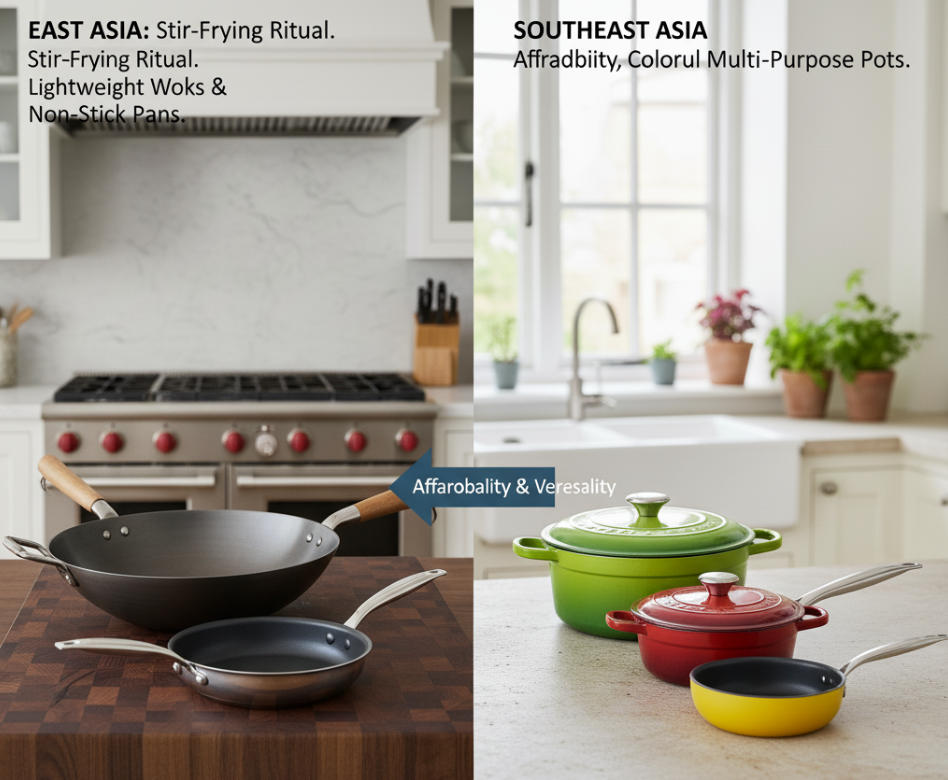
The sizzle of garlic and ginger hitting a hot wok is the sound of home for billions of people. This single cooking method has a profound impact on the cookware market. I remember visiting a partner in Seoul who showed me their sales data; over 60% of their revenue came from non-stick frying pans and woks. These items are valued for being lightweight, heating up quickly, and making cleanup easy—all crucial for preparing quick, multi-dish family meals.
While modern non-stick is king for daily convenience, many households also have a traditional pan for specific tasks. A seasoned carbon steel wok for high-heat stir-fries that require "wok hei" (the prized "breath of the wok"), or a heavy clay pot for slow-simmered soups. This shows a sophisticated market that balances modern convenience with traditional performance, creating opportunities for a diverse product range.
East Asia: Precision, Technology, and Tradition
While united by some common culinary threads, China, Japan, and Korea have distinct preferences.
- Japan: With typically smaller living spaces, Japanese consumers value products that are compact, efficient, and multi-functional. There is an incredible focus on quality and detail. High-performance, multi-layer non-stick coatings are standard. Specialty pans like square tamagoyaki pans for rolled omelets and lightweight yukihira saucepans are kitchen staples. The aesthetic is often one of understated quality and beautiful simplicity.
- South Korea: Korean consumers are very trend-aware and appreciate modern, stylish designs. Bright pastel colors and innovative features are popular. Tabletop cooking is common, so pans like grill pans for Korean BBQ that are both functional and attractive are big sellers. The influence of social media and K-dramas on home goods trends cannot be overstated.
- China: The market is vast and stratified. The traditional iron wok remains a cornerstone in millions of homes. Simultaneously, a rapidly growing middle class is embracing Western-style cooking and investing in full stainless steel cookware sets. E-commerce and livestreaming are massive sales channels, where visual appeal and demonstrated performance can make a product an instant hit.
Southeast Asia: The Power of Price and Practicality
In countries like Thailand, Vietnam, and Malaysia, practicality and affordability are the most powerful purchasing drivers.
- Multi-Functionality is Key: A single pot often needs to perform multiple duties: boiling noodles, making a curry, deep-frying spring rolls, and steaming vegetables. A versatile wok or a deep, multi-purpose pot is therefore a much smarter purchase for many families than a specialized set.
- Price Sensitivity: The budget is a primary consideration. Aluminum is extremely popular because it's affordable and an excellent heat conductor. Simple, reliable non-stick coatings add value by making cooking and cleaning easier.
- Vibrant Aesthetics: Unlike the minimalist trends in parts of Europe, consumers here often respond positively to bright colors and bold patterns. Cookware with floral motifs or vibrant enamel coatings can stand out in a crowded marketplace and add a touch of joy to the kitchen. This is a fantastic opportunity for private label brands to create culturally resonant designs.
As a flexible manufacturer, we help our partners win in these diverse markets. For Japan, we focus on precision engineering and flawless finishes. For Southeast Asia, we can develop cost-effective yet durable aluminum lines with custom colors and patterns, offering a low MOQ of 500 pieces to help importers test the market without heavy risk.
| Feature | East Asia (China, Japan, Korea) | Southeast Asia (Thailand, Vietnam, Malaysia) |
|---|---|---|
| Key Materials | High-Tech Non-Stick, Iron/Carbon Steel, Stainless Steel, Ceramic | Aluminum, Basic Non-Stick, Stainless Steel |
| Popular Types | Woks, Frying Pans, Small Saucepans, Rice Cookers, Grill Pans | Woks, Multi-purpose Pots, Rice Cookers, Steamers |
| Design Focus | Lightweight, efficient, high-tech coatings, compact, stylish | Colorful, budget-friendly, versatile, durable, culturally inspired patterns |
| Buying Drivers | Convenience, healthy cooking (less oil), brand trust, modern features | Affordability, practicality, multi-functionality, visual appeal |
How Can You Succeed in Latin America and Other Emerging Markets?
When approaching emerging markets like Latin America, you're dealing with savvy, price-conscious consumers who have strong local traditions. You cannot simply offload last season's European stock and expect it to sell. Success requires a dedicated strategy built on value, durability, and cultural understanding.
To succeed in emerging markets, you must prioritize affordability and everyday practicality. Lightweight aluminum and reliable non-stick cookware are consistent top sellers because they are versatile, energy-efficient, and budget-friendly. The winning formula is offering a durable, easy-to-use product at a highly competitive price point.
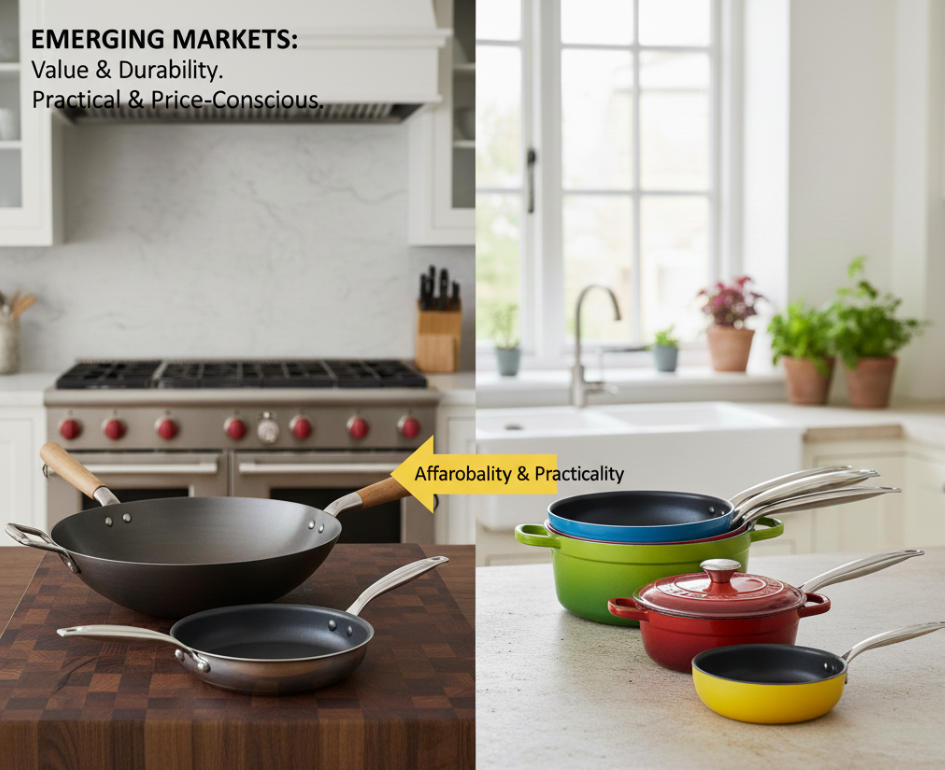
Every time I start a project with importers from Brazil, Mexico, or Colombia, the conversation is refreshingly direct. They cut right to the chase: "What is your most cost-effective option for a durable, all-purpose pan that can handle daily use?" Their customers aren't cooking for a dinner party; they're preparing daily meals for their families—rice, beans, stews, and fried plantains. They need reliable workhorse tools that get the job done without breaking the bank.
This is precisely why aluminum and basic non-stick cookware dominate these markets. Aluminum heats up quickly on a gas stove, which is common in the region, saving time and fuel. A good non-stick surface makes cooking and cleanup manageable, a huge benefit for busy households. Price is often the number one factor in the final purchase decision, but durability is a very close second. A pan that warps or a coating that scratches off after a few weeks is a waste of money, and consumers have long memories.
Finding the Value Sweet Spot: More Than Just Cheap
The biggest challenge—and the biggest opportunity—in these markets is to find the perfect balance between cost and quality. This is where many sourcing managers go wrong.
- The "Too Cheap" Trap: Sourcing the absolute cheapest product available is a short-term strategy that destroys brand reputation. When a handle loosens or the pan warps, the customer won't blame the factory in China; they'll blame your brand.
- The "Too Premium" Mistake: On the other hand, trying to sell a premium 5-ply stainless steel pan at a price point that works in Zurich will fail in Lima. The value proposition just doesn't align with the local economy.
The winning strategy is to occupy the "value sweet spot." This means creating a product that offers a tangible step-up in quality from the rock-bottom options, but at a price that remains accessible. As a vertically integrated manufacturer, we have full control over our costs and can engineer products to hit specific price targets without compromising on core quality. We can help you find that sweet spot.
Consider these strategic approaches for your private label:
- Focus on Core Functionality: Forget about bells and whistles. Invest in what matters: a sturdy, riveted handle that won't come loose, a reliable two-layer non-stick coating, and a base that is thick enough to resist warping and distribute heat evenly.
- Optimize Material Selection: A well-made, heavy-gauge aluminum pan can offer fantastic performance and durability for a fraction of the cost of multi-ply stainless steel. It’s the right material for the market's needs.
- Embrace Local Identity: These markets have a rich culinary heritage. A product like a caldero—a versatile cast aluminum pot that's a staple in Caribbean and Latin American kitchens—will resonate far more than a generic saucepan. We can work with you on ODM projects to create cookware that respects and serves these traditions. Offering products in colors that are popular locally, like bright reds, blues, and yellows, can also make your brand stand out on the shelf.
Conclusion
To succeed in the global cookware market, you must look beyond the product and understand the culture. By aligning your sourcing strategy with regional cooking habits and consumer values, you can build a profitable and sustainable business.