
Deciding between OEM and ODM for your new bakeware line can feel overwhelming. This choice defines your product development path, budget, and timeline, so getting it right from the start is crucial.
OEM (Original Equipment Manufacturer) is when you provide a complete, custom product design for a factory to produce. ODM (Original Design Manufacturer) is when you select a factory's existing product design and customize it with your own brand. Your choice depends on your design resources, budget, and speed-to-market goals.
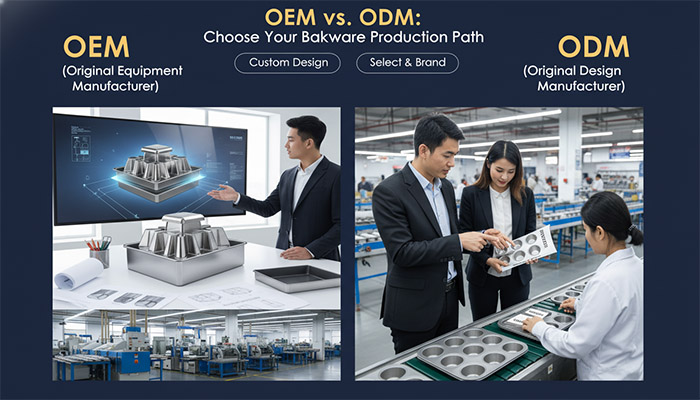
I founded my stainless steel kitchenware company, INOXICON, back in 1997. In the 28 years since, I've worked on over 1,200 projects with more than 500 partners around the world. The first major conversation we always have is about OEM versus ODM. It’s the foundational decision that impacts everything that follows. I’ve seen partners thrive by creating a completely unique product through OEM, and I’ve seen others achieve rapid success by launching a new line in weeks using our ODM catalog. Both paths can lead to success, but only if you choose the one that aligns with your specific business strategy. This article will break down each option in detail, using real examples from my experience, to help you make an informed and confident decision for your brand.
When is OEM the Right Choice for Your Bakeware Line?
Do you have a truly unique idea for a bakeware product that the market has never seen before? If you have a specific vision and the resources to develop it, OEM might be your path.
Choose OEM (Original Equipment Manufacturer) when you possess a complete, proprietary product design. You provide the detailed specifications, material requirements, and blueprints, and the manufacturer builds it exclusively for you. This path offers total control and creates a unique product that strengthens your brand.
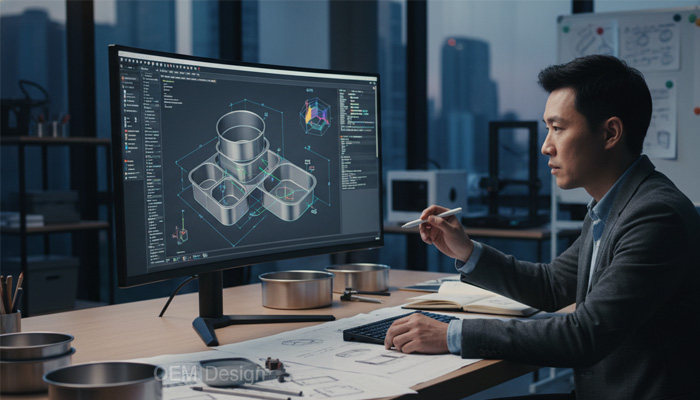
The OEM journey puts you in the role of the innovator. You are responsible for all the upfront research, design, and engineering. This is the ideal route when your brand's core value proposition is built on a unique feature, a patented mechanism, or a distinct aesthetic that sets you apart. It's about creating something that is 100% yours.
A Real-World OEM Project
I recall a partner from Germany who approached us with a brilliant concept for a collapsible, non-stick cooling rack made from stainless steel. They had invested heavily in the design phase and came to us with professional CAD files, precise dimensions, and specific material callouts for food-grade 304 stainless steel. They even had a patent pending. Our role was not to design, but to execute. We became their manufacturing arm. The process involved creating custom molds, producing several rounds of prototypes for them to test, and refining the production process to meet their exact quality standards. It was a six-month process from the first drawing to the first mass production run, but the result was a highly successful, exclusive product that became a bestseller for their brand. This is the essence of a successful OEM partnership.
The Financial and Timeline Realities of OEM
OEM is a significant investment. The biggest upfront cost is tooling, which refers to the custom molds and dies required to create your unique product. This can range from a few thousand to tens of thousands of dollars, depending on the complexity of your bakeware. This is a non-refundable expense. The timeline is also longer. You should budget for multiple rounds of prototyping to iron out any design flaws and ensure the final product is perfect. A typical OEM project, from initial discussion to shipment, can take anywhere from 6 to 12 months. This extended timeline is necessary to ensure quality and precision for a product that has never been made before.
| Pros of OEM | Cons of OEM |
|---|---|
| Full control over design, materials, and quality | Higher upfront investment in R&D and tooling |
| Creates a completely exclusive product for your brand | Much longer time to market (6-12 months) |
| Builds strong, unique brand identity and value | You bear full responsibility for design flaws |
| Higher potential profit margins on a unique product | Often requires higher initial MOQs to offset tooling costs |
Is ODM a Smarter Path for Speed and Lower Risk?
Are you looking to expand your kitchenware offerings or enter the bakeware market quickly? If speed is your priority and you want to avoid heavy upfront investment, ODM is an excellent strategy.
Yes, ODM (Original Design Manufacturer) is often the smartest choice for fast market entry and lower risk. You select a pre-designed, factory-tested product from the manufacturer's catalog and simply add your branding and packaging. This approach minimizes R&D costs and can get your product to market in a matter of weeks.
The ODM model is designed for efficiency. Think of it as leveraging the manufacturer's R&D department as your own. At INOXICON, our five senior designers create over 50 new stainless steel kitchenware products each year. These aren't just concepts; they are fully engineered, prototyped, and tested designs ready for production. This catalog includes everything from mixing bowls and measuring spoons to baking sheets and utensil sets. When a partner chooses an ODM product, they are getting a proven design that we know is functional, durable, and aligned with current market trends.
The Customization Spectrum in ODM
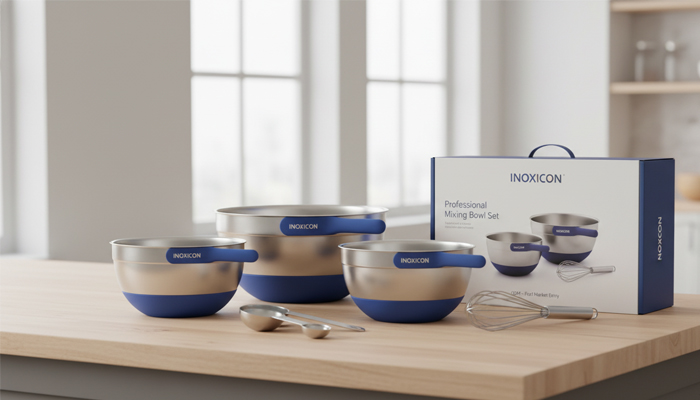
A common misconception is that ODM is just "logo-slapping." While that is the most basic form, a good manufacturing partner will offer a range of customization options to help the product feel more unique to your brand. For example, a client might choose one of our stainless steel mixing bowl sets. From there, we can:
- Customize the Finish: They can choose between a standard polished finish, a modern brushed finish, or even a powder-coated color on the exterior.
- Modify Components: We can add or change silicone bases for non-slip functionality or add silicone handles to the rims for a better grip, with colors matched to their brand palette.
- Brand Application: We can apply their logo through laser etching for a premium feel or stamping for a more classic look.
- Packaging: We work with them to design fully custom retail packaging, from the box design to the instruction manual inside. This level of customization allows our partners to launch a product that feels unique to their brand, but on a much faster timeline and with a much lower budget than OEM. We’ve helped clients launch entire bakeware lines this way, going from selection to store shelves in under three months.
Who Benefits Most from ODM?
ODM is particularly powerful for specific types of businesses. New importers can use it to test the waters in a market with a low MOQ of just 500 pieces, minimizing inventory risk. Established wholesalers can quickly expand their catalog to meet new customer demands without a long development cycle. E-commerce brands on platforms like Amazon can rapidly launch new products to capitalize on emerging trends. For these businesses, the speed and cost-effectiveness of ODM provide a significant competitive advantage.
| Pros of ODM | Cons of ODM |
|---|---|
| Extremely fast time to market (often 4-8 weeks) | The core product design is not exclusive to you |
| Very low or no R&D and tooling costs | Competitors may sell a very similar-looking item |
| Products are based on proven, factory-tested designs | Less control over core product specifications |
| MOQs are generally much lower than OEM | Harder to build a brand based on unique innovation |
How Do You Choose the Right Manufacturing Partner?
You’ve decided between OEM and ODM, and you know your budget and timeline. Now comes the most critical step: finding a reliable manufacturing partner who can deliver on your vision.
Choose a manufacturer with extensive, verifiable experience in your product category. Look for strong in-house engineering, transparent communication, and a proven quality control system. Always verify their compliance certifications (like FDA, LFGB, REACH) to ensure market access.
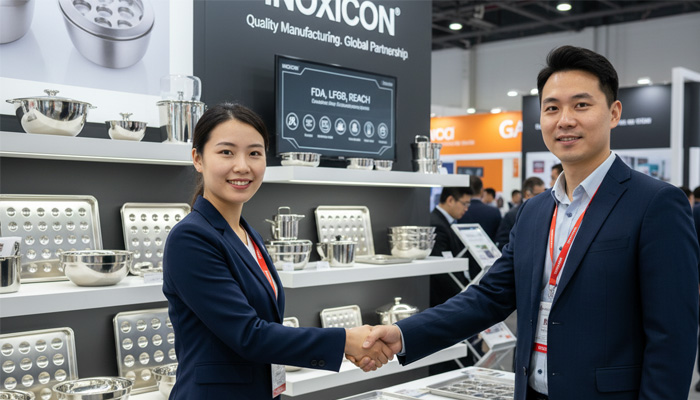
Your manufacturer is more than just a supplier; they are a partner in your business's success. Their expertise, or lack thereof, will directly impact your product's quality, your delivery schedule, and your bottom line. A great partner does more than just take orders. They should act as a consultant, using their experience to guide you, flag potential issues, and help you optimize your product for both quality and cost. This is especially true for OEM projects, where their engineering input can turn a good design into a great, manufacturable product. For ODM, their market knowledge should inform the catalog of products they offer, ensuring they are relevant and desirable.
Vetting Your Partner: A Practical Checklist
When I meet a potential new client, I encourage them to ask me the tough questions. You should do the same with any potential supplier. Here is a checklist to guide your conversations:
- Factory Tour & Audits: Can you arrange a factory tour, either in person or virtually? Are they open to third-party audits from firms like SGS or Intertek? A confident manufacturer has nothing to hide.
- Experience in Your Market: Ask for case studies or references from clients in your country (e.g., North America, Europe, Japan). This proves they understand your market's quality expectations and compliance rules. We are always proud to share our successful partnerships.
- In-House Capabilities: Do they have an in-house design and engineering team? A dedicated team means they can solve problems quickly and offer valuable insights, rather than outsourcing and causing delays. Our team of 5 senior designers is a core part of our value.
- Quality Control Documentation: Ask to see their Quality Control process. How do they inspect raw materials? What checks are done during production and before shipment? A documented process shows a commitment to consistency.
- Communication & Responsiveness: During your initial interactions, how quickly and clearly do they respond? Miscommunication is one of the biggest causes of project failure. A responsive partner is invaluable.
Finding the right manufacturer is a process of due diligence. It takes time, but investing that time upfront will save you from costly problems down the road. This is the foundation of a long-term, profitable relationship.
Conclusion
Understanding the difference between OEM and ODM is your first step. Choosing the right path for your brand and performing due diligence to select a trustworthy partner will ensure your new bakeware line is a success.