
Tired of seeing rust complaints and sharp edge reviews on a "simple" product? Your stainless steel colander sourcing strategy might be killing your profits and your Amazon listing's reputation.
To avoid bad reviews, choose a 304 stainless steel colander with a solid thickness (0.6mm+), smooth rolled edges, and micro-perforated holes. A stable, footed base and smart nesting design for sets are also key factors that prevent returns and build a five-star reputation on Amazon.
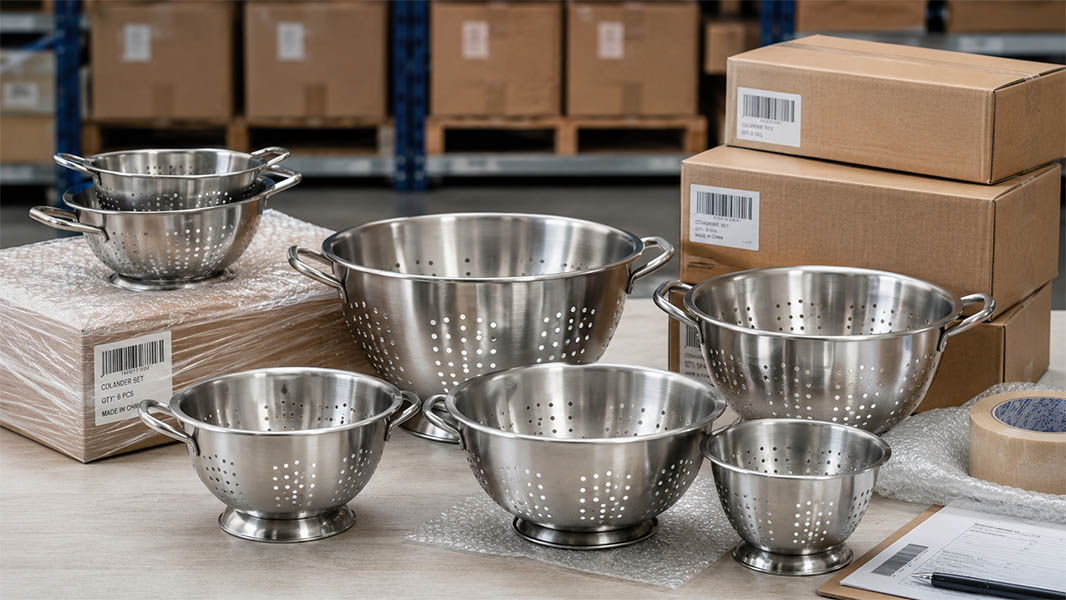
As a manufacturer, I've worked with hundreds of Amazon sellers over the years. I've seen firsthand how a seemingly simple product like a stainless steel colander can become a nightmare of returns and negative reviews. The problem usually starts long before the product hits the FBA warehouse. It starts with the sourcing decisions you make. Choosing the right colander isn't about finding the absolute lowest price; it's about finding a product that minimizes complaints and gives you strong, defensible selling points. This guide breaks down the critical details I discuss with sellers every day to help them build successful kitchenware listings.
What Material Should You Choose for a Rust-Proof Reputation?
Struggling with "rust spots" or "not stainless" reviews on your listing? These complaints can quickly damage your product's ranking and customer trust, turning a profitable product into a liability.
Choose 304 (18/8) stainless steel to build a rust-resistant reputation. This material offers superior corrosion resistance compared to 201 or 430 steel, especially against detergents and heat from dishwashers, directly addressing the number one customer complaint about rust.
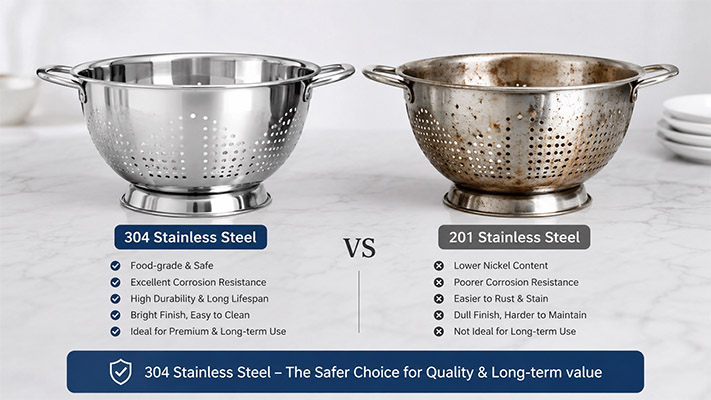
When I talk to Amazon sellers, the fear of "rust" reviews is always at the top of their list. A single picture of a rust spot in a customer review can tank your conversion rate. The truth is, not all stainless steel is created equal. While cheaper materials like 201 or 430 stainless steel can lower your initial cost, they are far more likely to develop rust or stains over time, especially when exposed to the high heat and harsh detergents of a dishwasher—a key feature for Amazon shoppers.
For a mid-to-premium Amazon listing, insisting on 304 stainless steel is non-negotiable. It forms the foundation of key marketing claims like "rust-resistant," "dishwasher safe," and "food-grade." Here's a simple breakdown I use with clients:
| Material Grade | Key Benefit | Main Risk for Amazon Sellers |
|---|---|---|
| 304 (18/8) | Superior rust & corrosion resistance | Higher initial cost |
| 201 | Low cost | High risk of rust complaints |
| 430 | Magnetic, cost-effective | Lower corrosion resistance than 304 |
While the cost is slightly higher, investing in 304 steel is an investment in your listing’s longevity. It's the best way to proactively eliminate the most common and damaging type of negative review before it ever gets posted.
How Does Thickness and Structure Affect Your Amazon Reviews?
Are you getting reviews calling your product "flimsy," "cheap," or "dented on arrival"? A thin, lightweight colander can instantly signal poor quality to a customer, regardless of its functionality.
A colander's perceived quality is directly tied to its thickness and structure. A metal thickness of at least 0.6mm provides a solid feel, resists dents during shipping, and supports a stable base, preventing negative reviews that complain about the product feeling "cheap" or "flimsy."
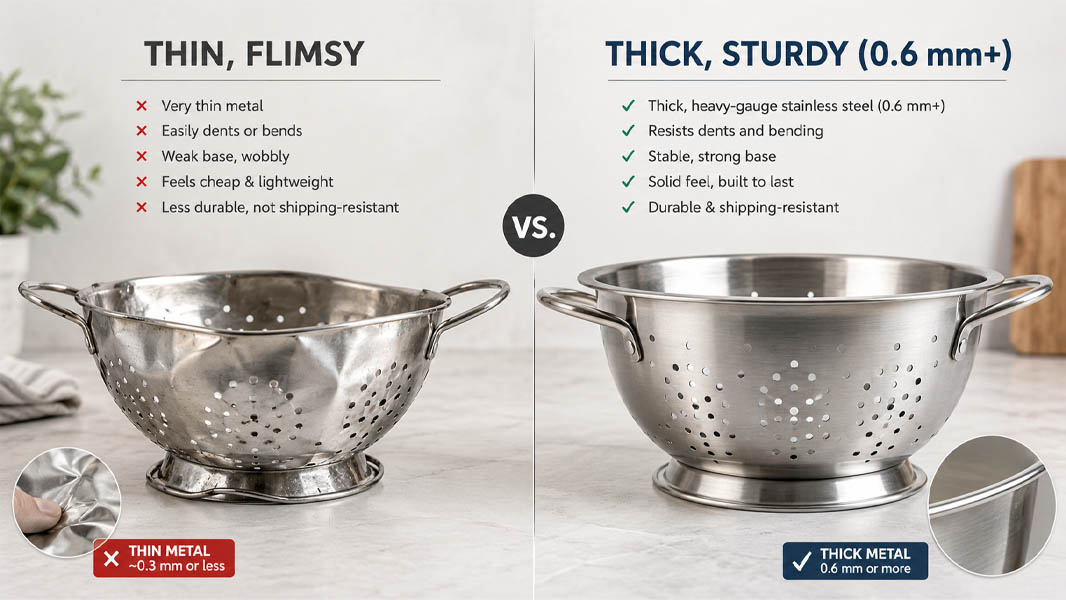
Customers judge quality with their hands. When they unbox your colander, the first thing they notice is its weight and rigidity. A thin colander that flexes easily or arrives with a dent feels like a bad purchase, even if it drains pasta perfectly. This "perceived value" is critical on Amazon. As a manufacturer, I always advise sellers to think beyond just the function and consider the customer's first impression.
Here are the structural details that matter for avoiding "cheap feel" complaints:
Key Structural Checks for a Premium Feel
- Body Thickness: Aim for 0.6mm or higher. Anything less can feel flimsy and is more prone to denting during FBA transit.
- Rim Strength: A thick, rolled rim not only feels safer but also adds significant structural integrity, preventing the bowl from deforming.
- Base Stability: The base ring must be sturdy and securely welded. An unstable base that wobbles is a common source of negative reviews.
- Overall Weight: While you want to manage FBA shipping costs, a product that is too light will almost certainly be described as "cheap." Find the right balance between a solid feel and manageable shipping weight.
Serious Eats, in their 2026 review of the best colanders, highlighted that a good colander has a sturdy build. This shows that even product experts, not just everyday customers, value a product that feels durable and well-made. Don't let a few cents saved on material thickness cost you dollars in returns and bad reviews.
Which Colander Hole Design Prevents Bad Reviews and Food Waste?
Worried your colander will work for pasta but fail miserably for rice or quinoa? Choosing the wrong hole design can lead to customer frustration, bad reviews, and returns.
Micro-perforated holes are the best all-around choice for Amazon. This design drains water quickly while preventing small foods like rice, quinoa, and orzo from falling through, creating a powerful selling point that directly addresses a common customer pain point.
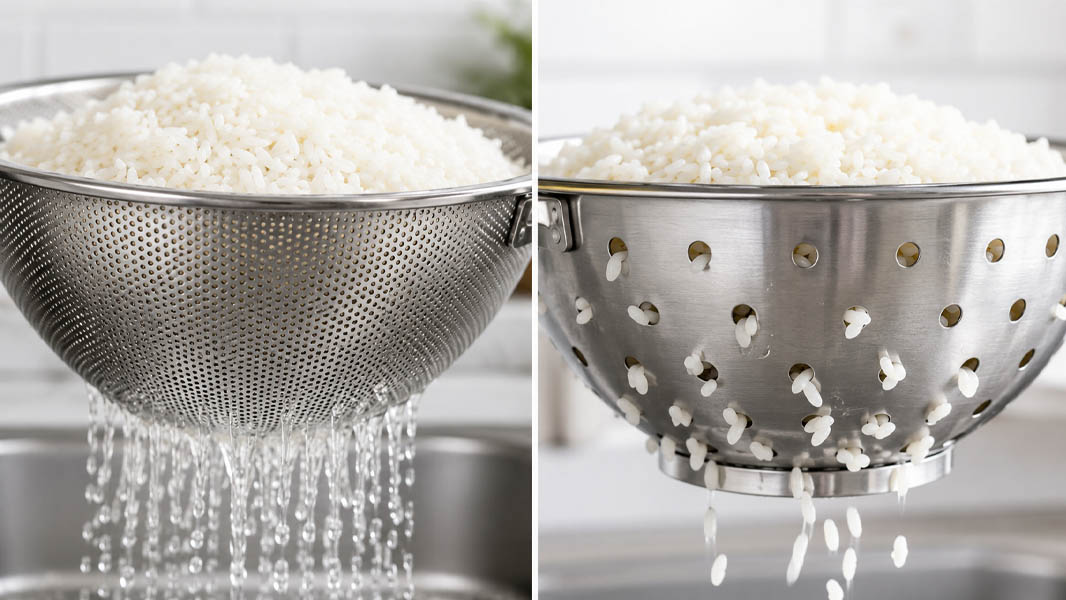
The primary job of a colander is to drain, but the how is what separates a great product from a frustrating one. Your customer might use the same colander to rinse berries in the morning, drain pasta for dinner, and wash quinoa for lunch. If your hole design only works for one of these tasks, you're setting yourself up for complaints.
Food Network's testing confirms that small, closely spaced holes provide fast drainage without sacrificing food. This is why I guide my Amazon clients toward designs that offer the most versatility.
Let's compare the options from a seller's perspective:
| Hole Design | Best Selling Point | Potential Complaint |
|---|---|---|
| Large Round Holes | "Great for Pasta & Veggies" | "My rice fell through!" |
| Slits or Slots | Unique aesthetic | Can be slower to drain |
| Micro-perforated | "Drains Fast, No Food Lost" | Slightly higher cost |
From a listing optimization standpoint, "micro-perforated" is a fantastic keyword. It sounds technical, premium, and immediately communicates a solution to a known problem. By choosing this design, you can easily differentiate your product from cheaper, large-holed colanders and justify a higher price point. It’s a feature that looks great in photos and performs even better in the kitchen, leading to happier customers and better reviews.
Should You Sell Single Colanders or Sets to Maximize Profit?
Are you debating whether to launch a single 5QT colander or a 3-piece nesting set? This decision impacts your price point, FBA fees, shipping risks, and perceived customer value.
For Amazon FBA, a well-designed 3-piece nesting set often provides the best value. It increases the average order value, looks more substantial in photos, and appeals to customers looking for a complete solution. However, success depends entirely on a compact, scratch-proof nesting design.
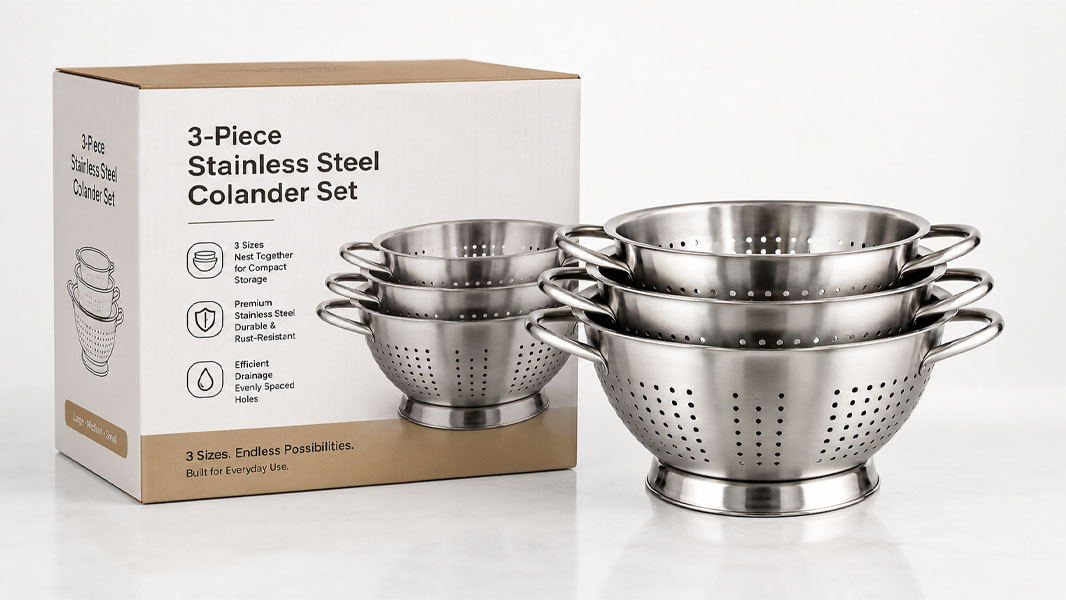
On Amazon, it's often easier to sell one customer a $30 set than it is to sell three customers a $12 single item. Sets naturally have a higher perceived value. Customers see a 3-piece set as a bargain and a one-and-done purchase for their kitchen. This is why I often see sellers have great success with sets.
However, the operational side can be tricky. A poorly designed set can be an FBA nightmare. The items can scratch each other in transit, and the bulky packaging can lead to unexpectedly high storage and shipping fees. The key is efficient nesting. When the colanders stack perfectly with minimal wasted space, you control the package volume and, therefore, the FBA costs.
Here's how to weigh the options:
| Product Format | Advantages | FBA Risks to Manage |
|---|---|---|
| Single Colander | Lower entry price, lower FBA fees | Lower perceived value, high competition |
| 3-Piece Set | Higher price point, better value perception | Packaging volume, transit scratching, higher return cost |
When sourcing a set, you must ask your supplier: "How well do these nest?" and "What scratch protection is used between pieces?" A supplier who understands Amazon FBA will have already solved these problems with smart nesting designs and protective interleaving paper or polybags.
Why Are Small Safety Details a Big Deal for Your Listing's Survival?
Think a small burr on a hole or a rough edge on the rim is no big deal? On Amazon, a review titled "Sharp edge, cut my hand!" is a listing killer.
Your product's edge finishing is a critical safety and review factor. A smooth, rolled rim and deburred holes are non-negotiable. These details prevent dangerous "sharp edge" complaints that can get your listing suspended and destroy customer trust in your brand.
In my 29 years of manufacturing stainless steel kitchenware, I've learned that the details customers can feel are the most important. A colander might look perfect in a photo, but a single sharp point can turn a 5-star experience into a 1-star review and a safety complaint. Amazon takes these reports very seriously, and they can be incredibly damaging to your brand's reputation.
When you're inspecting samples or setting quality standards with your manufacturer, you need to act like your own most critical customer. Run your fingers over every surface. These are the specific points I tell my clients to check:
The Safety Detail Checklist
- Rim Edge: Is it fully rolled and smooth, or is it a simple cut edge that feels sharp?
- Hole Edges (Inside and Out): Are there tiny metal burrs left from the punching process? These can snag food and fingers.
- Handle Joints: Are the welds or rivets smooth, or are there rough spots?
- Base Welding: Are the welding points for the base ring smooth, or are they sharp and poorly finished?
A good manufacturer doesn't see these as extra features; they are part of the standard process for producing a safe, high-quality product. A colander is a low-cost item with a high risk for reviews. Investing in smooth, safe finishing isn't just about making a better product—it's about protecting your entire business on Amazon.