
After 29 years manufacturing aluminum cookware, I see buyers struggle with core versus specialty options daily. Wrong choices mean lost profits and unhappy customers.
Core aluminum cookware offers reliable performance for everyday cooking, while specialty options provide enhanced features like hard-anodized surfaces or composite construction. Understanding these differences helps importers select products that match their market positioning and customer needs.
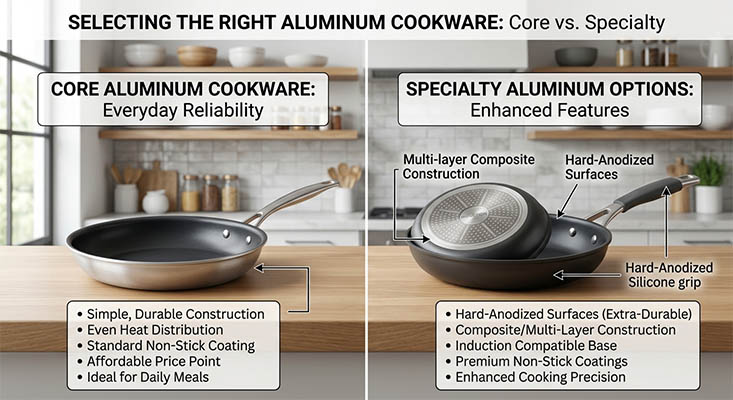
The aluminum cookware market splits into two distinct categories. Each serves different customer segments and price points. Making the right choice affects your entire product line success.
What Makes Core Aluminum Cookware the Industry Standard?
Most manufacturers position core aluminum as their backbone product line. These pieces handle daily kitchen demands without breaking budgets.
Core aluminum cookware uses 3003-series alloy construction for balanced durability and heat distribution. Standard thickness ranges from 2.5-4mm, providing excellent thermal conductivity at competitive price points for high-volume retail markets.
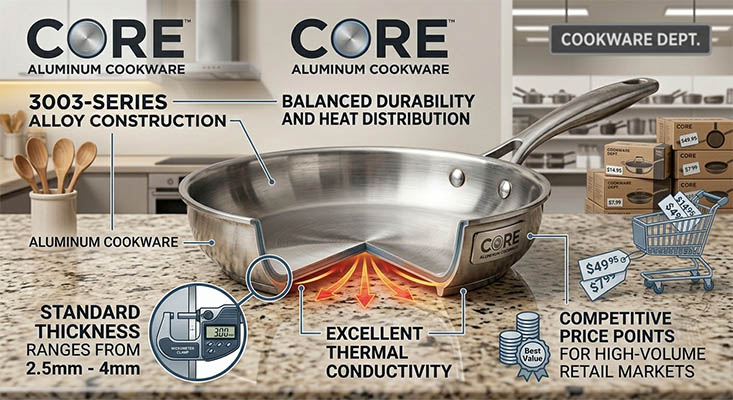
Core aluminum represents the sweet spot between performance and affordability. We manufacture these pieces using 3003-series aluminum alloy because it offers the best balance of workability and strength. The material conducts heat evenly across the cooking surface, reducing hot spots that can burn food.
Most core aluminum pieces feature medium-gauge construction between 2.5-4mm thickness. This provides solid heat retention without making pans too heavy for everyday use. The weight feels substantial in hand but remains manageable for home cooks and commercial kitchen staff.
Manufacturing costs stay lower because we use standard aluminum grades and straightforward forming processes. No special treatments or complex layering systems are needed. This translates to better margins for importers while maintaining quality standards customers expect.
Maintenance requirements are minimal. Most pieces can go in dishwashers, though hand washing extends their lifespan. The natural aluminum surface develops a protective patina over time when properly seasoned. This creates a naturally non-stick surface without additional coatings.
The versatility of core aluminum makes it perfect for universal cooking methods. Whether customers are searing steaks, making sauces, or preparing stir-fries, these pans deliver consistent results. This universality means fewer SKUs needed to cover customer needs, simplifying inventory management for retailers.
Production volumes for core aluminum remain high because demand stays consistent across all markets. We can achieve economies of scale that benefit both manufacturers and importers. Supply chain stability is excellent since raw materials are readily available worldwide.
| Feature | Core Aluminum | Benefit for Buyers |
|---|---|---|
| 3003 Alloy | Standard grade | Lower cost, reliable supply |
| 2.5-4mm thickness | Medium gauge | Good performance/price ratio |
| No special coatings | Simple construction | Higher profit margins |
| Even heat distribution | Consistent cooking | Customer satisfaction |
Why Do Specialty Aluminum Options Command Premium Pricing?
Specialty aluminum cookware targets customers who need enhanced performance or specific cooking capabilities. These products justify higher retail prices through advanced features.
Specialty aluminum includes hard-anodized surfaces, cast construction, composite layers, and pre-seasoned finishes. Each type addresses specific cooking needs like enhanced durability, superior heat retention, or induction compatibility through engineered construction methods.
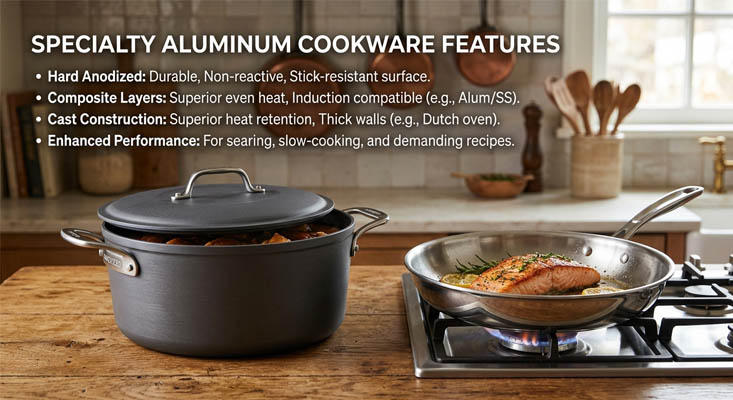
Hard-anodized aluminum undergoes electrochemical treatment that creates an extremely durable surface. This process makes the aluminum twice as hard as stainless steel while maintaining excellent heat conductivity. The surface resists scratching, staining, and corrosion better than standard aluminum.
Cast aluminum construction uses thicker material and different forming methods. We pour molten aluminum into molds rather than stamping from sheet metal. This creates heavier pieces with superior heat retention. Cast aluminum works especially well for slow cooking methods and searing applications.
Composite aluminum combines aluminum cores with stainless steel exteriors. The aluminum provides excellent heat distribution while stainless steel offers durability and induction compatibility. These multi-layer constructions cost more to manufacture but appeal to customers with induction cooktops.
Pre-seasoned aluminum arrives ready to use with factory-applied seasoning. This eliminates the break-in period customers typically associate with aluminum cookware. The seasoning creates immediate non-stick properties and prevents reactions with acidic foods.
Textured surfaces and specialized coatings add functionality for specific cooking techniques. Ribbed grill pans create attractive sear marks. Ceramic-reinforced coatings provide easy food release. Each feature addresses particular customer needs while supporting premium pricing.
The manufacturing complexity of specialty aluminum requires advanced equipment and skilled operators. Investment in specialized tooling and processes gets reflected in higher unit costs. However, these products often carry 40-60% higher retail prices, improving profit margins for importers willing to educate their customers about the benefits.
Market positioning becomes crucial with specialty aluminum. These products need proper merchandising and customer education to justify premium pricing. Retailers who understand the value proposition can successfully compete against lower-priced alternatives by focusing on performance benefits.
How Should Importers Evaluate Aluminum Thickness and Construction Quality?
Aluminum thickness directly impacts cooking performance, durability, and manufacturing costs. Understanding gauge measurements helps buyers make informed decisions about product positioning.
Aluminum cookware thickness ranges from 1.5mm for budget lines to 6mm+ for professional grades. Thicker aluminum provides better heat distribution and retention but increases weight and cost. Optimal thickness depends on target market and price positioning.
Aluminum thickness gets measured in millimeters or gauge numbers. Lower gauge numbers indicate thicker metal. For cookware, we typically see ranges from 1.5mm (very thin) up to 6mm or more (very thick). Each thickness level serves different market segments and cooking applications.
Thin aluminum (1.5-2mm) works for budget-conscious consumers who need basic cooking functionality. These pieces heat quickly but may develop hot spots or warp over time. Manufacturing costs stay low, allowing competitive retail pricing. However, durability concerns limit their appeal in premium markets.
Medium-thick aluminum (2.5-4mm) represents our most popular specification range. This thickness provides good heat distribution without excessive weight or cost. Home cooks find these pieces easy to handle while professional kitchens appreciate their consistent performance. Manufacturing costs remain reasonable while quality meets most customer expectations.
Heavy-gauge aluminum (4.5-6mm+) targets serious home cooks and commercial operations. Thicker construction delivers superior heat retention and even cooking. These pieces feel substantial and professional. However, increased material costs and weight affect both manufacturing expenses and shipping charges.
Construction methods also affect quality beyond simple thickness measurements. Forged aluminum uses compression forming that creates denser metal structure. Spun aluminum shapes the metal while rotating, creating smooth, consistent thickness. Each method impacts final product characteristics and manufacturing costs.
Bottom construction deserves special attention when evaluating aluminum cookware. Flat, smooth bottoms ensure even contact with heating elements. Slight concavity when cold allows for proper expansion during heating. Poor bottom flatness causes hot spots and unstable cooking performance.
Rim construction affects both functionality and durability. Rolled rims provide strength and comfortable pouring. Sharp, thin rims may chip or bend easily. Wide, flat rims work better for lid sealing. Each design choice affects manufacturing difficulty and final product cost.
| Thickness Range | Target Market | Key Benefits | Considerations |
|---|---|---|---|
| 1.5-2mm | Budget/Entry | Low cost, quick heating | May warp, hot spots |
| 2.5-4mm | Mainstream | Balanced performance | Best volume potential |
| 4.5-6mm+ | Premium/Pro | Superior heat retention | Higher cost, heavier |
Which Coating Options Deliver the Best ROI for Your Market?
Coating choices significantly impact product performance, customer satisfaction, and profit margins. Different coatings serve various cooking styles and maintenance preferences.
Non-stick coatings offer easy food release but require careful use and eventual replacement. Hard-anodized surfaces provide durability without coatings. Ceramic reinforcement combines non-stick properties with scratch resistance. Each option targets different customer segments and price points.
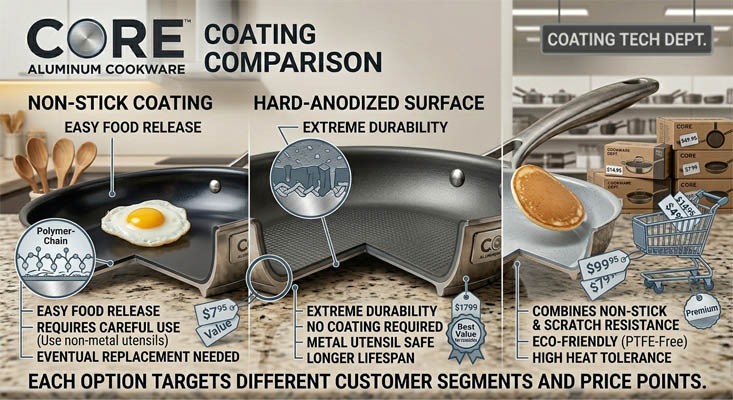
Traditional non-stick coatings use PTFE (polytetrafluoroethylene) technology for excellent food release properties. These coatings work well for low-fat cooking and easy cleanup. However, they require careful temperature control and gentle handling to maintain performance. Coating degradation means eventual replacement needs.
Ceramic-reinforced coatings combine non-stick properties with improved durability. These systems resist scratching better than standard PTFE while maintaining easy food release. Manufacturing costs increase slightly, but customer satisfaction often improves due to longer coating life.
Hard-anodized surfaces create natural non-stick properties without applied coatings. The electrochemical treatment hardens the aluminum surface while maintaining its cooking properties. No coating means no degradation concerns, but seasoning requirements may deter some customers.
Seasoned finishes apply during manufacturing to create immediate non-stick properties. These surfaces improve with proper use and care. Customers appreciate the traditional cooking experience, but maintenance requirements can challenge less experienced cooks.
Uncoated aluminum offers the most authentic cooking experience and longest potential lifespan. Proper seasoning creates excellent non-stick properties while allowing high-heat cooking techniques. However, initial preparation requirements and potential reactions with acidic foods limit mass market appeal.
Market research shows different regions prefer different coating approaches. European customers often prefer hard-anodized or uncoated options for durability. North American markets gravitate toward convenient non-stick coatings. Asian markets show growing interest in ceramic-reinforced systems.
Cost analysis reveals coating decisions significantly impact profit margins. Uncoated aluminum offers highest margins but requires customer education. Basic non-stick coatings provide good balance of performance and cost. Premium ceramic systems command higher retail prices but require larger initial investments.
Coating application quality varies significantly between manufacturers. Poor adhesion leads to early coating failure and customer complaints. Proper surface preparation, controlled application environments, and curing processes are essential for coating longevity. Quality coating systems require specialized equipment and trained operators.
How Do You Choose the Right Aluminum Cookware Manufacturer?
Selecting the right manufacturing partner affects product quality, delivery reliability, and long-term business success. Not all aluminum cookware manufacturers offer the same capabilities or service levels.
Evaluate manufacturers based on production capacity, quality certifications, design capabilities, and communication responsiveness. Look for partners with consistent aluminum sourcing, advanced forming equipment, and proven export experience to major markets worldwide.
Production capacity determines whether manufacturers can handle your volume requirements and growth plans. Our facility produces over 30,000 pieces daily using 95 advanced machines. This capacity allows us to handle both small test orders starting at 500 pieces and large production runs exceeding 50,000 units.
Quality certifications show manufacturers meet international standards for food contact materials. Look for LFGB compliance for European markets, FDA approval for North American sales, and REACH conformity for chemical safety. These certifications require regular testing and documentation that serious manufacturers maintain consistently.
Design capabilities separate innovative manufacturers from simple production houses. Our five senior designers with 15+ years experience develop over 50 new products annually. This innovation pipeline keeps your product lines fresh and competitive against market trends and competitor offerings.
Raw material sourcing stability affects both quality consistency and pricing predictability. Manufacturers with direct aluminum supplier relationships maintain better cost control and quality standards. Spot market purchasing creates price volatility and potential quality variations that affect your business planning.
Communication responsiveness becomes critical when managing international supply chains. Time zone differences and language barriers can complicate product development and order management. Manufacturers with dedicated export teams and English-speaking staff reduce miscommunication risks that lead to production delays or specification errors.
Manufacturing flexibility allows adaptation to changing market demands. Rigid production systems struggle with custom requirements or urgent delivery needs. Our optimized processes deliver 40% faster than industry averages while maintaining quality standards across all product categories.
Technical expertise helps solve complex manufacturing challenges and develop custom solutions. Manufacturers with engineering teams can optimize designs for cost reduction while maintaining performance. This technical support becomes valuable when developing private label products or adapting existing designs for specific markets.
Financial stability ensures manufacturers can invest in equipment upgrades, quality improvements, and capacity expansion. Financially stressed manufacturers may cut corners on quality or struggle to fulfill large orders. Due diligence on manufacturer financial health protects your supply chain reliability.
Testing and quality control capabilities verify products meet specifications before shipping. In-house testing labs reduce delays and ensure consistency. Third-party testing relationships provide independent verification when required by customers or regulations.
Export experience with your target markets reduces customs and regulatory compliance risks. Manufacturers familiar with specific country requirements can provide proper documentation and avoid shipping delays. Our experience across 50+ countries helps navigate complex international trade requirements.
Conclusion
Choose core aluminum for volume sales and specialty options for premium positioning. Match thickness and coatings to your target customers' cooking habits and maintenance preferences.