
Aluminum cookware confusion costs importers thousands in wrong inventory decisions. Smart buyers know the six distinct categories. Each serves different market segments with unique profit margins.
The global aluminum cookware wholesale market features six primary categories: pure aluminum, hard-anodized, non-stick coated, multi-layer composite, cast aluminum, and ceramic-coated products. Each type targets specific consumer needs and price points.
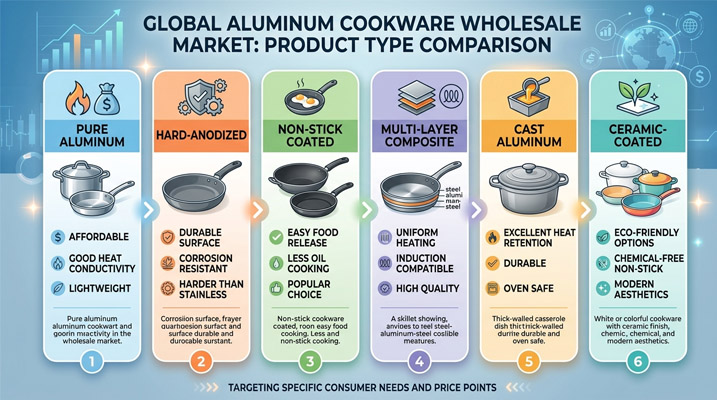
After 29 years in kitchenware manufacturing, I have watched aluminum cookware evolve from simple pure aluminum pots to sophisticated multi-layer systems. The variety can overwhelm new importers, but understanding each type helps you choose the right products for your market.
Why Does Pure Aluminum Cookware Still Dominate Commercial Kitchen Orders?
Budget-conscious commercial buyers choose pure aluminum for its unmatched heat transfer. Restaurant owners know lightweight means less worker fatigue. Price sensitivity drives volume purchases in foodservice segments.
Pure aluminum cookware offers the lightest weight and fastest heat conduction at the lowest cost. However, it reacts with acidic foods and requires seasoning to prevent sticking.
Pure aluminum remains the backbone of commercial kitchen operations worldwide. I see consistent demand from restaurant supply distributors who serve high-volume kitchens. The material conducts heat three times faster than stainless steel, which matters when you cook for hundreds daily.
The main challenge with pure aluminum lies in its reactivity. Acidic foods like tomatoes or citrus cause the aluminum to leach into food, creating metallic tastes and discoloration. This limits its use in home kitchens where consumers cook diverse cuisines. Commercial kitchens often work around this by using pure aluminum for specific tasks like boiling water or cooking non-acidic foods.
Weight becomes crucial in busy kitchens. A pure aluminum stockpot weighs 40% less than its stainless steel equivalent. Kitchen staff appreciate this when moving large pots filled with soup or sauce. The durability concerns matter less in commercial settings where pots receive regular replacement as part of operational costs.
Price sensitivity drives most commercial purchases. Pure aluminum costs roughly 60% less than hard-anodized alternatives while delivering superior heat performance. This cost advantage explains why brands like Vollrath and Wear-Ever maintain strong positions in the commercial market despite the material's limitations.
How Does Hard-Anodized Aluminum Solve the Reactivity Problem?
Hard-anodization creates a protective barrier that prevents food interaction. The electrochemical process forms a surface harder than stainless steel. Premium brands position this as the professional choice for serious home cooks.
Hard-anodized aluminum undergoes electrochemical treatment creating a non-reactive, scratch-resistant surface. This process combines aluminum's heat conductivity with the durability of harder materials.
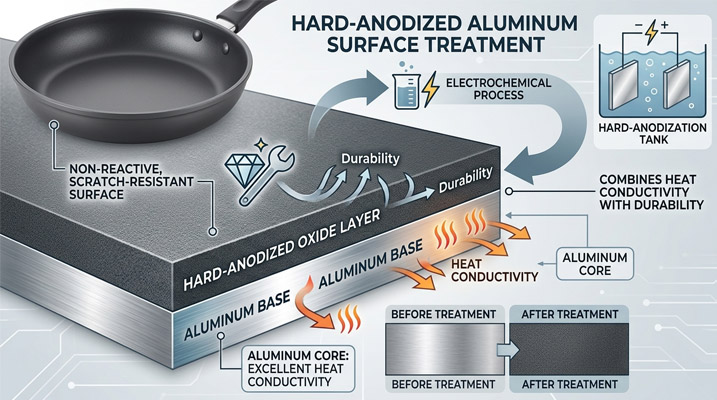
Hard-anodization transforms regular aluminum into a premium cooking surface through controlled oxidation. The process creates an aluminum oxide layer that measures harder than many knife blades. This innovation solved aluminum's biggest weakness while preserving its thermal advantages.
The anodization process involves immersing aluminum in an acid bath while applying electrical current. This creates microscopic pores that then seal to form a completely non-reactive surface. The resulting cookware handles acidic ingredients without flavor changes or discoloration. Home cooks can prepare tomato sauces or wine reductions without concern.
Durability becomes a major selling point for retail markets. Hard-anodized surfaces resist scratching from metal utensils and maintain their appearance through thousands of cooking cycles. This longevity justifies higher price points for consumers seeking long-term value. Brands like Calphalon built entire product lines around this technology.
Heat distribution improves compared to pure aluminum due to the uniform surface treatment. The anodized layer creates consistent thermal properties across the entire cooking surface. This eliminates hot spots that can burn delicate sauces or proteins. Professional chefs and serious home cooks recognize this advantage.
Manufacturing costs increase significantly due to the specialized anodization process. However, the premium positioning allows for higher wholesale margins. Importers targeting mid-to-upper market segments find strong demand for hard-anodized products, especially in cookware sets marketed to cooking enthusiasts.
What Makes Non-Stick Coated Aluminum the Consumer Favorite?
Easy cleanup drives consumer preference in busy households. Non-stick surfaces require minimal oil, appealing to health-conscious buyers. Parents choose non-stick for stress-free cooking with children around.
Non-stick coated aluminum combines aluminum's heat distribution with PTFE or ceramic coatings for effortless food release. These products excel at low-fat cooking but require careful temperature control.
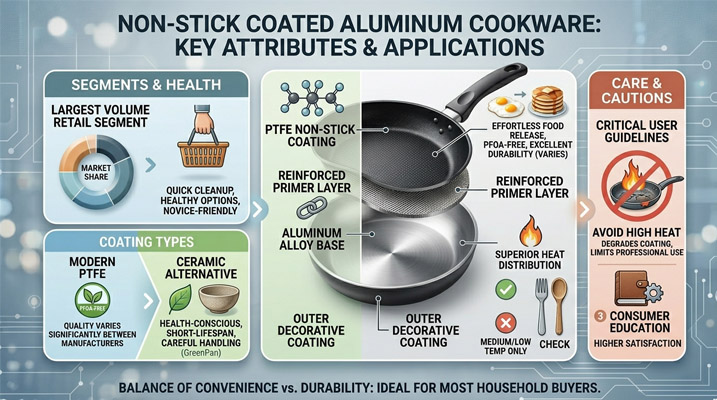
Non-stick coated aluminum represents the largest volume segment in retail cookware sales. The combination addresses consumer pain points directly: quick cleanup, healthy cooking options, and foolproof results for novice cooks. Every major cookware brand offers extensive non-stick aluminum lines.
PTFE coatings dominate the market despite ongoing health concerns about fluorinated chemicals. Modern PTFE formulations eliminate PFOA while maintaining excellent release properties. The coating bonds to aluminum through primer layers that ensure durability. Quality varies significantly between manufacturers, affecting both performance and lifespan.
Ceramic coatings emerged as the "healthy" alternative to PTFE systems. Brands like GreenPan pioneered ceramic non-stick technology targeting health-conscious consumers. However, ceramic coatings typically offer shorter lifespans and require more careful handling than traditional PTFE options.
Temperature sensitivity limits professional use of non-stick coatings. Excessive heat degrades both PTFE and ceramic surfaces, releasing potentially harmful compounds or simply destroying the non-stick properties. This restricts their use to medium and low-temperature cooking methods.
Consumer education remains crucial for non-stick success. Proper use involves avoiding metal utensils, limiting maximum temperatures, and accepting eventual replacement needs. Retailers that provide clear care instructions see higher customer satisfaction and fewer returns. The convenience factor usually outweighs durability concerns for most household buyers.
Why Do Professional Chefs Choose Multi-Layer Composite Aluminum Cookware?
Induction compatibility opens all stovetop options for modern kitchens. The stainless steel exterior provides durability while aluminum cores ensure even heating. High-end restaurants invest in cookware that performs consistently across all cooking methods.
Multi-layer composite cookware sandwiches aluminum cores between stainless steel layers, combining superior heat distribution with induction compatibility and non-reactive cooking surfaces.
Multi-layer construction represents the engineering pinnacle of aluminum cookware design. These products typically feature aluminum or copper cores bonded between stainless steel layers that extend up the sidewalls. This configuration delivers aluminum's thermal properties while solving its compatibility and reactivity issues.
Induction cooktop compatibility drives much of the premium market demand. Pure aluminum cannot work with induction heating, but the magnetic stainless steel exterior allows these composite pans to function on all cooktop types. This versatility appeals to consumers who want future-proof cookware investments.
The bonding process requires sophisticated manufacturing equipment and precise temperature control. Layers must expand and contract at similar rates to prevent delamination during repeated heating cycles. Quality manufacturers like All-Clad invest heavily in bonding technology to ensure long-term durability.
Thermal performance often exceeds pure aluminum due to the extended sidewall construction. Heat spreads more evenly from bottom to rim, eliminating the hot spots common with thin-based cookware. This performance characteristic justifies premium pricing in professional and enthusiast markets.
Manufacturing complexity increases costs significantly compared to single-layer alternatives. However, the premium positioning allows for higher wholesale margins. Importers serving upscale kitchen stores and culinary professionals find strong demand despite higher price points. The products appeal to consumers viewing cookware as long-term investments rather than disposable items.
How Does Cast Aluminum Compare to Traditional Pressed Aluminum Products?
Casting creates thicker walls that store and distribute heat more evenly. The process allows for complex shapes like Dutch ovens and roasting pans. Professional bakers prefer cast aluminum for its consistent temperature maintenance.
Cast aluminum cookware uses molten aluminum poured into molds, creating thicker walls and better heat retention than stamped alternatives. This manufacturing method suits specialty items like Dutch ovens and baking pans.
Cast aluminum manufacturing involves pouring molten aluminum into shaped molds rather than stamping flat sheets. This process creates significantly thicker walls that improve heat retention and distribution. The additional mass helps maintain consistent temperatures during cooking, especially important for braising and slow-cooking applications.
The casting process allows for complex geometries impossible with stamped construction. Dutch ovens, roasting pans, and specialty baking forms benefit from the design flexibility. Manufacturers can incorporate integral handles, spouts, and other features that would require separate assembly with stamped products.
Heat retention characteristics make cast aluminum ideal for specific cooking methods. The thicker walls store thermal energy that continues cooking food even after removing from heat. This property works well for braised meats, stews, and baked goods that benefit from gentle, sustained heat application.
Weight increases substantially compared to stamped aluminum products. A cast aluminum Dutch oven might weigh twice as much as a stamped equivalent. This weight can be advantageous for stability and heat retention but challenging for everyday handling, especially for older users or those with mobility limitations.
Production costs rise due to the more complex manufacturing process and increased material usage. However, cast aluminum products typically command premium pricing due to their superior performance characteristics. The market positioning appeals to serious cooking enthusiasts willing to invest in specialized tools for specific culinary techniques.
Are Ceramic-Coated Aluminum Pans Worth the Premium Price Point?
Health-conscious consumers drive demand for PTFE-free alternatives. Ceramic coatings appeal to families avoiding fluorinated chemicals. Marketing emphasizes natural materials and toxin-free cooking surfaces.
Ceramic-coated aluminum cookware offers PTFE-free non-stick performance using mineral-based coatings. While appealing to health-conscious consumers, these products typically have shorter lifespans than traditional non-stick alternatives.
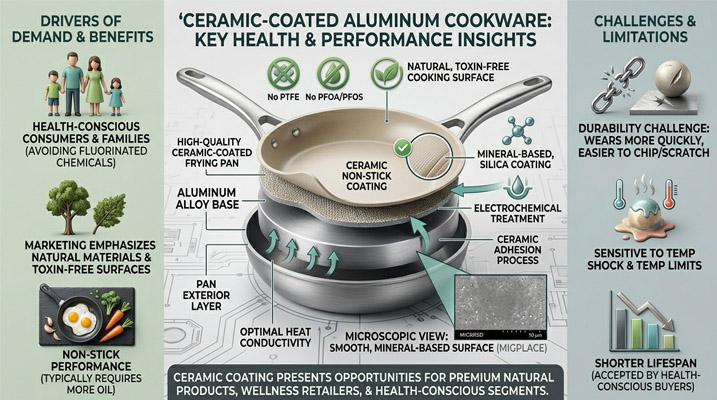
Ceramic coatings emerged as the "natural" response to PTFE health concerns, positioning themselves as toxin-free alternatives for conscious consumers. These coatings use silica-based materials that create slick surfaces without fluorinated chemicals. Brands like GreenPan and Caraway built entire identities around ceramic coating technology.
The performance characteristics differ significantly from PTFE systems. Ceramic coatings typically require more oil or fat for optimal release properties. They also show greater sensitivity to temperature changes and thermal shock. However, they can withstand higher temperatures than PTFE without degrading or releasing harmful compounds.
Durability remains the biggest challenge for ceramic-coated products. Most ceramic coatings wear more quickly than quality PTFE systems, especially with frequent use or improper care. The surface can chip or scratch more easily, leading to reduced non-stick performance over time.
Consumer perception often outweighs performance limitations in this segment. Health-conscious buyers willingly accept shorter lifespans in exchange for perceived safety benefits. This creates opportunities for importers targeting premium natural product markets, wellness-focused retailers, and health-conscious consumer segments.
Manufacturing requires different coating application processes compared to PTFE systems. The ceramic materials must cure at specific temperatures to achieve proper bonding and performance characteristics. Quality control becomes critical since coating defects significantly impact both performance and appearance. Successful ceramic cookware requires experienced suppliers with proven coating expertise.
Conclusion
Understanding these six aluminum cookware categories helps importers choose products matching their target markets and price points effectively.