
Finding the right aluminum cookware supplier feels overwhelming when your business reputation depends on quality products.
Successful wholesale aluminum cookware programs require careful evaluation of material quality, manufacturing standards, pricing terms, and supplier reliability to ensure consistent customer satisfaction and profitable margins.
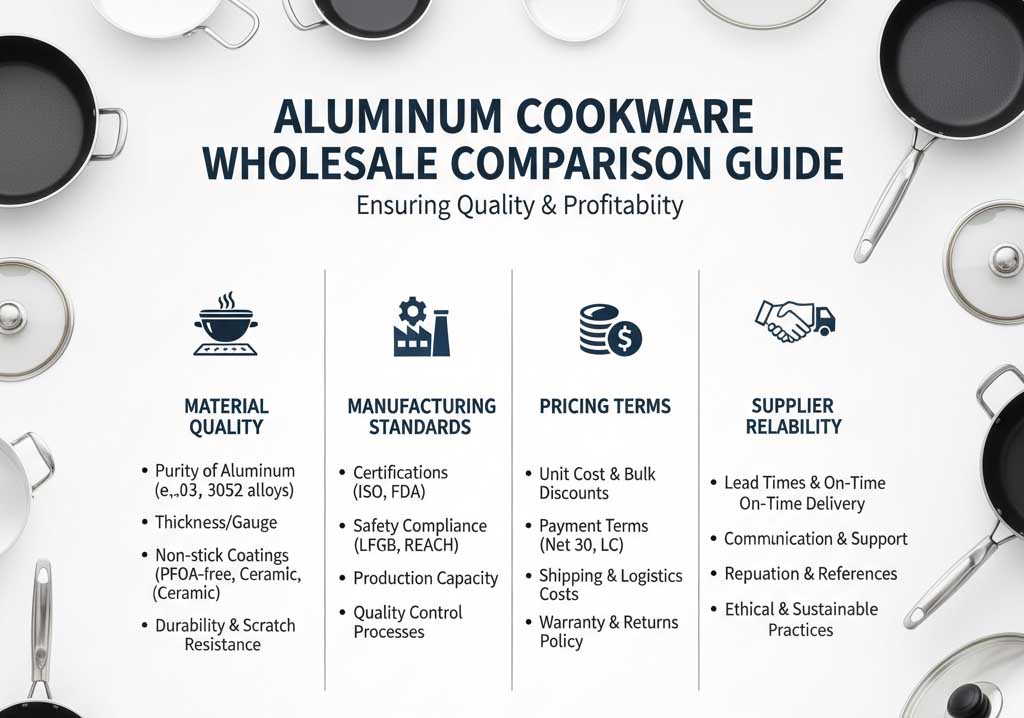
The aluminum cookware market offers countless options, but choosing the wrong supplier can damage your brand reputation and hurt your profits. Smart wholesale buyers know that the cheapest option rarely delivers the best long-term value.
How Does Aluminum Material Quality Affect Your Wholesale Success?
Material quality determines everything from cooking performance to product lifespan in your customer's hands.
Pure aluminum conducts heat excellently but lacks durability, while aluminum alloys like 3003 series provide better strength and longevity for commercial applications without sacrificing thermal performance.
I learned this lesson the hard way during my first major aluminum cookware import. The supplier promised "premium aluminum construction" but delivered thin, pure aluminum pans that dented easily and warped under high heat. My restaurant clients returned nearly 30% of the order within six months.
Material Thickness Comparison
| Thickness | Heat Distribution | Durability | Cost | Best Use Case |
|---|---|---|---|---|
| 1-2mm | Poor | Low | Lowest | Budget retail |
| 2-3mm | Good | Medium | Medium | Standard foodservice |
| 3-4mm | Excellent | High | Higher | Professional kitchens |
| 4mm+ | Superior | Very High | Highest | Heavy-duty commercial |
The thickness makes a huge difference in performance. Thicker aluminum distributes heat more evenly and resists warping under high temperatures. Your customers will notice the difference immediately when they cook with properly constructed aluminum pans versus thin alternatives.
Food safety certifications matter just as much as thickness. Always verify that your supplier's aluminum meets FDA food contact standards and contains no harmful PFOA or PTFE compounds. Many overseas manufacturers claim compliance but lack proper documentation.
Which Surface Finishing Options Work Best for Your Target Market?
Different surface finishes serve different customer needs and price points in your wholesale program.
Non-stick coatings work best for retail customers seeking easy cleanup, while hard-anodized aluminum serves commercial kitchens requiring durability and scratch resistance over extended use.
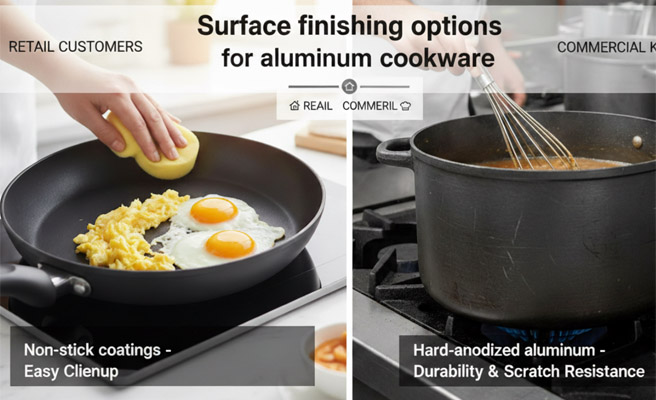
Your target market determines which finish options you should prioritize. Home cooks love non-stick surfaces for easy food release and cleanup. Professional chefs often prefer uncoated or seasoned aluminum for better browning and heat control.
Hard-anodized aluminum creates a durable surface that resists scratches and provides excellent heat distribution. This finish costs more than standard aluminum but lasts significantly longer in commercial applications. The extra investment pays off through reduced replacement costs and happier commercial customers.
Ceramic coatings appeal to health-conscious consumers who want non-stick performance without traditional chemical coatings. These finishes command premium prices but require careful handling during shipping and storage. The coating can chip if dropped or roughly handled.
At INOXICON, we've worked with aluminum cookware manufacturers for over 25 years and understand how different finishes affect product performance and customer satisfaction. While we specialize in stainless steel, our experience with various metal cookware helps us advise clients on making the right material choices for their markets.
What Manufacturing Quality Standards Should You Demand?
Manufacturing quality separates reliable suppliers from those who will cause you headaches and customer complaints.
Forged aluminum construction provides superior strength compared to stamped alternatives, while proper handle attachment and consistent quality control processes ensure products meet professional standards throughout production runs.
Construction method affects both product durability and your wholesale pricing structure. Forged aluminum cookware costs more to produce but delivers better performance and longevity. Stamped aluminum reduces manufacturing costs but may not withstand heavy commercial use.
Handle attachment deserves special attention during supplier evaluation. Poor welding or riveting creates safety hazards when handles loosen during use. Ask potential suppliers about their handle attachment processes and request samples for stress testing.
Quality Control Checklist
| Quality Factor | What to Check | Impact on Business |
|---|---|---|
| Welding consistency | Even seams, no gaps | Prevents leaks and failures |
| Handle security | Tight attachment, no wobble | Avoids safety issues |
| Surface finish | Smooth, even coating | Customer satisfaction |
| Edge finishing | Smooth, no sharp corners | User safety |
| Dimensional accuracy | Consistent sizing across batches | Inventory management |
Consistency across production runs protects your business reputation. Establish clear specifications with your supplier and request regular quality reports. Inconsistent products create customer complaints and return issues that hurt your bottom line.
Request detailed information about quality control processes before placing large orders. Reliable manufacturers maintain detailed records of defect rates and implement continuous improvement programs to address quality issues.
How Can You Negotiate Better Wholesale Program Terms?
Wholesale terms significantly impact your program profitability and operational flexibility.
Minimum Order Quantities should balance supplier efficiency with your inventory capacity, while volume pricing tiers and customization options provide competitive advantages in your target markets.
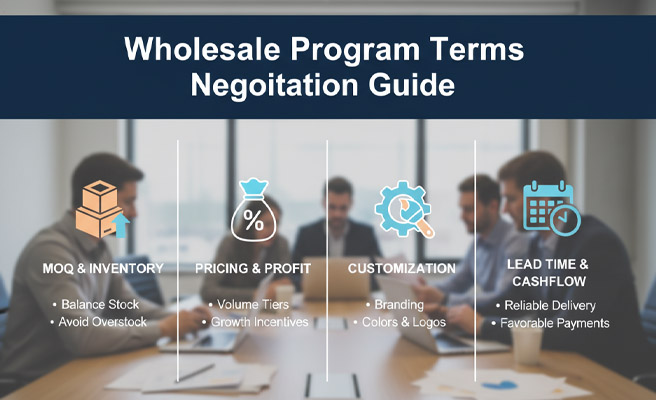
Minimum Order Quantities often create the biggest challenge for new wholesale programs. High MOQs tie up working capital and increase inventory risk, especially when testing new products or markets. Look for suppliers who offer reasonable starting quantities that allow product variety within single orders.
Volume pricing should provide clear incentives for larger orders without forcing you to overstock slow-moving items. The best suppliers offer incremental discounts that reward growth while maintaining flexibility for seasonal fluctuations.
Customization capabilities add value for customers seeking branded cookware solutions. Private label packaging, custom colors, or logo engraving help differentiate your products from competitors. Discuss customization costs and lead times upfront to avoid surprises later.
Payment terms affect your cash flow management. Standard terms range from 30% deposit with balance due before shipping to net 30 days for established relationships. Negotiate terms that support your business model while providing reasonable security for the supplier.
Lead times vary significantly between suppliers and directly impact your ability to meet customer demands. Reliable lead times matter more than short lead times that frequently change. Build relationships with suppliers who communicate proactively about production schedules and potential delays.
Why Does Packaging and Shipping Matter for Your Bottom Line?
Proper packaging and shipping logistics protect your investment and determine customer satisfaction upon delivery.
Bulk packaging designed for international shipping minimizes damage during transport, while retail-ready packaging options reduce your handling costs and improve shelf presentation for direct-to-consumer sales.
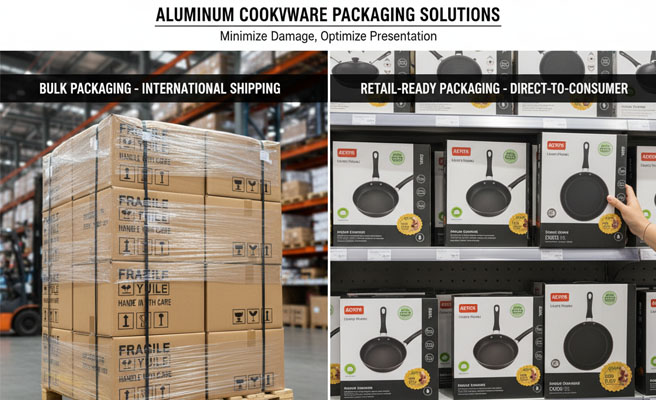
Packaging design directly affects your damage rates during long-distance shipping. Aluminum cookware requires protection from dents, scratches, and coating damage during transport. Quality suppliers design packaging specifically for international shipping requirements.
Retail-ready packaging becomes important if you sell directly to consumers or supply retailers who want shelf-ready products. This packaging costs more but reduces your handling labor and improves product presentation. Evaluate whether the additional cost justifies the convenience for your business model.
Shipping logistics capabilities separate professional suppliers from those who will create operational headaches. Your supplier should handle Less than Container Load (LCL) shipments for smaller orders and Full Container Load (FCL) options for larger volumes. Proper export documentation and shipping coordination saves you time and reduces delays.
Container loading efficiency affects your shipping costs per unit. Experienced suppliers maximize container space utilization and provide accurate piece counts for customs documentation. Poor loading wastes money and creates inventory discrepancies.
What After-Sales Support Should You Expect from Suppliers?
Strong after-sales support protects your business when problems arise and builds long-term partnership value.
Comprehensive defect policies, manufacturing warranties, and dedicated account management ensure quick resolution of quality issues while supporting your growth with reliable reorder processes and technical assistance.
Defect policies determine how quickly you can resolve customer complaints and maintain business relationships. Clear policies should specify replacement procedures, return shipping arrangements, and response timeframes for different types of issues.
Manufacturing warranties provide additional protection against defects that appear after delivery. While aluminum cookware rarely fails due to manufacturing defects, warranties demonstrate supplier confidence in their quality standards and provide recourse for unexpected problems.
Account management makes a significant difference in ongoing business efficiency. Dedicated contacts who understand your business requirements streamline reordering, resolve issues faster, and provide market insights that help grow your program.
At INOXICON, our approach to after-sales support has evolved over 27 years of serving wholesale clients worldwide. We've learned that proactive communication and quick problem resolution build the trust necessary for long-term partnerships. While we focus on stainless steel products, the principles of excellent customer service apply across all cookware categories.
Technical assistance becomes valuable when customers have questions about product specifications or usage recommendations. Suppliers with deep product knowledge can provide training materials and technical documentation that help you serve your customers better.
Conclusion
Smart aluminum cookware wholesale decisions focus on long-term value through quality materials, reliable manufacturing, and strong supplier partnerships.