
Sourcing cookware from China feels overwhelming. A simple "top 10" list won't cut it, and a wrong choice can cost you. How do you find a truly reliable partner?
To find the best cookware manufacturer, you must look beyond rankings. Instead, focus on their specific material expertise, proven OEM/ODM capabilities for your brand, and verifiable compliance with your market’s standards like FDA and LFGB. This ensures the factory is a perfect match for your products.
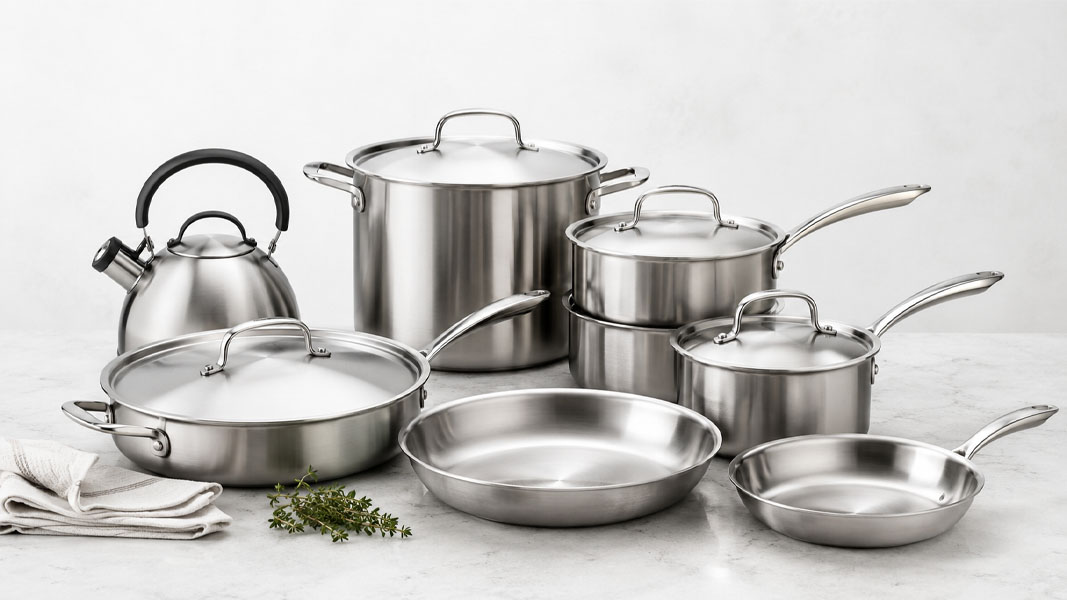
Finding the right factory partner is the single most important decision for your business. Over my 27 years in the stainless steel kitchenware industry, I've seen importers succeed or fail based on this choice. A generic list of manufacturers is a starting point, but it doesn't tell you the full story. You need to dig deeper to find a partner who understands your quality standards, market needs, and long-term vision. Let's break down how to do that.
Why Is Factory Specialization More Important Than a Top 10 List?
Are you struggling to find a supplier who truly excels at your specific product? Many factories claim to do everything, but this often leads to inconsistent quality and a lack of expertise.
A specialized factory is always the better choice. A master of stainless steel cookware won't have the same deep knowledge of non-stick coatings, and vice versa. Matching the factory's core strength to your product line is the key to consistent quality and innovation.
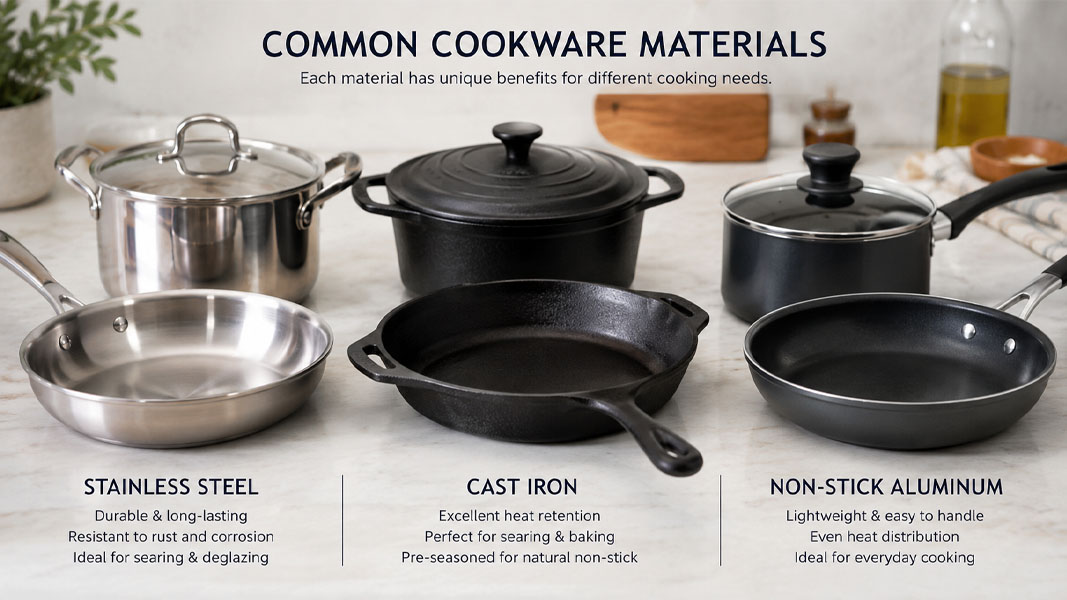
In my experience, a factory's focus defines its quality. A generalist supplier might appear convenient, but they rarely achieve excellence in any single category. For example, producing high-quality tri-ply stainless steel cookware requires specialized impact bonding machines and meticulous polishing techniques that are completely different from applying a non-stick coating to an aluminum pan. When a factory tries to do both, one or both processes often suffer. I've seen importers receive stainless steel pots with poor heat distribution or non-stick pans that peel after a few uses, all because their supplier wasn't a true specialist. The best results always come from partnering with a factory that lives and breathes your chosen material.
Key Checks for Different Factory Types
To make sure you're talking to the right expert, you need to ask specific questions. Here’s a simple guide to help you vet a factory based on their claimed specialization.
| Factory Type | Key Products | What to Ask About |
|---|---|---|
| Stainless Steel Specialist | Cookware sets, stockpots, strainers | Material grades (304 vs. 316), base construction (impact-bonded vs. clad), and polishing finish. |
| Non-Stick Aluminum Factory | Fry pans, saucepans, griddles | Coating supplier (e.g., Teflon, Whitford), abrasion test results, and PFAS-free compliance. |
| Cast Iron Specialist | Skillets, Dutch ovens, grill pans | Enamel coating thickness and chip resistance, weight tolerance, and pre-seasoning process. |
Choosing a specialist ensures they have the right equipment, experience, and quality control systems in place for your specific product.
What Should You Really Look for in OEM/ODM Capabilities?
Your brand has a unique identity, but does your manufacturer just stick your logo on a generic product? True partnership means they help bring your vision to life, from design to packaging.
A strong OEM/ODM partner offers more than just a logo. They should provide a full suite of services, including custom handle and lid design, color matching, bespoke packaging solutions, and even new mold development. This capability turns a supplier into a growth partner.
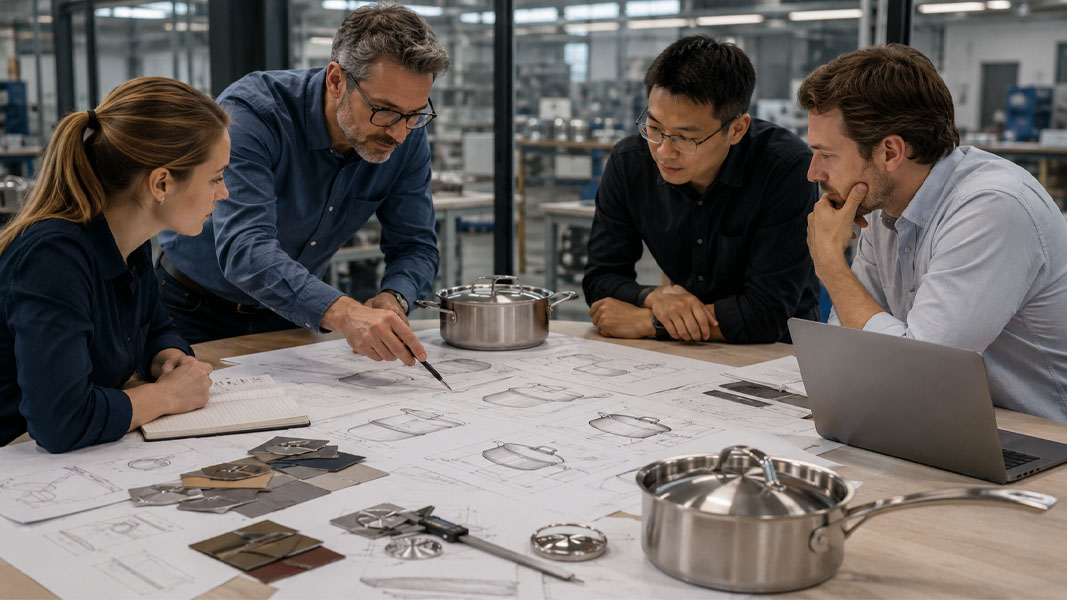
When you’re building a private label brand, the details are everything. A good ODM partner doesn't just wait for your instructions; they collaborate with you. I remember working with a European client who wanted to launch a new line of stainless steel saucepans. They had a concept but needed help with the technical design. Our engineering team worked with them to refine the handle ergonomics for better balance and suggested a subtle change to the lid's steam vent that improved cooking performance. This is the difference between a simple OEM order and a true ODM partnership. You aren't just a customer; you are a collaborator. Look for a factory that has its own in-house design and engineering team. Ask them about their new product development process and how many new designs they create each year. This tells you if they are an innovative partner or just a production line.
Differentiating OEM from ODM
Understanding the difference is crucial for your project.
-
OEM (Original Equipment Manufacturer): This is the right path when you already have a complete product specification. You provide the factory with detailed designs, material requirements, and quality standards. Their job is to manufacture the product exactly as you've specified. This is ideal for established brands with in-house R&D.
-
ODM (Original Design Manufacturer): Choose this route when you have an idea or concept but need the factory's expertise to develop it. A good ODM partner will help you with everything from industrial design and material selection to performance testing and packaging. This is perfect for new brands or importers looking to launch innovative products quickly.
A factory that excels at both offers the most flexibility for your business as it grows.
How Can You Verify a Factory's Certifications and Compliance?
Worried that your shipment might get rejected by customs for not meeting safety standards? This is a common fear, and a valid one, as regulations like LFGB and Prop 65 are strict.
Always ask for test reports before placing an order. But don't stop there. Verify that the report is recent, applies to the exact material and color you are ordering, and was issued by a reputable third-party lab. A trustworthy manufacturer will provide this transparently.
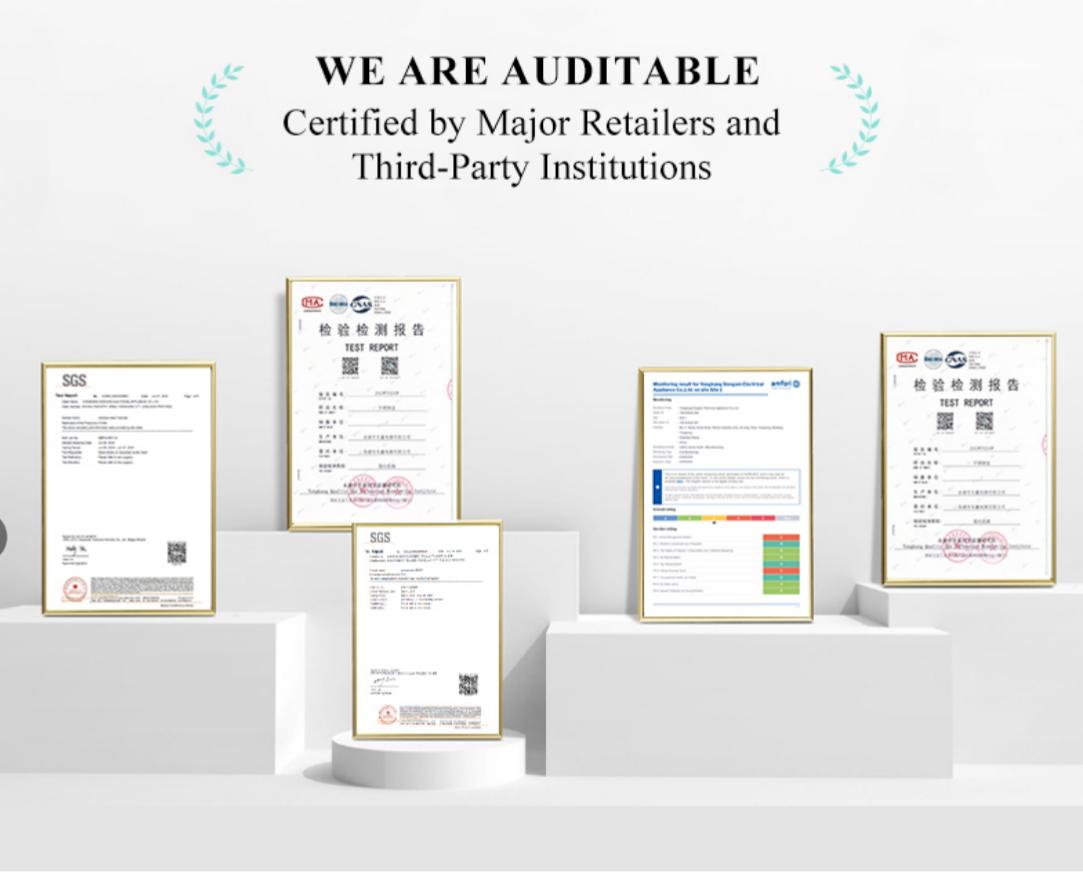
Compliance is not just a piece of paper; it's a commitment to safety and quality. A few years ago, an American client came to us after their previous supplier’s shipment was held up. The factory had provided an FDA report, but it was for a different product made with a different grade of steel. It was a costly mistake for the client. That’s why we ensure every test report we provide matches the exact production batch. When you vet a new factory, ask for their compliance documents for major markets. Reputable suppliers should readily provide FDA, LFGB, and REACH reports. Also, ask about their quality management system, like an ISO 9001 certification, and social compliance audits like BSCI. A factory that invests in these certifications is demonstrating a long-term commitment to quality and ethical production, making them a much safer partner.
Essential Compliance Checklist
Never take a factory's claims at face value. Use this checklist during your evaluation:
- Food-Contact Reports (FDA, LFGB): Are they for the specific material (e.g., SS304) and coating you plan to use?
- Chemical Safety (REACH, Prop 65): Can the factory provide documentation showing they meet regulations for hazardous substances, especially for the EU and California markets?
- Social Audit (BSCI): Does the factory follow ethical labor practices? This is increasingly important for brand reputation.
- Quality Management (ISO 9001): Does the factory have a documented system for maintaining consistent quality?
Requesting and verifying these documents is a critical step in protecting your business and your customers.
How Do You Balance MOQ, Cost, and Quality?
Finding low-cost products is easy, but are they trapping you with high MOQs and poor quality? This forces you into heavy inventory risk and damages your brand's reputation with subpar goods.
The key is to find a manufacturer that offers a fair price without compromising on quality, supported by a flexible MOQ. This allows you to test new products and manage inventory effectively, reducing your financial risk.

The lowest price is rarely the best value. I've learned that cost should be evaluated alongside MOQ and quality. A factory offering a rock-bottom price might be cutting corners on raw material thickness, using a cheaper polishing process, or skipping crucial quality checks. These shortcuts lead to products that customers will return. At the same time, a high MOQ can kill your cash flow, especially if you're a small or medium-sized business trying to test a new market. That's why we decided to offer lower MOQs, starting from 500 pieces on many items. It was a strategic choice to support our partners. It allows them to launch new lines without taking on huge inventory risk. When you talk to a potential supplier, don't just ask for the price. Ask what that price includes. Is it for 0.5mm or 0.6mm thick steel? What kind of packaging is standard? Are test reports included? A transparent partner will explain their cost structure and work with you to find a balance that supports your business goals.
Understanding the Cost Drivers
To negotiate effectively, you need to know what impacts the final price.
| Cost Factor | Why It Matters | What to Specify |
|---|---|---|
| Raw Material | The biggest cost component. Thicker steel or premium coatings increase durability and price. | Specify material grade (e.g., SS304) and thickness (e.g., 0.6mm). |
| Construction | A fully clad tri-ply base is more complex and expensive than a simple encapsulated base. | Define the base structure your product requires for performance. |
| Handles & Lids | Cast stainless steel handles are more premium than hollow ones. Tempered glass lids cost more than steel lids. | Clarify the exact materials and finish for all components. |
| Packaging | A full-color retail box is significantly more expensive than a simple brown box. | Provide your packaging specifications for an accurate quote. |
Understanding these elements empowers you to have a more productive conversation about cost and find a solution that delivers true value.
Conclusion
Choosing the right cookware manufacturer in China is about finding a strategic partner. Focus on their specialization, OEM/ODM support, and verified compliance to ensure long-term success for your brand.