
Choosing the wrong cookware factory can damage an Amazon listing fast. One weak handle, scratched surface, or damaged box can turn into bad reviews.
Amazon sellers should choose a cookware manufacturer with real production capacity, stable quality control, food-contact compliance support, OEM/ODM service, FBA packaging experience, flexible MOQ, and clear communication from sample to shipment.
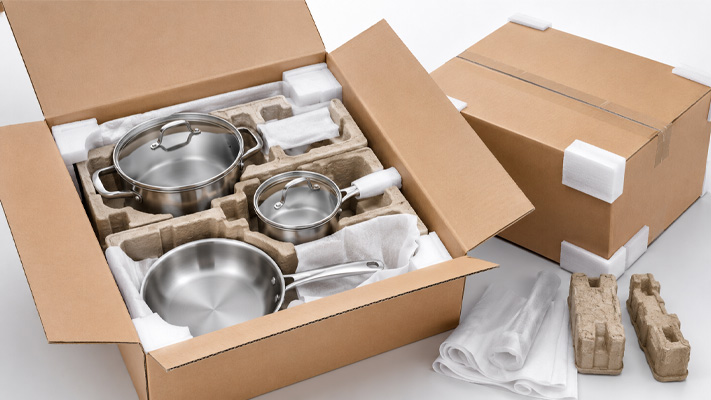
As a cookware manufacturer, I know Amazon sellers face direct pressure from customers, reviews, and ranking. A small defect is not small on Amazon. It can affect conversion, returns, ad cost, and repeat sales.
At INOXICON, I do not see production as only making cookware. I see it as helping sellers build stable, review-friendly products. A good manufacturer should help reduce risk before mass production starts.
Why Should Amazon Sellers Work Directly With a Cookware Factory?
Many Amazon sellers compare prices first, but price alone cannot protect a listing. The real question is who controls production.
Amazon sellers should work directly with a cookware factory because direct cooperation gives better control over material, quality, customization, packaging, lead time, and cost.
Factory Control Protects Amazon Reviews
As a factory, I know cookware quality is built in every step. It starts from stainless steel material. It continues through forming, polishing, welding, edge treatment, cleaning, packing, and shipment preparation.
A trading company may give service, but a real factory can answer technical questions faster. If a seller wants to adjust thickness, logo position, handle design, carton size, or set combination, my production team can check the real possibility directly.
| Factory Control Area | Why It Matters for Amazon Sellers |
|---|---|
| Material selection | It affects safety and durability |
| Polishing | It affects appearance and reviews |
| Edge treatment | It reduces safety complaints |
| Welding or assembly | It affects product strength |
| Packaging | It affects FBA damage rate |
At INOXICON, we have produced stainless steel kitchenware since 1997. This experience helps us understand what details matter for online sales. Amazon customers cannot touch the product before buying. So the product must match the listing promise when they open the box.
What Production Capacity Should a Cookware Manufacturer Have?
A good sample is not enough. Amazon sellers also need repeat supply when a listing starts to grow.
A cookware manufacturer should have stable machines, skilled workers, clear production planning, daily output capacity, organized packing space, and the ability to handle trial orders and repeat orders.
Support Both Test Orders and Growth Orders
Amazon sellers often start with a test order. If the product performs well, they may need faster repeat orders before Prime Day, Black Friday, Christmas, or a seasonal campaign. If the factory cannot keep up, the seller may face stockouts.
At INOXICON, we have 95 advanced machines and can produce more than 30,000 pieces per day. This capacity helps us support both small trial orders and larger repeat production.
| Capacity Factor | Why Amazon Sellers Care |
|---|---|
| Machine quantity | It affects lead time |
| Daily output | It affects replenishment speed |
| Skilled workers | It affects finish consistency |
| Packing area | It affects shipment accuracy |
| Production planning | It affects launch timing |
I also believe a factory should be honest about lead time. Unrealistic promises create more problems than slow but clear planning. I prefer to confirm sample time, production time, packing time, inspection time, and shipment preparation time before the seller makes a launch plan.
What Compliance Support Do Amazon Sellers Need for Cookware?
Cookware touches food, so compliance cannot be ignored. Missing documents can delay sales or create product risk.
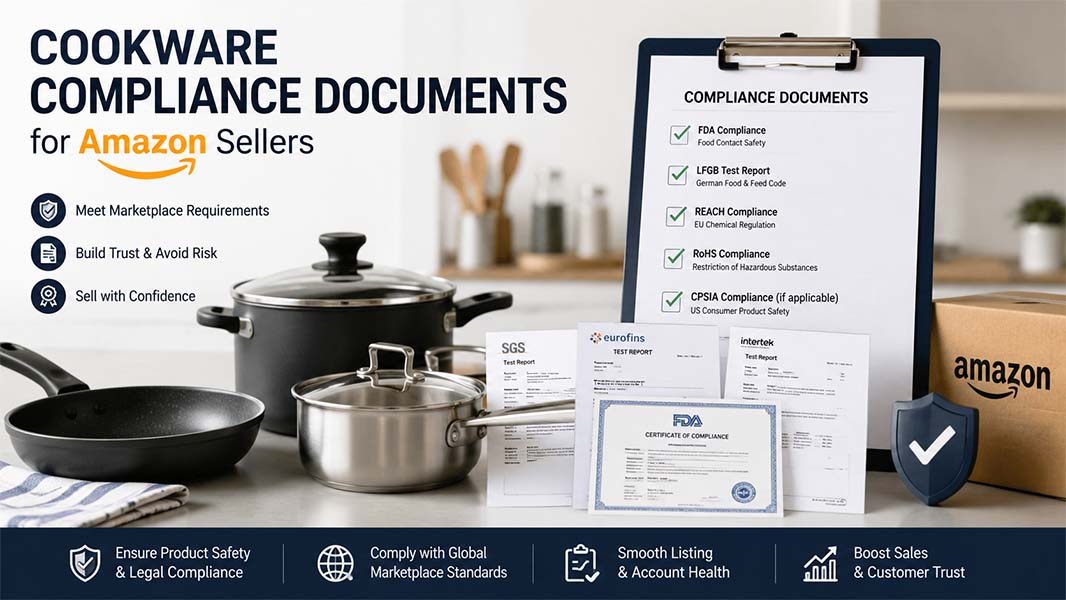
Amazon sellers need food-contact test support, stainless steel material information, packaging details, product instructions, and market-related compliance documents such as FDA, LFGB, or REACH when needed.
Treat Compliance as Part of Product Development
From the factory side, compliance should be discussed before mass production. If the product will sell in the United States, the seller may need FDA-related food-contact support. If it will sell in Europe, the seller may ask for LFGB, REACH, or other local requirements.
A test report must match the real product, material, and usage. A random report for a different item is not enough.
| Compliance Item | Why It Matters |
|---|---|
| Stainless steel grade | It supports food safety claims |
| Food-contact test | It supports market entry |
| Packaging information | It supports retail and FBA needs |
| Product instruction | It reduces misuse and complaints |
| Batch inspection record | It supports quality tracking |
At INOXICON, we serve clients in more than 50 countries. So I understand that different markets need different document support. Compliance is not only about passing a test. It also protects the seller’s brand and customer trust.
How Can a Factory Help Amazon Sellers Improve Cookware Quality?
Amazon customers judge cookware quickly. They judge by weight, finish, touch, packaging, and the feeling of value.
A factory helps Amazon sellers improve cookware quality by controlling material thickness, surface finish, edge smoothness, handle strength, welding quality, product balance, and packaging protection.
Control Quality Before the Product Leaves the Factory
Final inspection is important, but it cannot fix every problem. If the material is too thin, inspection cannot make it stronger. If the polishing is poor, inspection can only find scratches. It cannot create a better finish.
So I focus on prevention during production. For Amazon sellers, this is important because the product must match the listing promise.
| Quality Area | Factory Control Point |
|---|---|
| Thickness | Check weight and sheet standard |
| Surface finish | Control polishing and cleaning |
| Edge smoothness | Remove sharp edges |
| Handle strength | Check welding or fixing point |
| Packaging strength | Improve inner and outer protection |
I suggest sellers approve a golden sample before mass production. This sample should confirm size, weight, finish, logo, packaging, and accessories. Then the production team can follow the same standard. This helps keep the first batch and repeat batches consistent.
Why Are OEM and ODM Services Important for Amazon Sellers?
Amazon is crowded. If sellers offer the same cookware as everyone else, customers often compare price first.
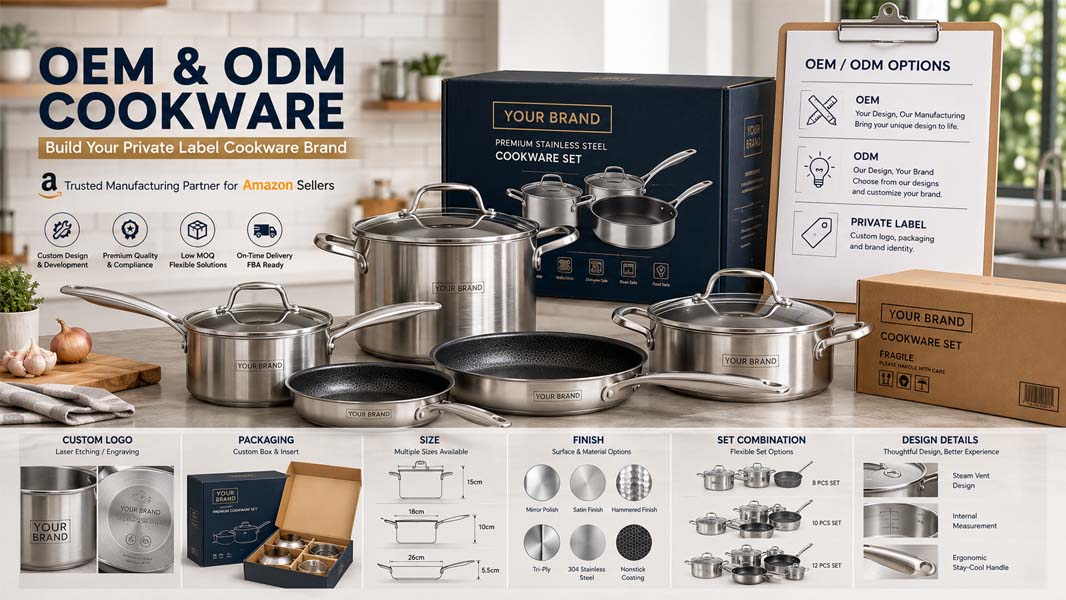
OEM and ODM services help Amazon sellers create private label cookware with custom logo, packaging, size, finish, set combination, and design details that support brand difference.
Help Sellers Build Products That Are Harder to Compare
A product does not always need a big redesign to stand out. A better handle, stronger box, smarter set combination, cleaner logo, or improved size can make a listing more attractive.
OEM service supports logo, packaging, labels, carton marks, instruction cards, and barcode needs. ODM service supports product shape, finish, size, mold development, and new design planning.
| Custom Service | Example |
|---|---|
| Logo customization | Laser logo on stainless steel |
| Custom packaging | Color box or kraft box |
| Insert card | Care guide or thank-you card |
| Set combination | 3-piece or 5-piece cookware set |
| Product design | New handle, deeper bowl, special finish |
At INOXICON, our design and engineering teams develop more than 50 new products every year. I use this ability to help sellers test new ideas faster. A good product should look modern, work well, and stay easy to produce at stable quality.
How Should Amazon Sellers Think About MOQ and Cost?
A low price looks attractive, but Amazon sellers must think about total cost and risk. Cheap products can become expensive after returns.
Amazon sellers should compare MOQ, unit price, packaging cost, logo cost, testing cost, mold cost, inspection cost, shipping effect, defect risk, and repeat order stability.
Support Flexible MOQ Because Testing Matters
Amazon sellers often need to test the market before buying large quantities. A high MOQ can create inventory pressure. A flexible MOQ can reduce risk.
At INOXICON, we support low MOQ starting from 500 pieces for many items. This helps sellers test a new cookware size, set, or price point with less pressure.
| Cost Area | What Sellers Should Confirm |
|---|---|
| Unit price | Material, weight, finish, packaging |
| MOQ | Trial quantity and repeat quantity |
| Logo cost | Logo method and quantity |
| Packaging cost | Box, insert, carton, label |
| Testing cost | Needed reports and lab support |
| Mold cost | New tooling or design change |
From the factory side, I also explain why prices differ. A cheaper quote may use thinner material, lighter cartons, simpler polishing, or fewer inspection steps. The better way is to discuss target price and target quality together.
What Packaging Support Should Amazon Cookware Sellers Expect?
Good cookware can still fail if packaging is weak. Amazon products pass through many handling steps before reaching customers.
Amazon cookware sellers should expect strong inner protection, suitable product boxes, clear labels, carton marks, barcode support, and FBA-ready packing details.
Design Packaging to Protect the Product and the Review
Packaging is not only a box. It protects the cookware, the brand, and the customer experience. Stainless steel products can be scratched or dented during shipping if inner protection is weak.
When I support Amazon sellers, I ask about the shipping method and fulfillment method. FBA orders may need clear labels, carton marks, and SKU separation.
| Packaging Detail | Why It Matters |
|---|---|
| Inner protection | Prevents scratches and dents |
| Outer carton | Protects during transport |
| Barcode label | Supports FBA receiving |
| Carton mark | Reduces warehouse mistakes |
| Instruction card | Improves customer experience |
| Set packing | Keeps items organized |
I prefer to discuss packaging early. Box size, protection method, label position, carton quantity, and shipping volume all affect cost and delivery. If packaging is planned too late, mistakes become more likely.
Conclusion
Amazon sellers should choose a cookware factory that controls quality, compliance, packaging, customization, delivery, and communication, because these details protect reviews and long-term profit.