
Choosing the wrong tumbler supplier can lead to leakage complaints, inconsistent colors, delayed delivery and high replacement costs. Many problems only appear after mass production begins.
A reliable stainless steel tumbler manufacturer should provide stable material quality, controlled production processes, flexible customization, consistent bulk production and clear quality standards. The right supplier should be evaluated by manufacturing capability, not only price.
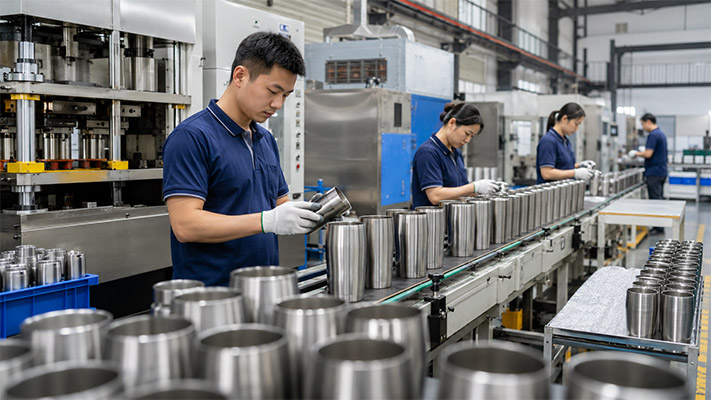
A stainless steel tumbler may look simple, but many processes affect the final product performance, including steel thickness, vacuum insulation, lid design, coating quality and assembly accuracy.
A tumbler with a lower purchase price may create higher costs later if it causes customer complaints, returns or replacement requests. Before placing a bulk order, brands should understand how to evaluate a manufacturer and avoid common sourcing risks.
Define Your Tumbler Requirements Before Choosing a Manufacturer
A clear product specification helps manufacturers provide accurate solutions and prevents misunderstandings during development.
Before contacting suppliers, define:
- Tumbler capacity, such as 20 oz, 30 oz or 40 oz
- Body shape and dimensions
- Handle or handle-free design
- Lid structure and straw type
- Leak-resistant requirements
- Surface finish and colors
- Logo method
- Packaging requirements
- Target quantity and launch schedule
Many tumbler projects fail because the product requirements are not clearly defined at the beginning. For example, a buyer may request a “leakproof tumbler” but does not specify whether the product needs to resist leakage when placed upside down, carried in a bag, or only prevent normal splashing.
A professional manufacturer should help clarify these details before production.
Different markets also require different product features. A tumbler sold in retail stores may need premium packaging and strong shelf appearance. An online product may require stronger protection against scratches and dents during delivery.
The intended sales channel also affects product decisions. For example:
- Retail projects often focus on color consistency, packaging presentation and repeat availability.
- Online brands usually pay more attention to durability, product reviews and customer experience.
- Promotional products may require flexible logo options, short lead times and multiple customization choices.
A professional tumbler manufacturer should not only quote a product. They should help confirm whether the design, materials and production method match the target market.
Verify the Manufacturer’s Production Capability
Many suppliers can provide tumbler samples, but not every supplier can consistently produce thousands of units with the same quality.
Before cooperation, check whether the manufacturer controls the important production steps.
Key areas include:
| Production Area | What to Check |
|---|---|
| Stainless steel forming | Whether body production is controlled internally |
| Welding process | Equipment, experience and inspection methods |
| Vacuum insulation | Production control and leakage testing |
| Surface finishing | Color and appearance consistency |
| Coating | Internal capability or subcontract management |
| Lid production | Design ability and component control |
| Packaging | Protection during transportation |
The stainless steel body is only one part of tumbler manufacturing. The final performance depends on how different processes work together.
For example:
- Poor welding quality can affect vacuum insulation.
- Inconsistent forming can cause lid fitting problems.
- Uneven coating can create color differences between production batches.
- Weak packaging can cause dents during transportation.
A factory does not need to complete every process internally. However, it should clearly explain which processes are outsourced and how quality is controlled.
For example, coating and plastic components are often managed by specialized suppliers. The important question is not only:
“Is this process in-house?”
The more important question is:
“Who controls this process and how is consistency guaranteed for repeat orders?”
A reliable manufacturer should have clear procedures for supplier selection, incoming inspection, production approval and final inspection.
For long-term cooperation, production transparency is often more valuable than simply having a large factory building.
Check Materials, Components and Product Safety
A tumbler is made from multiple components, not only stainless steel. Each part can affect product safety, durability and customer experience.
Important components include:
- Inner stainless steel wall
- Outer stainless steel wall
- Lid
- Straw
- Silicone gasket
- Plastic accessories
- Coating materials
When comparing suppliers, avoid relying only on terms like “food-grade stainless steel” or “premium quality”.
Request clear specifications for:
- Stainless steel grade
- Product weight
- Material thickness
- Lid material
- Silicone material
- Testing documents
The same stainless steel grade can produce very different results depending on thickness, forming process and finishing quality.
For example, two tumblers may both use stainless steel 304, but one may have a heavier structure, better surface treatment and stronger vacuum performance. These differences directly affect the product experience.
For private label projects, component consistency is especially important. A different gasket supplier or lid design may create problems with leakage, odor or customer complaints even when the cup body remains unchanged.
Compliance documents should also match the actual product. Check:
- Tested product model
- Tested materials
- Test items
- Testing date
- Applicable market requirements
Documents such as FDA, LFGB or REACH-related reports should support the specific product rather than only represent the supplier’s general capability.
A professional manufacturer should also be able to explain which components require testing and how material changes are managed during repeat production.
Evaluate OEM and Private Label Development Ability
A good stainless steel tumbler manufacturer should support different levels of customization.
Not every project needs a completely new mold. Choosing the right development method can reduce cost, shorten launch time and lower development risks.
| Customization Level | Suitable For |
|---|---|
| Existing model + logo | Fast market testing |
| Semi-custom tumbler | Custom colors, lids, accessories or packaging |
| Full OEM development | Unique body design or new structure |
Customization options may include:
- Custom colors
- Powder coating
- Laser engraving
- Screen printing
- Full-wrap graphics
- Custom lids
- Custom straws
- Retail packaging
However, customization ability is not only about offering many options. The manufacturer should explain the impact of each option on MOQ, cost, lead time and production stability.
For new designs, clarify:
- Mold ownership
- Tooling cost
- Sample approval process
- Design confidentiality
- Future modification options
A common mistake is developing a completely new tumbler design too early. For new brands, starting with an existing structure and adding customized colors, packaging or accessories can often reduce investment and shorten the time to market.
A professional OEM tumbler manufacturer should help customers choose a practical development path instead of simply increasing project complexity.
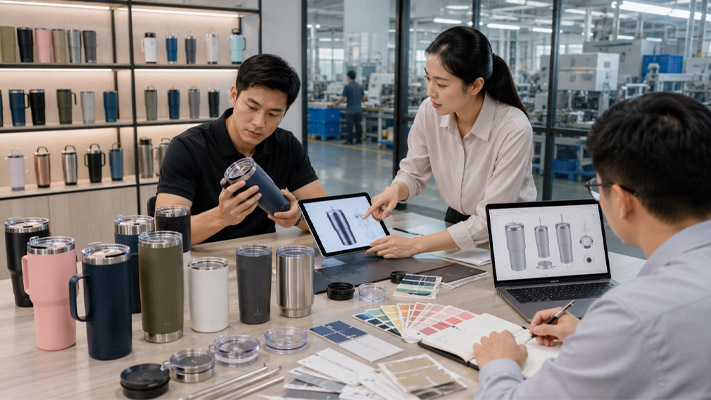
Review Sampling and Quality Control Process
A production sample is only useful when it becomes the standard for mass production.
Before bulk manufacturing, confirm the final approval details:
- Product dimensions
- Capacity and weight
- Lid fit
- Leakage performance
- Insulation performance
- Surface finish
- Color reference
- Logo position
- Packaging structure
A common mistake is approving a basic sample and assuming the final production will be identical.
The approved sample should include all important details, especially for customized products. This sample becomes the reference for future production inspection.
A strong quality system should cover:
Incoming Inspection
Check:
- Stainless steel materials
- Plastic components
- Silicone parts
- Packaging materials
Production Inspection
Monitor:
- Body forming
- Welding quality
- Vacuum performance
- Surface treatment
- Assembly accuracy
Final Inspection
Verify:
- Appearance
- Function
- Leakage
- Packaging condition
- Product quantity
Before production starts, the manufacturer and customer should agree on inspection standards and acceptable tolerance levels.
This reduces disputes and improves consistency for future repeat orders.
Compare MOQ, Lead Time and Total Project Cost
Price is important, but the lowest quotation is not always the most economical choice.
A tumbler quotation should be compared based on the complete specification:
- Stainless steel material
- Product weight
- Lid structure
- Accessories
- Surface treatment
- Logo method
- Packaging
- Testing requirements
- Delivery terms
MOQ should also be evaluated carefully.
A supplier may offer a low product MOQ but require higher minimum quantities for:
- Special colors
- Custom lids
- Packaging
- Accessories
- New molds
For new brands, a flexible supplier can reduce initial investment risk by offering existing models with customization options.
Lead time should also include the entire production process:
- Material preparation
- Body production
- Coating
- Component supply
- Packaging
- Inspection
The right manufacturer should provide a realistic production schedule and communicate possible risks before production begins.
When comparing suppliers, buyers should consider the total project cost, including development time, quality risks and future repeat orders, rather than only the initial unit price.
Why Work with INOXICON as Your Stainless Steel Tumbler Manufacturer?
INOXICON has been designing and manufacturing stainless steel kitchenware since 1997. With decades of production experience, we understand how material selection, structural design and manufacturing control affect the final product quality.
Our factory supports OEM and ODM projects, including custom designs, branding, packaging and product development. We help customers develop stainless steel products with reliable quality, practical production solutions and consistent mass production.
With professional engineering support and production experience, INOXICON can assist with:
- Product design improvement
- Material selection
- Custom finishes
- Logo and packaging solutions
- Sample development
- Mass production control
Whether you need an existing tumbler model with private labeling or a customized product solution, INOXICON can support the complete process from product development to mass production.
Conclusion
Choosing a stainless steel tumbler manufacturer requires more than comparing prices. Focus on production control, customization ability, quality consistency and long-term cooperation.