
When I evaluate aluminum cookware for my product lines, I see buyers make the same mistake. They focus on price first, then wonder why their customers complain later.
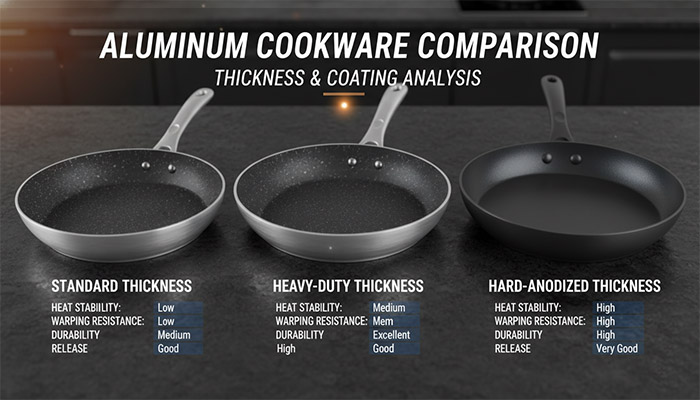
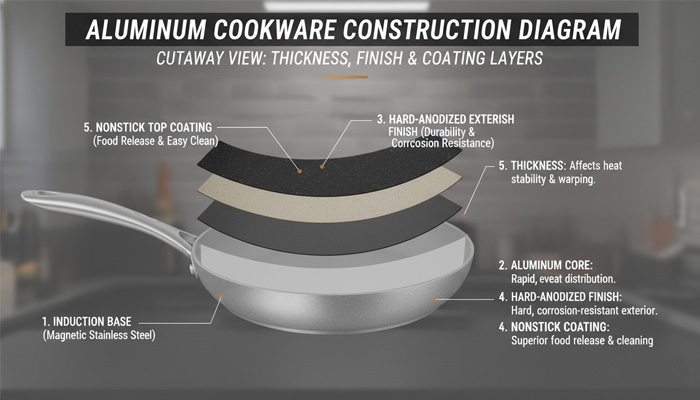
Aluminum cookware performance depends on three core factors: body thickness affects heat stability and warping resistance, surface finish changes durability and appearance, and coating type determines cooking experience and maintenance needs.
I have worked with over 500 clients in my 27 years at INOXICON. The buyers who succeed long-term always check these three factors before they look at anything else. The ones who skip this step often face returns, complaints, and lost retail relationships. That is why I want to share what I have learned about making smart choices in aluminum cookware sourcing.
Why Does Body Thickness Make or Break Aluminum Cookware Performance?
Thin aluminum cookware looks fine in photos, but it creates problems when customers actually cook with it. I see this pattern repeat with new buyers who choose based on weight and price alone.
Thicker aluminum bodies provide better heat distribution, reduce hot spots, resist warping, and feel more solid in use. Thin bodies heat faster but warp easier and create uneven cooking results.
I always tell buyers to think about their target market first. A discount retail line needs lighter weight and lower cost. But I warn them about the trade-offs. Thin aluminum heats up fast, which sounds good in marketing. But it also cools down fast and creates hot spots that burn food. When customers experience this, they blame the brand, not the thickness choice.
Medium-gauge aluminum works for most mass retail situations. It balances cost with performance. I typically recommend this for buyers who want steady repeat orders without major complaints. The cooking experience feels reliable without the premium price point.
Heavy-gauge aluminum serves premium lines and professional markets. Yes, it costs more in materials and freight. But it delivers the heat stability that serious cooks expect. When I position cookware for upscale retailers or cooking enthusiasts, thicker bodies support higher prices and build brand reputation.
I also check if the thickness is uniform or just concentrated in the base. Some manufacturers add a thick aluminum disc to the bottom but keep thin walls. This approach works for certain cooking styles but fails for others. Sauteing and frying need even heat distribution throughout the pan, not just at the bottom.
The freight impact matters too. Thicker aluminum means heavier products and higher shipping costs. I help buyers calculate total landed cost, not just FOB price. Sometimes a slightly thinner option delivers better profit margins without sacrificing too much performance.
How Surface Finish Changes the Performance of Aluminum Cookware?
Many buyers confuse finish with coating, but I treat them as completely different decisions. Finish refers to how the aluminum surface is processed before any coating goes on top.
Surface finish determines hardness, corrosion resistance, appearance, and market positioning. Hard-anodized aluminum offers superior durability compared to plain aluminum, while brushed finishes hide scratches better than polished surfaces.
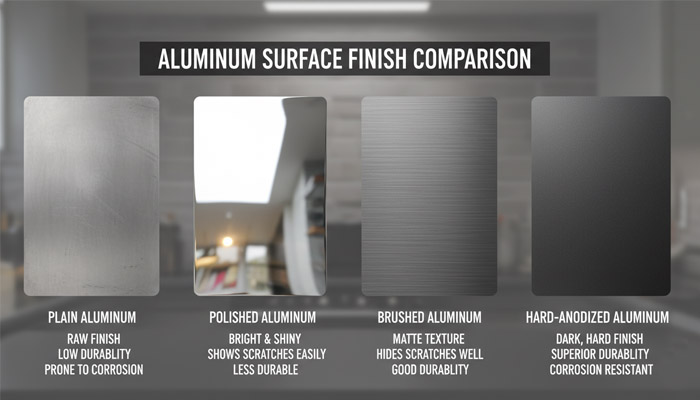
Plain aluminum gives the lowest processing cost and traditional appearance. I recommend this for entry-level lines where price matters most. The surface shows scratches and water spots easily, but some markets prefer the classic aluminum look. Buyers targeting budget-conscious customers often choose this option.
Brushed aluminum creates a more modern appearance with better scratch resistance than polished surfaces. The directional grain pattern hides minor wear marks and fingerprints. I often suggest brushed finishes for mid-range lines that need to compete on both price and appearance. The processing cost stays reasonable while the visual appeal improves significantly.
Hard-anodized aluminum transforms the surface through an electrochemical process. This creates a harder, more durable layer that resists scratches, corrosion, and staining better than untreated aluminum. The dark color gives a premium appearance that photographs well for online sales. Most importantly, it provides a clear story for sales teams to explain why the product costs more.
I have seen hard-anodized lines succeed in competitive markets because the benefit is obvious to customers. They can feel the difference in surface hardness and see the enhanced durability. This makes it easier to justify higher retail prices and build customer loyalty.
The finish choice also affects manufacturing timelines and minimum order quantities. Plain aluminum requires minimal processing time. Hard-anodizing needs additional production steps and quality control. Buyers need to factor these requirements into their sourcing schedules and order planning.
What Should Buyers Know About Nonstick Coating Options?
Coating selection impacts the daily user experience more than any other factor. I see buyers make emotional decisions about coatings based on marketing trends rather than practical performance considerations.
PTFE coatings provide superior food release and cleaning ease, while ceramic coatings offer marketing appeal but typically have shorter lifespans. Uncoated aluminum works best for high-heat cooking and professional applications.
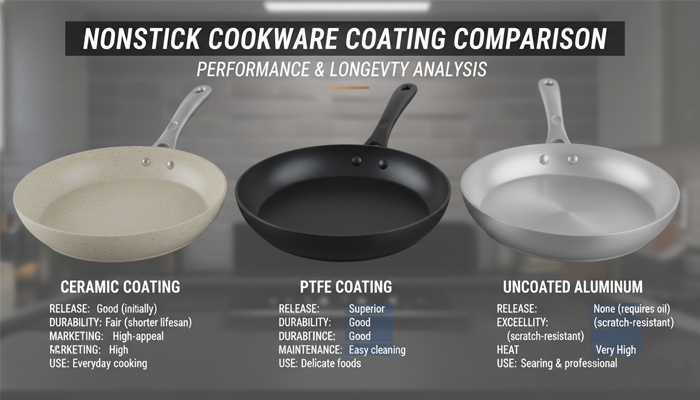
PTFE nonstick remains the performance standard in most markets. The food release works consistently across different cooking styles and temperatures. Eggs slide easily, cleanup takes minimal effort, and the coating maintains its properties through hundreds of cooking cycles when users follow proper care instructions. I recommend PTFE for buyers who want predictable performance and fewer customer service issues.
However, PTFE faces market perception challenges related to PFAS discussions. Some customers avoid it based on health concerns, regardless of regulatory approval. Buyers need to understand their target market's attitudes before committing to PTFE-coated lines. In some regions, this perception issue does not affect sales. In others, it can limit market acceptance significantly.
Ceramic nonstick appeals to health-conscious consumers and markets well in online channels. The marketing story focuses on being PFAS-free and using mineral-based technology. But I always warn buyers about the performance trade-offs. Ceramic coatings typically lose their release properties faster than PTFE, especially when exposed to high heat or metal utensils.
The key difference is durability expectations. PTFE coatings can maintain good performance for years with proper care. Ceramic coatings often start showing reduced release properties within months of regular use. This creates a mismatch between customer expectations and actual performance that leads to negative reviews and returns.
Uncoated aluminum works best for specific cooking applications. Professional chefs often prefer uncoated surfaces for browning, searing, and high-heat techniques. The aluminum responds quickly to temperature changes and does not have coating limitations. But most home users find uncoated aluminum too reactive and difficult to clean for everyday cooking.
I help buyers match coating choices to their target customers' actual cooking habits, not their stated preferences. A buyer targeting busy families needs different coating properties than one serving cooking enthusiasts or professional markets.
How Do These Factors Work Together in Real Market Situations?
The interaction between thickness, finish, and coating determines whether a cookware line succeeds or fails in the marketplace. I have seen great individual components create disappointing products when poorly combined.
Successful aluminum cookware balances thickness, finish, and coating to match target customer needs, price points, and use patterns. Mismatched combinations lead to performance issues and market rejection.
Thin bodies with premium coatings create customer disappointment. The coating may perform well initially, but the thin aluminum underneath warps and creates uneven heating. Customers expect premium coating to deliver premium performance, but the structural weakness undermines the cooking experience. This combination works only for very light-duty use or decorative applications.
Thick bodies with poor finishes waste money on materials while creating appearance problems. Heavy-gauge aluminum costs more but plain surfaces show wear quickly and photograph poorly for online sales. The performance foundation is solid, but the visual appeal and durability story fall short of customer expectations in premium market segments.
Premium finishes with inappropriate coatings confuse market positioning. Hard-anodized aluminum suggests durability and professional quality, but short-lived ceramic coatings contradict this message. Customers pay premium prices expecting long-term performance but experience coating failure that makes the entire product feel cheaply made.
The most successful combinations align all three factors with target market expectations. Budget lines use appropriate thickness for light cooking, simple finishes that photograph well, and coatings that deliver adequate performance without premium pricing pressure. Premium lines invest in thickness that supports serious cooking, finishes that enhance durability and appearance, and coatings that maintain performance over time.
I always recommend testing market combinations before large orders. A small test run reveals how customers actually respond to the thickness, finish, and coating combination in real use situations. This approach prevents expensive mistakes and builds confidence in larger commitments.
Conclusion
Smart aluminum cookware buying means evaluating thickness, finish, and coating as connected decisions that determine market success and customer satisfaction.