
Many cookware lines fail because they treat all consumers the same. That creates weak product planning, slow sales, and poor shelf value.
Aluminum cookware fits different consumer cooking needs because it is lightweight, affordable, fast-heating, and easy to design into many product types. Pressed aluminum fits budget users, forged aluminum fits frequent home cooking, and die-cast aluminum fits consumers who want stronger structure and premium cooking experience.
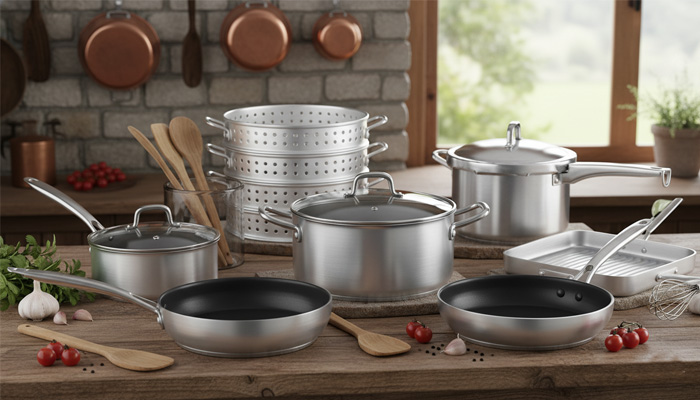
When I look at aluminum cookware from a product development view, I see a flexible cookware base that can serve many markets. A student may need a low-cost frying pan. A family may need a full cookware set. A home chef may want a thicker pan with better heat control. Aluminum cookware can support all these needs if the construction, coating, thickness, handle, and design match correctly.
Why Is Aluminum Cookware Still Popular in Modern Kitchens?
Many consumers want cookware that is easy to use, easy to clean, and not too expensive. If cookware feels heavy, slow, or hard to maintain, it often stays in the cabinet.
Aluminum cookware stays popular because it heats quickly, feels light in the hand, and can be produced at different price levels. It works well for frying pans, saucepans, stockpots, cookware sets, grill pans, and nonstick daily-use cookware.
Aluminum cookware stays relevant because it solves many daily problems in a simple way. Most home users do not want cookware that requires special care every day. They want a pan that heats fast when they cook eggs in the morning. They want a saucepan that is light enough to lift with one hand.
From my experience working with cookware importers, aluminum gives brands more space to build product lines. The same material can support basic supermarket pans, mid-range family cookware sets, and premium die-cast cookware collections. For many consumers, cookware is not only about performance but also about comfort. A pan may cook well, but if it is too heavy, many users will avoid using it. Aluminum cookware gives a good balance between weight, price, and daily function.
What Cooking Needs Does Pressed Aluminum Cookware Fit?
Some consumers only need simple cookware for light daily meals. They do not want high prices, and they may not compare technical details before buying.
Pressed aluminum cookware fits budget users, students, rental homes, supermarket promotions, and light daily cooking. It is usually thin, light, and cost-effective, so it works well for entry-level cookware lines and high-volume retail programs.
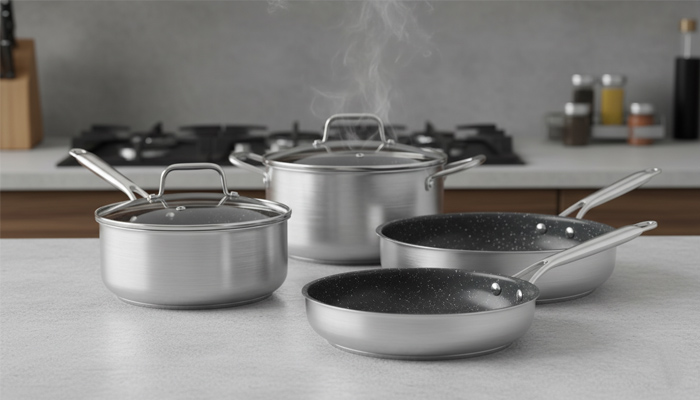
Pressed aluminum cookware is made by pressing aluminum sheets into cookware shapes. This method is common for affordable frying pans, saucepans, and simple cookware sets. In my factory, we can produce thousands of pressed aluminum pieces daily to meet bulk order demands.
I usually see pressed aluminum cookware as a practical product for basic cooking needs. It works well for consumers who cook simple meals like eggs, pancakes, noodles, and vegetables. Students especially like pressed aluminum because it offers good value without breaking their budget. However, I would not position pressed aluminum as heavy-duty cookware. If the pan is too thin, it may heat unevenly or deform under high heat.
What Cooking Needs Does Forged Aluminum Cookware Fit?
Many families cook more often and expect cookware to last longer. If a pan feels too thin or unstable, they may quickly lose trust in the product.
Forged aluminum cookware fits frequent home cooking because it has a stronger body and better shape stability than basic pressed cookware. It is a good choice for mid-range frying pans, sauté pans, saucepans, and family cookware sets.
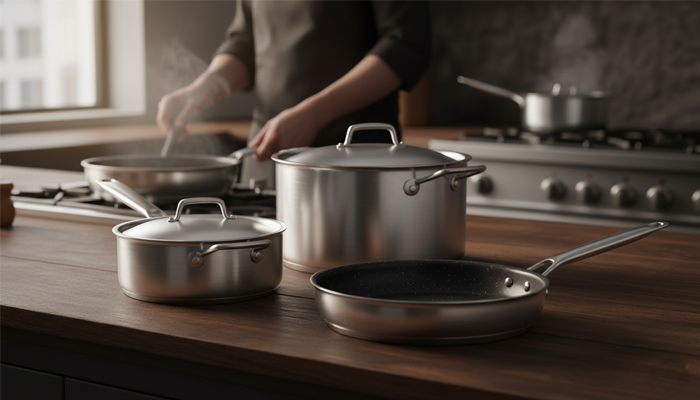
Forged aluminum cookware is made under pressure, so the body is usually stronger and more solid than simple pressed aluminum cookware. It often has better thickness and better hand feel. This makes it suitable for consumers who cook several times a week and want a more reliable pan.
I like forged aluminum for mid-range cookware programs because it gives a better balance between price and perceived quality. Consumers can feel the difference when they pick it up. It has more weight than a very thin pan, but it is still not too heavy for daily cooking. When I design forged aluminum cookware lines, I focus on practical details like steady handles, flat bottoms, and smooth coating surfaces that release food easily.
What Cooking Needs Does Die-Cast Aluminum Cookware Fit?
Some consumers want cookware that looks stronger, feels heavier, and supports a premium kitchen image. Basic lightweight pans may not satisfy this group.
Die-cast aluminum cookware fits quality-focused consumers who want thicker cookware, stronger structure, and better visual value. It is commonly used for premium nonstick pans, grill pans, casseroles, deep pans, and cookware gift sets.
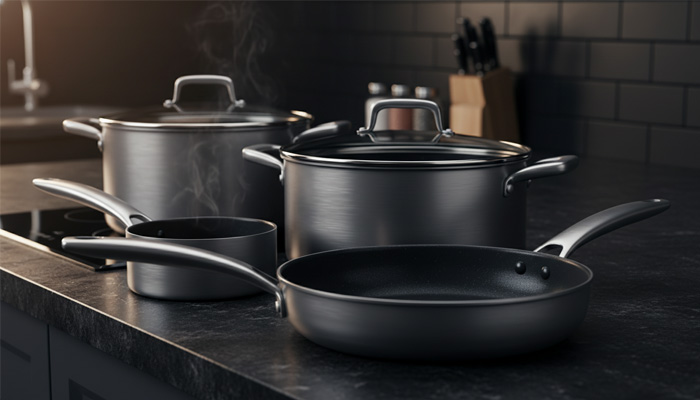
Die-cast aluminum cookware is made by pouring molten aluminum into molds. This allows the cookware body to have more complex shapes, thicker walls, and a heavier structure. The die-casting process also allows for better heat distribution because the aluminum structure is more uniform.
I often see die-cast aluminum used in cookware lines that need stronger shelf presence. A die-cast casserole, grill pan, or deep frying pan creates a strong first impression in retail environments. Die-cast aluminum cookware is not only about performance but also about confidence and market positioning. Consumers often connect weight and thickness with durability and quality. A well-made die-cast pan can help a brand move into a higher price range and compete with more premium cookware materials.
How Does Aluminum Cookware Support Fast Daily Cooking?
Busy consumers do not want to wait too long for a pan to heat. If cooking feels slow, they may order food instead of cooking at home.
Aluminum cookware supports fast daily cooking because it heats up quickly and is easy to handle. It works well for breakfast, simple frying, stir-frying, reheating, noodles, and quick family meals during busy weekdays.
Fast daily cooking is one of the strongest reasons aluminum cookware sells well globally. Many consumers cook under time pressure. They may cook before work, after work, or while caring for children. They need cookware that reacts quickly and does not make the cooking process feel harder.
Aluminum cookware reaches cooking temperature faster than many heavier materials like cast iron or thick stainless steel. This helps users prepare eggs, pancakes, vegetables, fish, and simple meat dishes with less waiting time. I build fast-cooking aluminum cookware around ease of use and quick response. The pan should not be too heavy, the nonstick surface should be smooth, and the handle should stay comfortable. These details matter because fast-cooking consumers judge cookware by how much it helps their daily routine.
How Should Brands Match Aluminum Cookware to Different Markets?
A cookware product may sell well in one channel and fail in another. The same pan cannot serve every market without adjustment.
Brands should match aluminum cookware to retail channels by aligning construction, coating, thickness, packaging, and price level. Supermarkets may need affordable pressed cookware, while e-commerce and homeware stores often need stronger design, better coating, and clearer product value.
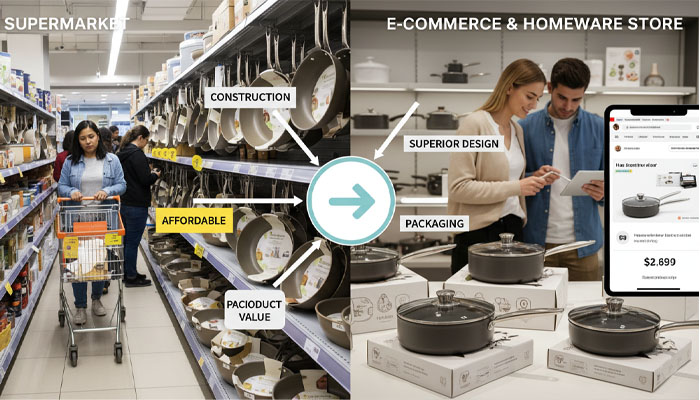
Retail channel planning is one of the most important parts of aluminum cookware development. A supermarket buyer may focus on price and volume. An e-commerce brand may focus more on photos, reviews, and product comparison. A homeware store may care more about finish, design, and hand feel.
| Retail Channel | Suitable Aluminum Type | Main Focus |
|---|---|---|
| Supermarkets | Pressed or basic forged | Price, volume, simple use |
| E-commerce | Forged or die-cast | Visual design, reviews, packaging |
| Homeware stores | Forged or die-cast | Finish, hand feel, shelf value |
| Private label brands | Customized aluminum | Branding, coating, packaging |
The best approach is to build a product ladder. Pressed aluminum can support entry-level price points. Forged aluminum can support mid-range daily cooking. Die-cast aluminum can support premium positioning. This gives consumers a clear reason to choose and upgrade.
What Should Importers Consider When Sourcing Aluminum Cookware?
Some sourcing decisions focus too much on unit price. That can create problems with coating life, pan shape, handle strength, and customer complaints.
Importers should consider aluminum thickness, construction method, coating quality, handle strength, induction compatibility, packaging protection, and supplier quality control. These factors affect real product value more than price alone.
When I evaluate aluminum cookware, I do not only ask for the lowest price. I look at the whole product. Thickness affects heat behavior and body stability. Construction method affects strength and product positioning. Coating affects cooking experience and reviews. Handle design affects safety and comfort.
| Sourcing Point | Why It Matters |
|---|---|
| Body thickness | Affects stability and perceived quality |
| Construction method | Defines market positioning |
| Coating quality | Affects customer satisfaction |
| Handle strength | Affects safety and comfort |
| Packaging | Reduces damage and improves shelf appeal |
| Quality control | Reduces risk in repeated orders |
A good aluminum cookware supplier should also support product development. This includes coating options, color matching, packaging design, and logo customization. The strongest aluminum cookware programs match real consumer needs with the right construction and finish.
Conclusion
Aluminum cookware serves different consumer needs through smart construction choices. Pressed aluminum fits budget markets, forged aluminum serves daily family cooking, and die-cast aluminum supports premium positioning.