
Many buyers see “forged aluminum cookware” on product pages, but they still do not know what makes it different from other pans. That gap can make product selection slow and confusing.
Forged aluminum cookware is cookware made by shaping aluminum under high pressure into a strong and even pan body. It is popular because it heats fast, feels light, cooks evenly, and often comes with easy-clean nonstick performance.
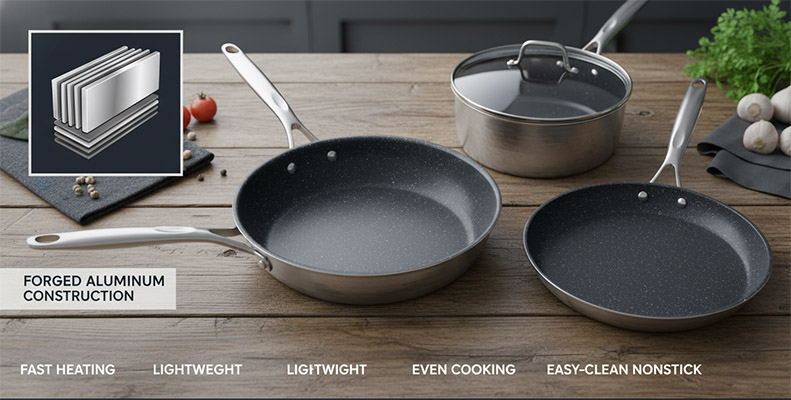
When I talk with buyers about cookware materials, I often find that many people already know stainless steel, cast iron, and nonstick pans. Still, forged aluminum cookware gets attention very quickly once people understand what it offers. It sits in a very practical place in the market. It gives users faster heating than many heavier materials. It also feels easier to handle in daily cooking. That mix is a big reason why it keeps showing up in retail lines, online stores, and private label collections.
What Does Forged Aluminum Cookware Actually Mean?
Many cookware terms sound technical, and that can make buyers think the difference is bigger or more complex than it really is. When the wording is unclear, people often hesitate to compare products.
Forged aluminum cookware means the cookware body is formed from aluminum under strong pressure. This process creates a pan that is usually thicker, more stable, and more refined than very basic stamped aluminum cookware.
I like to explain forged aluminum in simple words. It is still aluminum cookware, but the body is formed in a way that gives it a stronger shape and a more solid feel. That matters because the body of the pan affects how it heats, how stable it stays over time, and how premium it feels in the hand.
In the market, I often see people confuse forged aluminum with cast aluminum or ordinary pressed aluminum. These terms are related, but they are not the same. That is why I would break them down clearly in an article or sales page.
| Type | Basic Process | Common Feel | Common Market Position |
|---|---|---|---|
| Forged aluminum | Formed under high pressure | Solid but still light | Mid to upper-mid market |
| Stamped aluminum | Pressed from sheet aluminum | Lighter and simpler | Entry-level market |
| Cast aluminum | Poured into a mold | Thick and heavy-looking | Value or traditional market |
From my view, forged aluminum works well as a product story because it gives buyers a clear reason to believe the cookware is more than just a basic aluminum pan. It sounds modern, and it usually supports a better price point too.
How Is Forged Aluminum Cookware Made?
A lot of cookware buyers care about the final look, but they also want to know why one pan performs better than another. Without a simple process explanation, the value can feel vague.
Forged aluminum cookware is made by pressing aluminum into shape under high pressure, then refining the body, adding a handle, and finishing it with coatings or an induction base when needed.
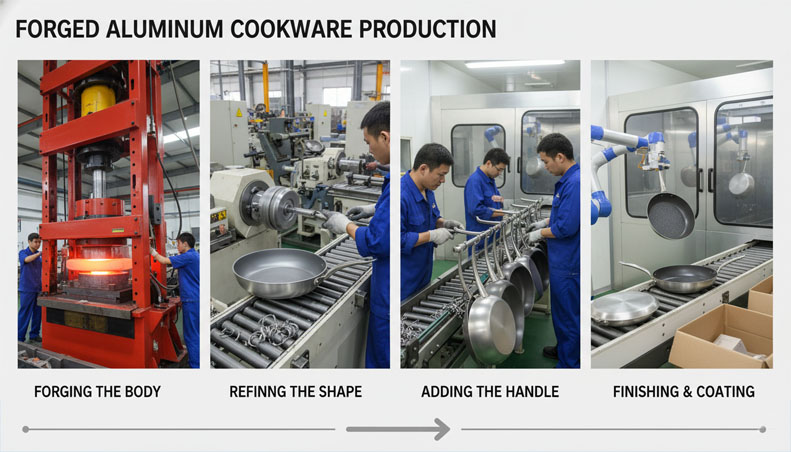
When I think about how to explain the process, I prefer to keep it practical. The key point is that the aluminum is shaped in a controlled way to create a cookware body with better structure. After that, the manufacturer will trim the shape, smooth the surface, fix the handle, and add the final functional layers.
In many modern product lines, the pan body does not stop at bare aluminum. It often includes several added features that directly affect how the cookware sells in the market.
| Production Step | What Happens | Why It Matters |
|---|---|---|
| Body forming | Aluminum is shaped under pressure | Builds the main pan structure |
| Edge trimming | Body is refined and finished | Improves appearance and consistency |
| Surface treatment | Interior and exterior are prepared | Supports coating adhesion and finish |
| Coating application | Nonstick or ceramic layer is added | Improves release and cleaning |
| Base attachment | Induction plate may be added | Expands stove compatibility |
| Final assembly | Handle and lid parts are attached | Completes the product for retail |
I have noticed that buyers do not always want every technical detail. They mainly want to understand how the process connects to performance. So when I write about this topic, I focus on what the process gives them: even heating, stable shape, lower weight, and better product appearance.
Why Do So Many People Like Forged Aluminum Cookware?
A cookware material does not become popular by accident. If buyers keep choosing it, there is usually a very direct reason tied to cooking results and daily use.
Forged aluminum cookware is popular because it offers fast heating, light handling, even cooking, easy cleaning, and a modern look at a price many households find reasonable.
I think popularity comes from the fact that forged aluminum cookware fits how many people cook today. Most home users do not want cookware that feels too heavy. They do not want long cleanup either. They want a pan that heats up quickly, cooks eggs or vegetables without much sticking, and looks nice on the stove. Forged aluminum answers those needs very well.
It also works well for brands because it gives them more room to build a clean product story. They can combine the forged body with a soft-touch handle, ceramic coating, induction bottom, glass lid, or color finish. That makes the cookware easier to position for supermarkets, homeware chains, e-commerce brands, and private label programs.
Here are the most common reasons it stays popular:
| Reason | What Users Like |
|---|---|
| Fast heat-up | Saves time in daily cooking |
| Even heat distribution | Reduces hot spots and uneven browning |
| Lighter weight | Easier to lift, pour, and clean |
| Nonstick compatibility | Better for low-oil cooking and quick cleanup |
| Attractive finish options | Good for retail presentation |
| Flexible price range | Easier to sell than premium heavy cookware |
From what I see, forged aluminum does especially well in categories like fry pans, sauté pans, saucepans, and cookware sets for family kitchens. It gives a balance that many users want. It does not feel too basic, and it does not feel too demanding either.
Is Forged Aluminum Cookware Better Than Cast Aluminum or Stainless Steel?
Buyers often do not choose a product in isolation. They compare materials side by side. When that comparison is missing, the buying decision becomes much harder.
Forged aluminum cookware is often better for buyers who want light weight and quick heating, while cast aluminum may feel thicker and stainless steel may offer a different type of durability and cooking style.
I do not think there is one perfect material for every user. The better choice depends on what the buyer values most. That said, forged aluminum has a very strong position because it solves many common kitchen needs without making the cookware too heavy or too expensive.
If I compare forged aluminum with cast aluminum, I would say forged aluminum usually feels more modern and more streamlined. Cast aluminum often looks thick and substantial, but some users may find it bulkier. If I compare forged aluminum with stainless steel, I would say forged aluminum usually wins on ease of use for everyday nonstick cooking. Stainless steel, on the other hand, is often chosen for searing, uncoated cooking, and a more professional kitchen feel.
| Material | Strengths | Limits | Best For |
|---|---|---|---|
| Forged aluminum | Fast heat, lighter weight, easy to coat | Coating life affects long-term use | Everyday home cooking |
| Cast aluminum | Solid body, good heat retention | Can feel bulkier | Traditional cookware users |
| Stainless steel | Durable surface, no coating needed | Can be harder for beginners | High-heat and searing tasks |
When I write for buyers, I like to avoid saying one material is simply “best.” A better approach is to explain which material fits which user. That creates trust and helps the article feel more helpful and more realistic.
Are There Any Drawbacks to Forged Aluminum Cookware?
When an article only talks about strengths, it sounds like marketing. When it also explains the limits, it feels more honest and useful.
Yes, forged aluminum cookware has some limits. The biggest ones are coating wear over time, possible scratching from rough tools, and performance differences between low-end and high-end products.
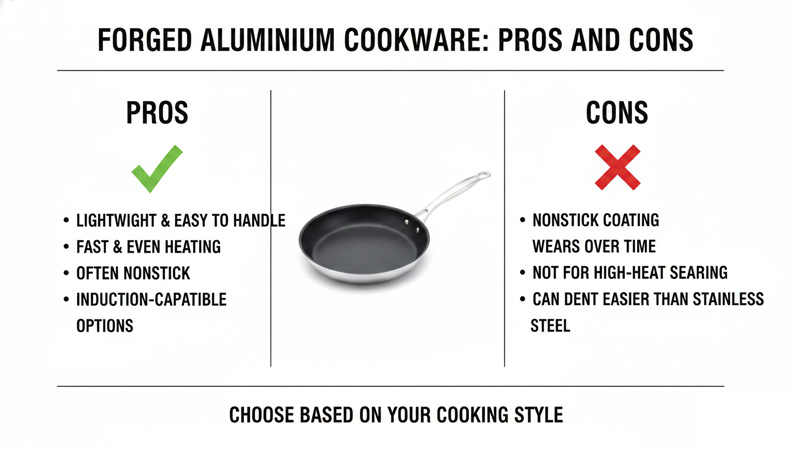
I always think this section is important because it separates a useful article from a shallow one. Forged aluminum cookware is popular, but it is not magic. Not every forged aluminum pan performs the same way. Thickness, coating quality, handle design, and base construction all matter.
For example, if the cookware uses a weak nonstick layer, the user may blame the aluminum body when the real issue is the coating. In the same way, a pan with a thin bottom may not feel as stable as a better-made version, even if both are labeled forged aluminum.
These are the most useful cautions to mention:
| Possible Issue | What It Means |
|---|---|
| Coating wears with use | The pan may lose nonstick performance over time |
| Metal utensils can scratch surfaces | Users need gentler tools for longer life |
| Very high heat may shorten coating life | Medium heat is often the safer choice |
| Quality varies by manufacturer | Product specs and construction still matter |
This is why I would not present forged aluminum as only a material choice. I would present it as a category where good manufacturing still matters. That point is useful for both SEO content and buyer education.
Who Should Buy Forged Aluminum Cookware?
A good article should not stop at describing a product. It should also help the reader decide whether the product fits their own needs.
Forged aluminum cookware is a strong choice for home users, retailers, and private label brands that want cookware that is light, practical, easy to use, and attractive in the market.
When I look at the market, I see forged aluminum cookware working well for several types of buyers. First, it suits home users who cook often and want easy handling. Second, it suits retailers because the product story is clear and easy to explain. Third, it suits importers and private label buyers because it can be developed in many styles, colors, finishes, and set combinations.
I think it is especially attractive in these cases:
| Buyer Type | Why It Fits |
|---|---|
| Home cooks | Easy to lift, fast to heat, easy to clean |
| Young families | Good for simple daily meals |
| E-commerce brands | Strong visual appeal and clear selling points |
| Importers and wholesalers | Flexible designs and broad market demand |
| Private label buyers | Easy to customize with coating, color, and packaging |
From my perspective, that wide fit is one of the biggest reasons forged aluminum cookware remains so popular. It is not a niche material. It fits a broad part of the market, and that gives it lasting commercial value.
Conclusion
Forged aluminum cookware stays popular because it gives people what they want most: fast heating, easy handling, practical performance, and a balanced price-to-use value.