
Choosing the wrong supplier type costs importers thousands in quality issues, delivery delays, and lost retail opportunities each year.
The real difference between manufacturers and trading companies goes far beyond "factory vs middleman" - it's about production control, cost stability, and your ability to scale consistently in competitive retail markets.
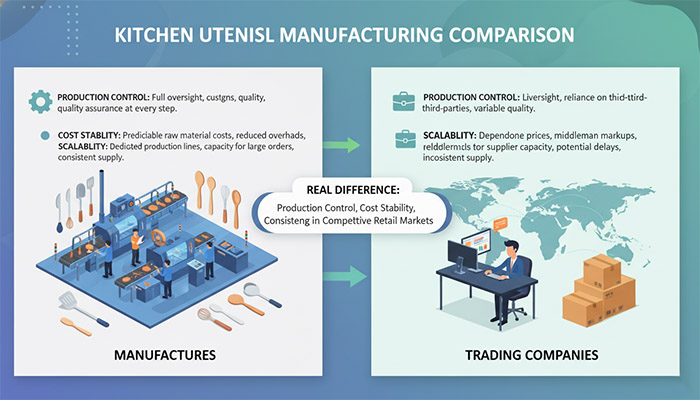
After 27 years in stainless steel kitchenware manufacturing, I've watched hundreds of buyers switch suppliers within their first two years. The reason is rarely pricing. It's usually because they didn't understand how their supplier's structure would impact their business growth.
Why Do So Many Kitchen Utensil Buyers Switch Suppliers After Just Two Years?
Most buyers focus on initial pricing and sample quality, missing the bigger supply chain picture that determines long-term success.
Supplier switching happens because buyers don't evaluate production consistency, scalability, and accountability systems before placing their first orders with manufacturers or trading companies.
The truth is that both manufacturers and trading companies can deliver good products initially. The problems show up later when you need to scale orders, handle quality issues, or develop new products. I've seen importers spend months fixing problems that could have been avoided by choosing the right supplier structure from the start.
Many buyers think manufacturers always cost less because there's no middleman markup. But I've watched trading companies deliver better net pricing on smaller orders through supplier consolidation and container optimization. The key is understanding when each model works best for your business stage.
The biggest mistake I see is buyers treating all manufacturers the same way. A stainless steel forming specialist operates very differently from a full-service kitchenware manufacturer. Same with trading companies - some are just order brokers, while others function like sophisticated supply chain managers.
What's Really Happening Behind Your Kitchen Utensil Orders?
The supply chain structure behind your orders determines product consistency, cost stability, and your ability to handle retail growth.
Most kitchen utensil "manufacturers" actually outsource key processes like welding, polishing, or silicone injection to specialized facilities, creating hidden dependencies that impact your orders.
At INOXICON, we control stainless steel forming, welding, and polishing in-house because these processes directly impact product consistency. But I know many manufacturers who outsource polishing to get better finishes or welding to handle capacity peaks. This isn't necessarily bad, but it creates coordination points that can cause delays or quality variations.
Trading companies often build their portfolios by connecting multiple specialist factories. A good trading company might source stainless steel bowls from one factory, silicone handles from another, and coordinate packaging at a third location. This can actually work well for mixed-category orders because they're managing the complexity for you.
The problem comes when buyers don't know about these arrangements. I've seen situations where a buyer thinks they're working with a single factory, but their orders are actually being split across three different facilities. When quality issues happen, finger-pointing starts because nobody wants to take full responsibility.
The most successful buyers I work with always ask about production flow during factory visits. They want to see which processes happen on-site versus which get outsourced. This transparency helps them understand potential risk points and plan accordingly.
Does Working Directly with Factories Always Save Money?
Direct factory pricing can actually cost more when you factor in hidden coordination costs and operational inefficiencies.
Managing multiple factories yourself often creates higher net costs through communication inefficiencies, separate logistics coordination, and sampling revision delays that trading companies absorb.
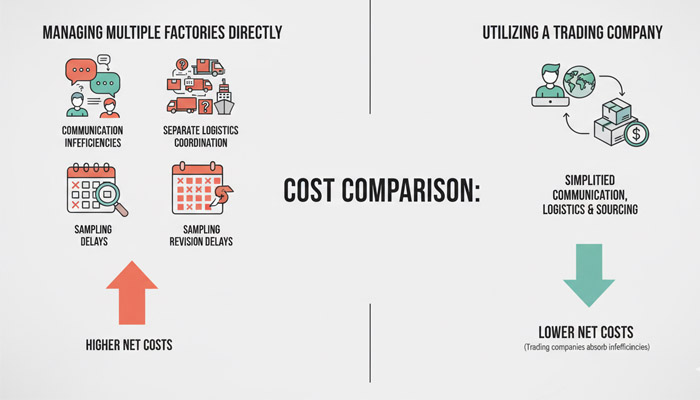
Here's what I see with direct factory buyers who aren't prepared for the coordination work. They place orders with three different factories for handles, bowls, and packaging. Each factory requires separate communication, separate sampling rounds, and separate shipping arrangements. The time spent coordinating these relationships often costs more than a trading company's markup.
Good trading companies achieve better pricing through supplier consolidation and container optimization. They might combine your kitchen utensil order with other products to fill containers more efficiently. They also leverage existing relationships to get better payment terms or production slots during busy seasons.
But the equation changes completely with large orders. When you're ordering 50,000 pieces or more, direct manufacturer relationships usually deliver better economics. You get material purchasing leverage, production priority, and better negotiation power. At these volumes, the coordination costs become worth managing internally.
I tell buyers to calculate their true cost per hour spent on supplier management. If you're spending 10 hours per week coordinating multiple factories, that time has value. Sometimes paying a trading company's markup actually delivers better net economics when you include your internal costs.
How Do You Ensure Product Consistency Across Multiple Batches?
Product consistency in kitchen utensils depends on controlling raw material sourcing, production processes, and quality checkpoints throughout manufacturing.
Stainless steel kitchenware often changes between batches due to steel sourcing fluctuations, different subcontractors, and variations in thickness tolerance that buyers don't discover until retail complaints start.
The biggest consistency risk I see is with steel sourcing. Market prices fluctuate, and some suppliers switch steel grades or thickness to maintain margins. A mixing bowl that weighs 280 grams in batch one might weigh 260 grams in batch three because someone used thinner steel to cut costs. Retailers notice these differences immediately.
Manufacturers with in-house QC systems can control this better because they inspect incoming steel before production starts. We test thickness, check steel grades, and verify surface quality before any forming begins. This prevents variations from reaching finished products.
But some trading companies actually deliver better consistency by using third-party inspection systems. They benchmark multiple factories and maintain export QC standards across their supplier network. The key is finding trading companies that treat consistency as seriously as manufacturers do.
The real test comes when problems happen. Who takes responsibility for rework? Who absorbs shipping delays? Who responds fastest to complaints? This accountability structure matters more than whether you're working with a manufacturer or trading company directly.
Where Does Product Development Speed Really Matter?
OEM development speed depends on direct engineering communication, tooling control, and prototype revision efficiency between your team and production engineers.
Direct manufacturer relationships usually accelerate product development through faster prototype revisions, better feasibility assessment, and reduced technical misunderstandings that slow down tooling investment decisions.
Product development is where manufacturer relationships shine most clearly. When you need to adjust handle balance, modify edge finishing, or improve heat resistance, direct engineering communication speeds everything up. I can walk customers through our production floor and show them exactly how design changes impact manufacturing feasibility.
Mold ownership becomes critical for exclusive products. If your custom kitchen utensil design succeeds in retail, you want control over the tooling. Some trading companies keep molds with third-party factories, creating dependency issues if you ever want to switch suppliers or expand production capacity.
The engineering feedback loop matters most during prototype phases. Direct manufacturer relationships reduce the back-and-forth communication that happens when technical details get filtered through trading company account managers. Engineers can explain why certain design approaches work better for durability or manufacturing efficiency.
But established trading companies with strong technical teams can sometimes match this speed. They invest in product development coordinators who understand both design requirements and manufacturing constraints. The key is evaluating technical depth during your supplier selection process.
What Happens When Your Kitchen Utensil Orders Start Growing Fast?
Supply chain scalability determines whether your supplier can handle capacity increases, maintain delivery reliability, and prevent quality drift during rapid business growth.
Manufacturers usually perform better at scale through production planning control, raw material forecasting, and dedicated capacity allocation, while trading companies can become bottlenecks due to external factory dependencies.
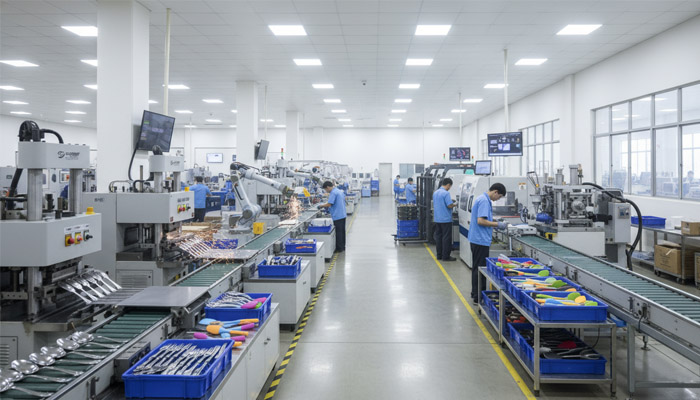
Scaling challenges hit buyers hard during peak retail seasons. Orders that worked fine at 5,000 pieces monthly start failing at 20,000 pieces because suppliers can't handle the capacity jump. I've seen promising retail relationships collapse because suppliers couldn't deliver consistently during growth phases.
Manufacturers with dedicated production lines handle scaling better because they control capacity allocation. We can forecast raw material needs, adjust production schedules, and maintain quality systems even when volumes increase. The production planning happens internally instead of depending on external factory availability.
Trading companies face different scaling challenges. They might lose priority at their supplier factories when larger customers place competing orders. Or they discover that their network of specialist factories can't all scale simultaneously, creating bottlenecks in their supply chain coordination.
The solution I recommend is building scalability requirements into your initial supplier evaluation. Ask about capacity limits, peak season performance, and backup production plans. Test smaller scale increases before committing to major growth phases with any supplier type.
Smart buyers often develop hybrid sourcing models as they grow. They might maintain trading company relationships for product diversity while building direct manufacturer relationships for their highest-volume products.
Which Supplier Model Fits Your Business Stage Best?
Supplier selection should match your business growth stage, with different priorities for startup brands, growing importers, and established retailers.
Startup brands need flexibility and lower complexity more than lowest pricing, while established retailers require direct manufacturer relationships for strategic control and scalability.
Startup brands should prioritize flexibility and learning opportunities over lowest unit costs. Trading companies often provide better support for mixed product testing, lower MOQ flexibility, and category diversification that helps new brands find their market fit. The markup costs less than the risk of committing to large volumes before proving retail demand.
Growing importers benefit most from hybrid sourcing approaches. They can use trading companies for product diversity and market testing while building direct manufacturer relationships for their proven bestsellers. This balances flexibility with cost optimization as volumes increase.
Established retailers and brand owners need strategic supply chain control. Direct manufacturer relationships become essential for exclusive product development, capacity guarantees, and cost structure optimization. At this stage, trading company markups start impacting competitive positioning more than operational efficiency benefits.
The transition between stages requires careful planning. I've helped customers gradually shift from trading company relationships to direct manufacturing as their volumes and requirements evolved. The key is maintaining supply continuity while building new supplier capabilities.
Why INOXICON Delivers the Best of Both Manufacturing Models?
After reading about manufacturer versus trading company trade-offs, you might wonder which approach INOXICON takes for your kitchen utensil sourcing needs.
INOXICON combines direct manufacturing control with flexible service approaches, offering low MOQs from 500 pieces, in-house production capabilities, and 27 years of export experience to support your business growth at any stage.
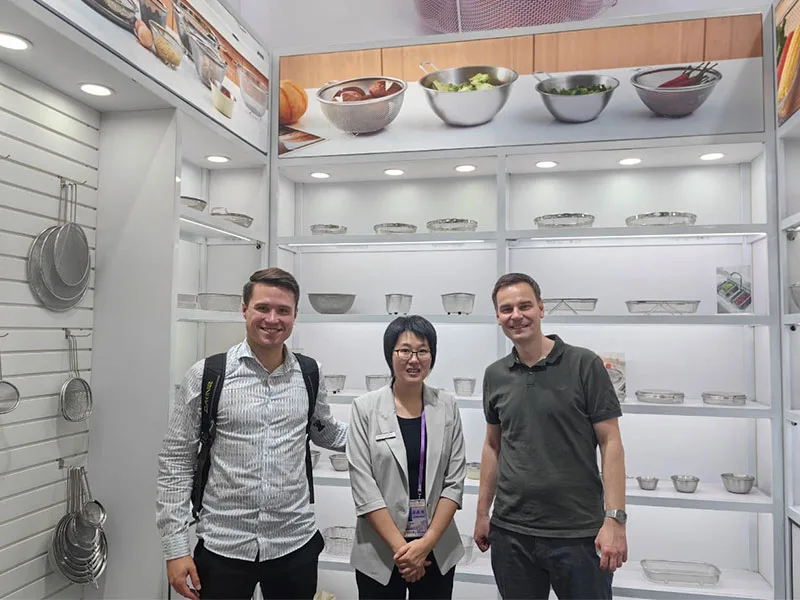
We've structured our operations to solve the common problems I described throughout this article. Our 95 advanced machines and 30,000+ daily production capacity mean we control the key processes that impact your product consistency. No outsourcing headaches. No finger-pointing when issues arise. No hidden dependencies that create delivery delays.
The low MOQ starting from 500 pieces helps importers test markets without the inventory pressure that larger manufacturers typically require. But we also scale efficiently for established buyers placing 50,000+ piece orders. This flexibility comes from our production planning control and raw material forecasting systems.
Our five senior designers with 15+ years average experience handle the product development speed issues I mentioned. Direct engineering communication. Faster prototype revisions. Better feasibility assessment before you invest in tooling. Plus mold ownership stays with you for exclusive products.
Most importantly, we take full accountability. When problems happen, you deal with the people who control production. No coordination between multiple factories. No waiting for external suppliers to respond. We absorb rework costs and delayed shipment risks because we control the entire process.
If you're ready to work with a manufacturer that understands both the operational challenges and growth requirements of kitchen utensil importers, let's discuss your specific sourcing needs. Our team can evaluate whether direct manufacturing or a hybrid approach works best for your current business stage.
Conclusion
The best kitchen utensil supplier depends on operational transparency, consistency, engineering support, scalability, and accountability - not just the manufacturer versus trading company label.