
Are your customers constantly asking for lightweight, affordable cookware that heats evenly? You're not alone in this challenge.
Aluminum cookware dominates modern kitchens because it offers excellent heat conduction, lightweight handling, and affordable pricing that appeals to both home cooks and professional chefs worldwide.
After 29 years in the kitchenware industry, I've watched aluminum cookware maintain its strong market position despite growing competition. The reasons behind this popularity reveal important insights for importers and wholesalers looking to understand consumer preferences.
Why Does Aluminum Excel in Heat Distribution and Performance?
Struggling with customer complaints about uneven cooking? This common pain point drives many buyers toward aluminum solutions.
Aluminum conducts heat three times faster than stainless steel, eliminating hot spots and ensuring even cooking results that satisfy both amateur and professional cooks.
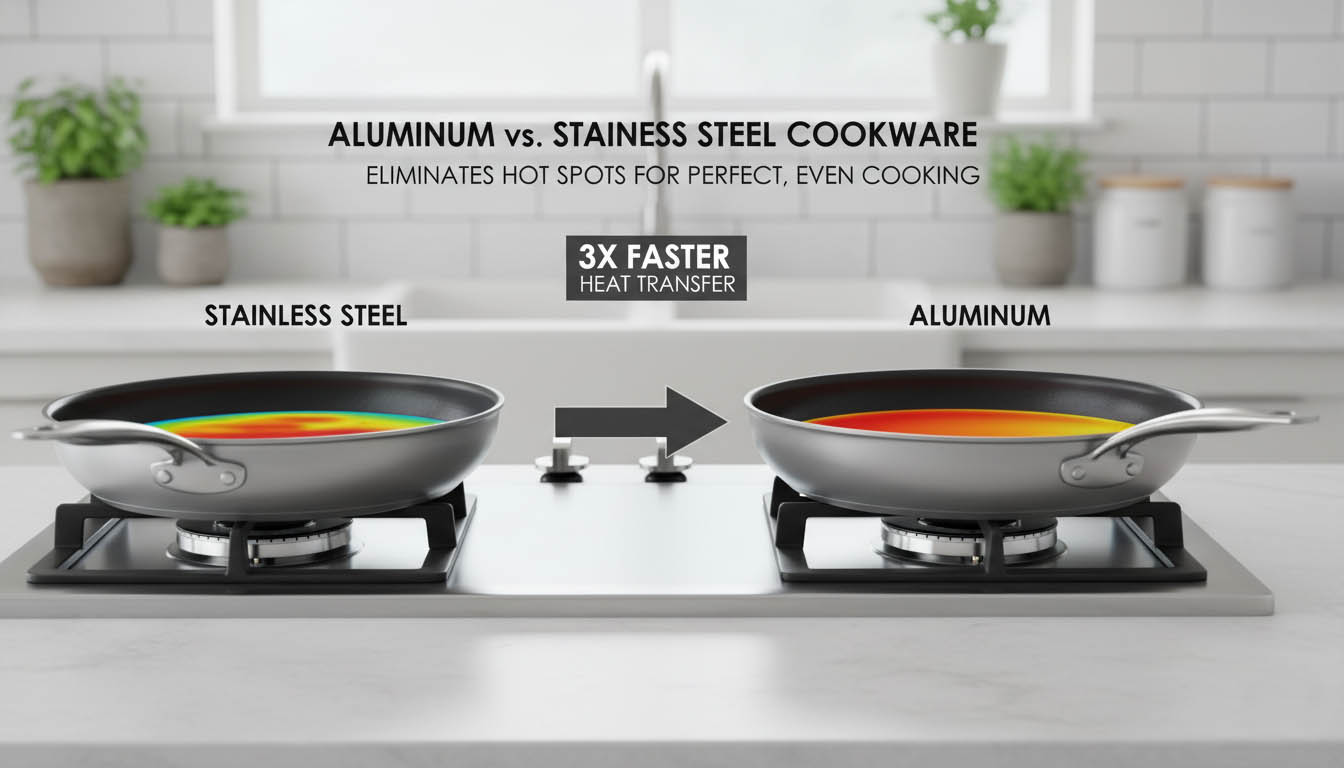
The superior thermal conductivity of aluminum creates a significant advantage in cooking performance. When I visit commercial kitchens during trade shows, chefs consistently praise aluminum cookware for its responsive heat control. This material allows precise temperature adjustments, which matters greatly for delicate cooking techniques like making perfect omelets or searing proteins without overcooking.
The weight factor cannot be overlooked either. Pure aluminum weighs roughly one-third less than equivalent stainless steel pieces. This reduction in weight translates to less fatigue during long cooking sessions. Restaurant workers who handle heavy pots all day and home cooks with arthritis especially appreciate this benefit. I've personally witnessed elderly customers at exhibitions choose aluminum specifically because they can lift and maneuver these pans comfortably.
Aluminum's natural oxide layer formation provides built-in corrosion resistance. Unlike iron-based metals, aluminum doesn't rust when exposed to moisture. This protective coating develops automatically when aluminum contacts oxygen, creating a barrier that extends the cookware's lifespan without special treatments. The manufacturing flexibility of aluminum allows producers to create diverse product shapes efficiently. From thin baking sheets to deep stockpots, aluminum's malleability supports various cooking vessel designs at lower tooling costs compared to harder metals.
Which Global Markets Show the Highest Demand for Aluminum Cookware?
Wondering where aluminum cookware sells best? Market data reveals clear regional preferences that smart importers should understand.
The United States, China, and India lead aluminum cookware consumption, with developing economies choosing aluminum for its affordability and developed markets valuing its professional performance.
The American market shows strong preference for hard-anodized aluminum cookware. Brands like Calphalon and Circulon built their reputations on aluminum technology. Commercial kitchens across the US rely heavily on aluminum equipment because it withstands high-volume use while maintaining consistent performance. American consumers spend approximately $2.4 billion annually on aluminum cookware, making it the second-largest cookware category after non-stick options.
China represents both the largest production center and major consumer market for aluminum cookware. The domestic preference for wok cooking aligns perfectly with aluminum's quick heat response. Chinese households choose aluminum for daily cooking because it offers professional-level performance at accessible prices. Our factory ships over 40% of our aluminum products to domestic Chinese distributors who supply both urban and rural markets.
India's traditional cooking methods favor aluminum extensively. Pressure cookers, which are essential in Indian kitchens, commonly use aluminum construction. The metal's ability to handle high pressure while remaining lightweight makes it ideal for traditional Indian cooking vessels like the karahi. Indian consumers purchase aluminum cookware primarily through local markets where price sensitivity drives purchasing decisions.
European markets show interesting patterns where commercial foodservice relies on aluminum while home kitchens often prefer composite cookware with aluminum cores. This approach combines aluminum's heat distribution benefits with stainless steel's durability and appearance. Developing economies worldwide choose aluminum cookware primarily for economic reasons, creating massive opportunities for budget-conscious importers.
How Do Different Aluminum Types Affect Market Positioning?
Confused about which aluminum grade to import? Understanding material variations helps you target the right customer segments effectively.
Raw aluminum, hard-anodized aluminum, and aluminum-core composites serve different market segments, from budget-conscious consumers to professional chefs demanding premium performance.
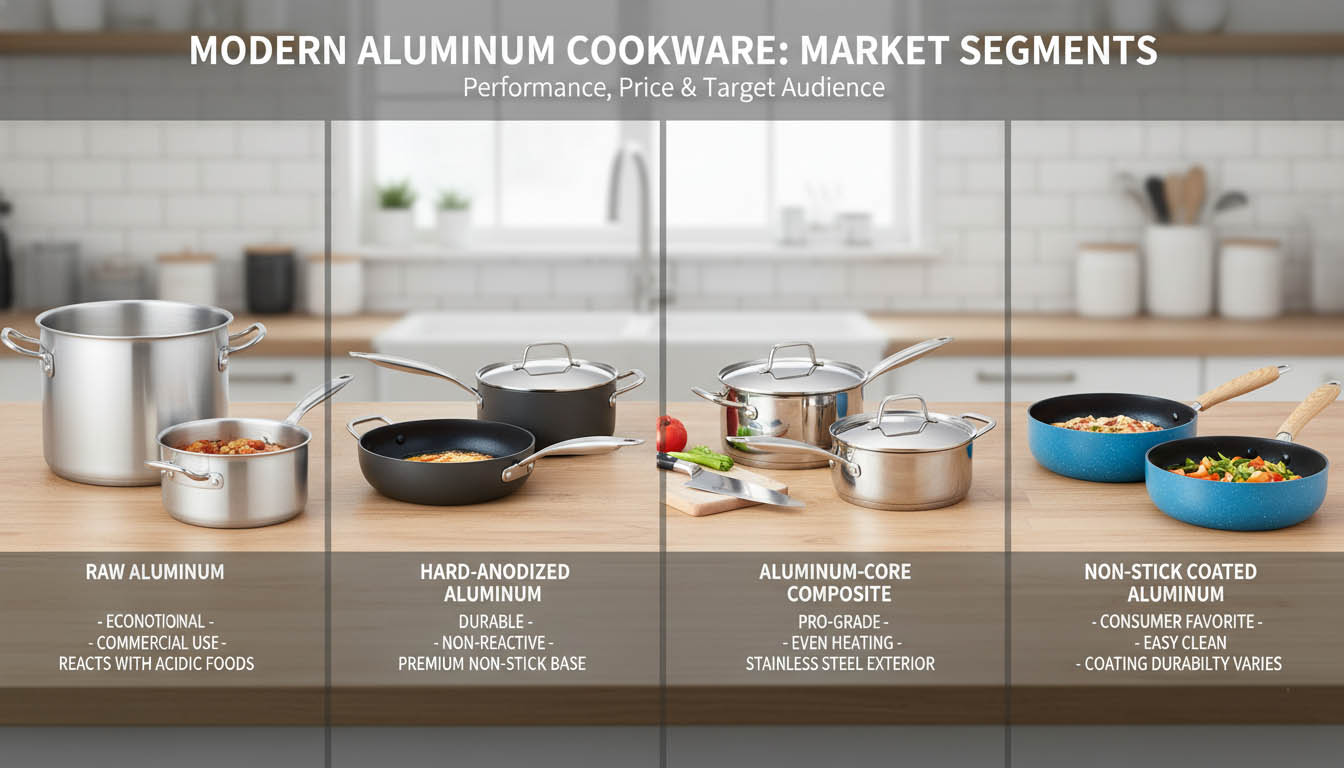
Raw aluminum represents the most economical option but requires careful marketing due to potential health concerns. Uncoated aluminum can react with acidic foods, creating metallic flavors that disappoint consumers. However, this grade works excellently for commercial applications where cost matters more than aesthetics. Many restaurants use raw aluminum stockpots and sauce pans because they prioritize functionality over appearance.
Hard-anodized aluminum undergoes an electrochemical process that creates a durable, non-reactive surface. This treatment doubles the hardness of the aluminum while maintaining excellent heat conduction. The dark, matte finish appeals to modern kitchen aesthetics, and the non-reactive surface eliminates concerns about acidic foods. Hard-anodized products typically sell for 30-50% more than raw aluminum but offer significantly better profit margins.
Aluminum-core composite cookware represents the premium segment. These products sandwich aluminum between stainless steel layers, combining aluminum's heat distribution with steel's durability and appearance. Professional chefs often prefer this construction because it delivers restaurant-quality performance with home-friendly maintenance requirements. The manufacturing complexity increases costs but creates opportunities for higher-value partnerships with upscale retailers.
Non-stick coated aluminum dominates the consumer market despite durability concerns. Modern ceramic and PTFE coatings address many traditional non-stick limitations while maintaining aluminum's core benefits. Smart importers focus on coating quality and warranty programs to differentiate their products in this competitive segment.
What Do Professional Buyers Need to Know About Consumer Feedback?
Concerned about potential customer complaints? Understanding common aluminum cookware issues helps you position products correctly and set proper expectations.
Consumers appreciate aluminum's lightweight performance but report challenges with non-stick coatings, induction compatibility, and maintenance requirements that savvy retailers can address proactively.
Non-stick coating durability remains the most frequent consumer complaint about aluminum cookware. Users report that budget aluminum pans lose their non-stick properties within two years of regular use. However, this challenge creates opportunities for importers who focus on higher-quality coatings and proper user education. We've found that customers who receive proper care instructions report 40% longer coating life compared to those who don't.
Induction cooktop compatibility presents another common issue. Pure aluminum doesn't work with magnetic induction systems, which frustrates consumers who don't research this limitation before purchasing. Smart retailers now clearly label induction compatibility and offer hybrid options with magnetic bases. The growing popularity of induction cooking creates demand for aluminum cookware with steel or iron disc bottoms.
Acidic food reactions concern health-conscious consumers, particularly when cooking tomatoes or citrus-based dishes. Uncoated aluminum can impart metallic flavors to acidic foods and may leach small amounts of aluminum into food. This issue drives demand for anodized or coated aluminum products that eliminate direct food contact with raw aluminum. Proper product education about which foods work best with different aluminum types prevents customer disappointment.
Dishwasher discoloration affects aluminum cookware appearance over time. The high-heat, alkaline environment in dishwashers can cause rainbow-like staining on aluminum surfaces. While this discoloration doesn't affect performance, it concerns appearance-conscious consumers. Educating customers about hand-washing recommendations prevents this cosmetic issue and extends product life.
Professional kitchens provide the most positive aluminum cookware feedback. Commercial-grade aluminum equipment receives praise for durability, heat responsiveness, and cost-effectiveness. This professional endorsement helps justify premium positioning for restaurant-quality aluminum products in retail markets. The pet-owning community, particularly bird owners, specifically seeks uncoated aluminum as a safer alternative to non-stick cookware.
How Should Importers Navigate Aluminum Cookware Quality Standards?
Worried about meeting international safety requirements? Different markets have varying standards that affect your sourcing decisions significantly.
FDA, LFGB, and other international standards regulate aluminum cookware differently, requiring importers to match product specifications with target market requirements carefully.
FDA regulations in the United States focus primarily on food safety rather than aluminum content limits for cookware. However, California's Proposition 65 requires warning labels if aluminum leaching exceeds specific thresholds. Smart importers test their products proactively and maintain documentation to avoid compliance issues. We maintain an FDA-compliant testing facility that processes over 200 aluminum samples monthly for our North American customers.
European LFGB standards are more stringent, particularly regarding aluminum migration into food during cooking tests. Products must pass specific leaching tests using acidic solutions that simulate worst-case cooking scenarios. The additional testing costs typically add $2-3 per unit to production costs, but European markets often accept higher prices for certified products.
Japanese Food Sanitation Law includes specific provisions for aluminum cookware that differ from both US and European standards. The testing requirements focus on long-term durability and coating adhesion under high-temperature conditions. Our Japanese partners require quarterly testing reports and maintain strict quality audit schedules.
REACH compliance in Europe affects not only the aluminum base material but also any coatings, handles, or accessories attached to the cookware. The documentation requirements can be extensive, but European importers often pay premium prices for fully compliant products. Quality management systems become crucial when serving multiple international markets simultaneously.
Conclusion
Aluminum cookware's combination of superior heat conduction, lightweight design, affordable pricing, and manufacturing flexibility ensures its continued dominance across diverse global markets.